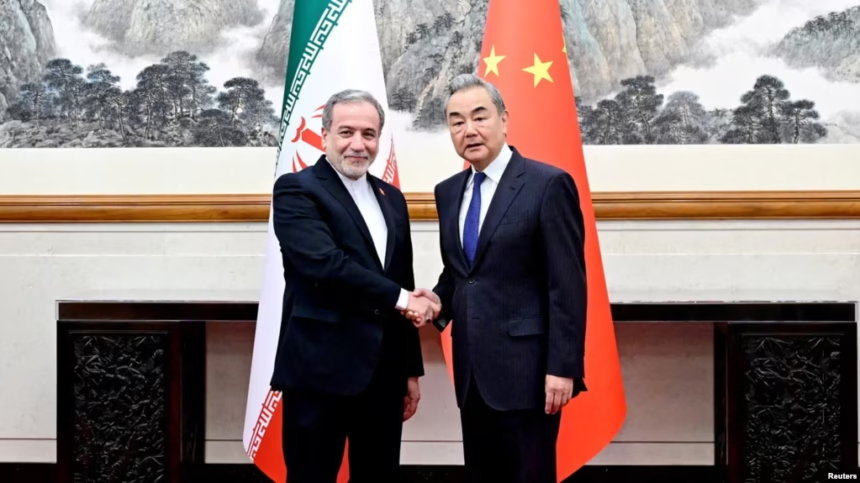
BEIJING – One week before a high-stakes summit between U.S. President Donald Trump and Chinese President Xi Jinping, Beijing has intensified its diplomatic efforts to end the conflict in the Persian Gulf.
On May 6, 2026, Chinese Foreign Minister Wang Yi hosted his Iranian counterpart, Abbas Araqchi, for his first visit to Beijing since hostilities broke out in late February. Following the meeting, Wang Yi issued a forceful call for a “comprehensive ceasefire” and the restoration of normal shipping traffic through the critical Strait of Hormuz.
Beijing’s “Active Role” in Peace
Wang Yi stated that China intends to work “more vigorously” to end the fighting and play a “greater role in restoring peace and stability to the Middle East.” According to a statement from the Chinese Foreign Ministry, Beijing views the cessation of hostilities as an absolute necessity.
“China believes that a complete halt to hostilities is essential, a resumption of conflict is unacceptable, and the continuation of negotiations is particularly important,” Wang noted.
The “One-Page” Peace Memorandum
The visit takes place amid swirling reports that Tehran and Washington are nearing a preliminary agreement to end the war. According to reports first published by Axios, a proposed one-page memorandum of understanding includes several key provisions:
- Nuclear Moratorium: Iran would commit to a freeze on nuclear enrichment.
- Sanctions Relief: The U.S. would agree to lift specific sanctions and unfreeze billions of dollars in Iranian funds.
- Maritime Freedom: Both sides would lift restrictions on vessels navigating the Strait of Hormuz.
Washington officials have not yet officially commented on the proposed memorandum.
Strategic Counter-Movements
Iranian political commentators have largely welcomed Araqchi’s Beijing visit, viewing it as a vital “counter-move” to ensure Iranian interests are protected during the upcoming Trump–Xi talks.
Analysts suggest that Tehran is seeking more than just mediation; it is looking for a financial lifeline. Strategist Mostafa Kharratian argued that if Tehran secures approximately $20 billion in Chinese financing to offset the impact of the U.S. naval blockade, Washington’s assumption that Iran will surrender first in an economic war would be proven false.
A New Regional Architecture?
The diplomatic flurry indicates a potential shift in the regional balance of power. While Pakistan has previously attempted to mediate, analysts point out that Beijing possesses the unique political and economic weight to act as both an “initiator” and a “guarantor” of any potential peace deal.
As Trump prepares to arrive in Beijing, the Iranian mission seeks to consolidate support from the “Tehran-Beijing-Moscow” axis, utilizing China’s recently activated “anti-sanctions” laws as a shield against continued American pressure.