RIFLE-WIELDING thrill-seekers who shot at innocent civilians in the siege of Sarajevo competed to see who could kill the most beautiful women, a book has claimed.
A new wave of controversy has emerged around the wartime history of Siege of Sarajevo, after fresh allegations suggested that foreign individuals may have paid to participate in the killing of civilians during the conflict.
The claims are detailed in the book Pay and Shoot by Croatian journalist Domagoj Margetić, who says he obtained documents from Bosnian intelligence officer Nezad Ugljen prior to his death in 1996. According to Margetić, the files describe a clandestine system in which outsiders allegedly paid large sums of money to join armed groups and fire on civilians trapped inside Sarajevo.
These allegations build on narratives previously explored in the documentary Sarajevo Safari by Slovenian director Miran Zupanič, which first brought broader public attention to claims that “war tourism” may have taken place during the siege.
While deeply disturbing, the allegations remain unproven. No international tribunal, including proceedings at International Criminal Tribunal for the former Yugoslavia, has confirmed the existence of organized “human safari” operations.
Some references to the possible presence of foreign individuals on the frontlines have appeared in past testimonies. In 2007, former U.S. Marine John Jordan told a court in The Hague that he had seen armed men in Sarajevo who did not appear to be locals, though he did not link them to any structured activity involving paid killings.
Recent developments have added a legal dimension to the story. Italian authorities reportedly opened an investigation in late 2025 after media reports, including those by La Repubblica, cited possible evidence of foreign involvement in violent acts during the war. However, no formal charges or conclusions have been announced.
The historical context remains clear and documented. The siege itself—carried out by Bosnian Serb forces—lasted nearly four years and resulted in over 11,000 civilian deaths. Daily life in Sarajevo was marked by constant shelling and sniper fire, particularly along the infamous “Sniper Alley,” where civilians risked their lives simply crossing the street.
Experts caution that, while such allegations capture public attention due to their shocking nature, they require rigorous verification. So far, they remain within the realm of claims, supported by fragments of testimony, intelligence accounts, and investigative reporting—but lacking definitive judicial confirmation.
What is not in dispute is the scale of human suffering during the siege. Whether these new claims will lead to further evidence—or accountability—remains to be seen.
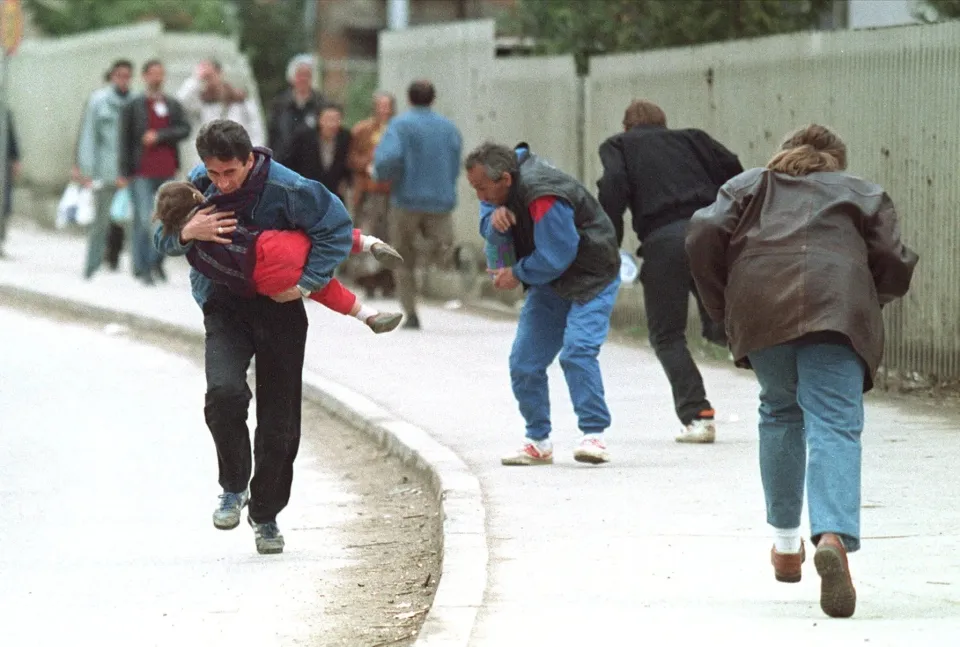
A Bosnian man cradles his child as they and others run past one of the worst spots for sniper attacks in Sarajevo, 1993
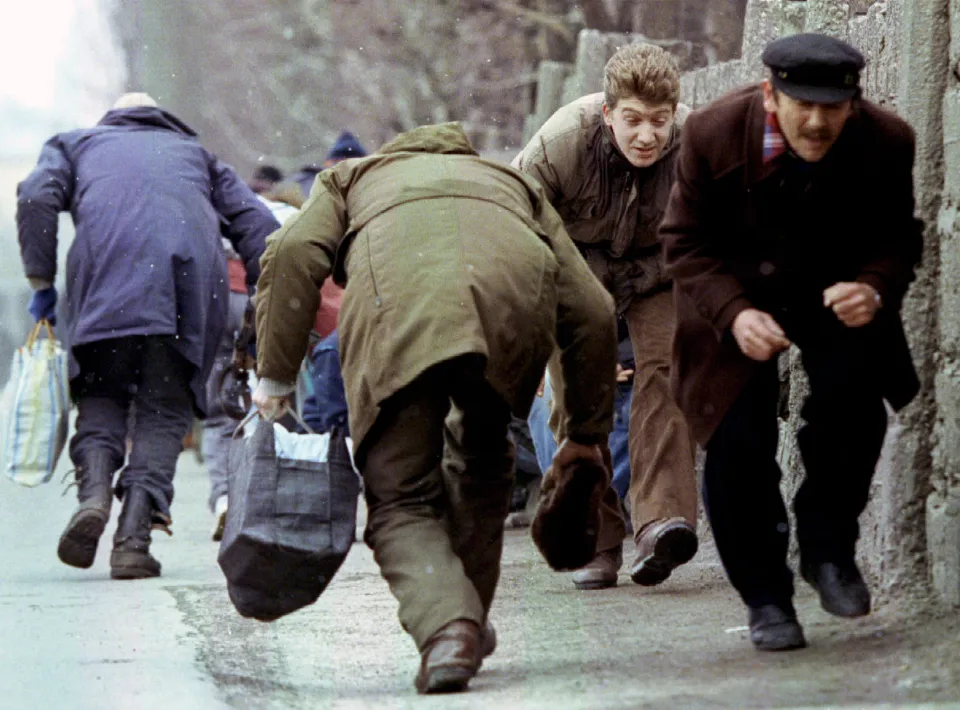
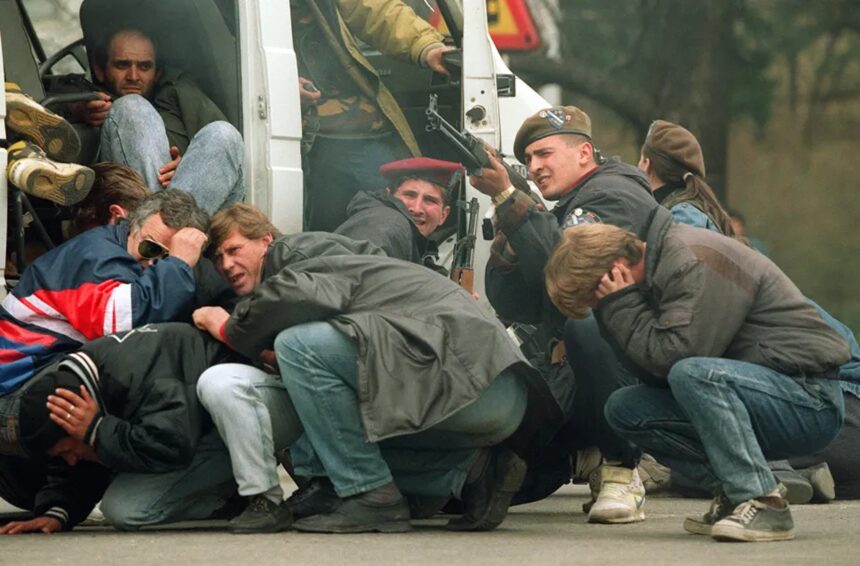
Civilians were at constant risk of being picked off by sniper fire in the early 1990s
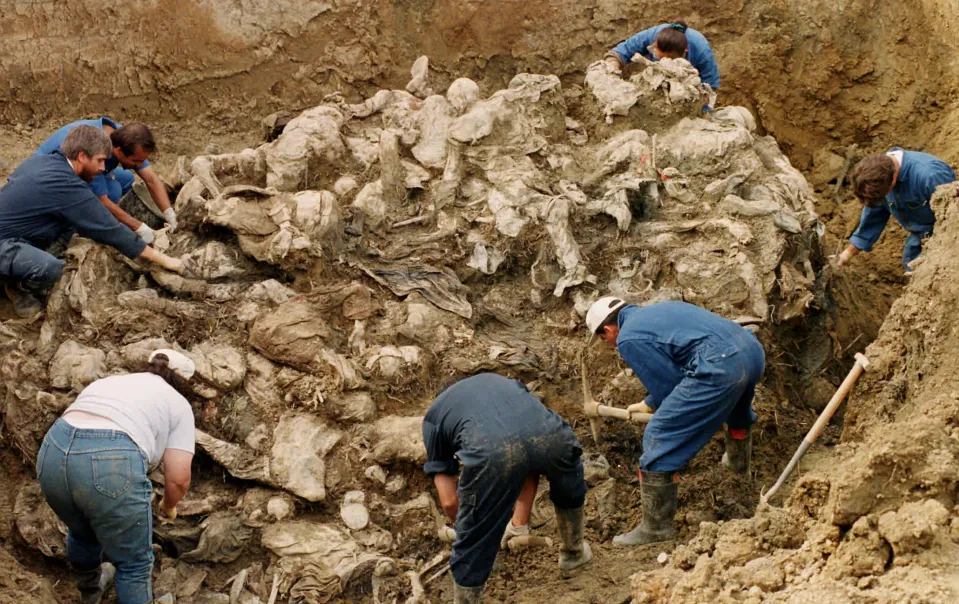
War crimes investigators uncovering a mass grave from the Srebrenica massacre of Bosnian Muslims by the Bosnian Serb army