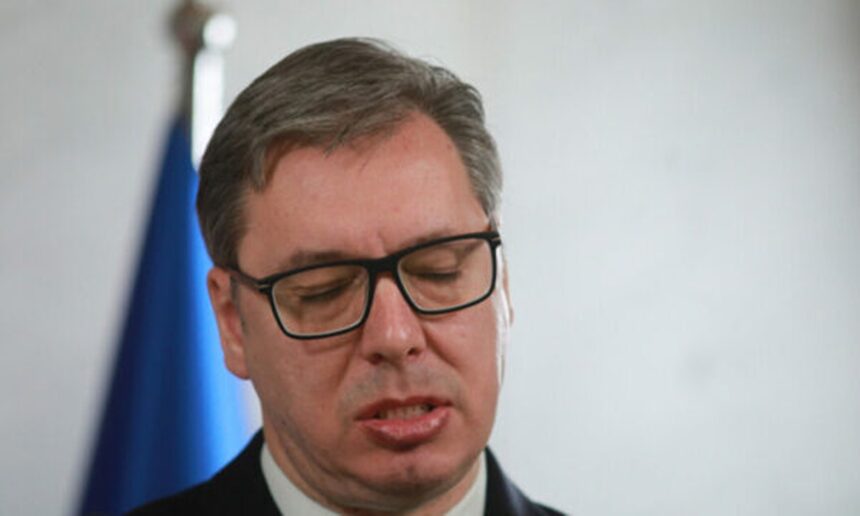
Slobodan Divjak, honorary president of the International School of Philosophy “Felix Romuliana,” has assessed that Aleksandar Vučić is using global tensions as a key justification for not calling early parliamentary elections in Serbia.
According to Divjak, Vučić presents the current global situation as a threat that requires political unity, arguing that election campaigns could weaken the state at a time when Serbia must be prepared to defend its sovereignty. This narrative, he says, is accompanied by calls for increased armament and strengthening of security structures, alongside rhetoric targeting “unreliable” or “anti-patriotic” elements.
Divjak argues that historically, small states cannot independently shape global developments and can at best align themselves with countries “on the right side of history.” In this context, he describes Vučić’s foreign policy as “ad hoc” and lacking strategic direction, claiming it has resulted in a “debacle” and led Serbia toward international isolation. He adds that key international actors no longer trust Vučić.
He rejects the claim that elections would be counterproductive under current conditions, citing Hungary as an example where recent elections, in his view, led to the fall of an unlawful autocratic system and opened the way for rebuilding governance based on the rule of law.
Divjak further claims that, faced with declining public approval, Vučić sees the main threat domestically and is using global instability to construct “fictitious enemies” and exaggerate the risk of a world war. According to him, this serves to justify calls for maximum armament, stricter order, and discipline.
He interprets such rhetoric as a signal of potential escalation in internal repression aimed at protecting the regime. He also suggests that ongoing purges within security institutions may be intended to align them more closely with paramilitary structures.
In this context, Divjak points to what he describes as a concerning message—that police may feel empowered to use excessive force against individuals deemed dangerous—particularly targeting students and potential political challengers.
Despite these concerns, he notes that opposition forces have shown resilience and determination. He warns that any escalation into extreme violence could trigger the population’s right to self-defense and lead to the internationalization of the crisis.
In conclusion, Divjak argues that any use of lethal force against citizens—especially young people—would mark the “final act” of a tyrannical government, while also suggesting that such threats may ultimately reflect panic within a system struggling to maintain control.