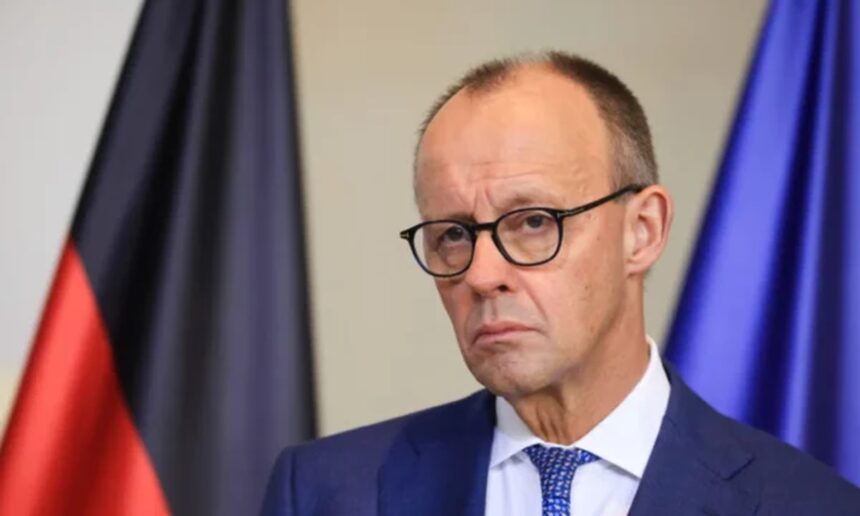
After one year in power, the government of Friedrich Merz is facing largely negative public evaluations—mostly tied to domestic issues. But when it comes to foreign policy, especially toward the Western Balkans, the picture is more complex and contested.
A shift in structure, not necessarily in priorities
One of the first noticeable moves by the new German government was the abolition of the Special Envoy for the Western Balkans, a role previously held by Manuel Sarrazin. This decision raised concerns that the region might lose importance in Berlin’s foreign policy.
The government justified the move as part of broader cost-cutting measures and a restructuring of foreign policy coordination, now jointly handled by the Chancellor’s Office and the Foreign Ministry under Johann Wadephul of the Christian Democratic Union (CDU).
Continuity with the past
Despite early skepticism, German officials insist there is continuity. According to CDU foreign policy representative Peter Beyer, the Western Balkans remains a strategic priority, especially in light of geopolitical tensions and Russian influence.
This approach builds on the legacy of former Chancellor Angela Merkel and initiatives like the Berlin Process, which aimed to strengthen regional cooperation and EU integration.
Similarly, Social Democratic Party (SPD) MP Adis Ahmetović emphasized that the six Western Balkan countries are seen as an integral future part of the European Union, with particular support for frontrunners like Albania and Montenegro.
Critics: “Too cautious, no clear leadership”
However, analysts and opposition voices are far less convinced.
Researcher Marina Vulović describes Germany’s approach as “cautious,” arguing that Berlin often reacts to external initiatives—such as those from the European Commission—rather than leading.
From the opposition Alliance 90/The Greens, Boris Mijatović criticizes the lack of strong support for reform-oriented forces in the region. He points to democratic backsliding in Serbia and instability in Bosnia and Herzegovina, arguing that Germany has not applied enough political pressure.
Similarly, Nikola Xaviereff from the German Council on Foreign Relations says the Merz government has not introduced new momentum—neither bilaterally nor in the EU enlargement process—aside from symbolic support for Montenegro.
Even critics see strategic importance
Interestingly, even voices from the opposition Alternative for Germany acknowledge that the Western Balkans remains a key region for European security and stability. However, they argue Germany lacks a clear long-term strategy and is too reactive instead of proactive.
The broader context
Germany’s foreign policy focus has been heavily shaped by major global crises, including Russia’s war in Ukraine and tensions in the Middle East. These challenges have inevitably overshadowed attention toward Southeast Europe.
Bottom line
After one year, Germany’s approach to the Western Balkans can be summed up as continuity without strong new direction. The region remains important on paper—but many argue Berlin has yet to match its strategic rhetoric with decisive political action.