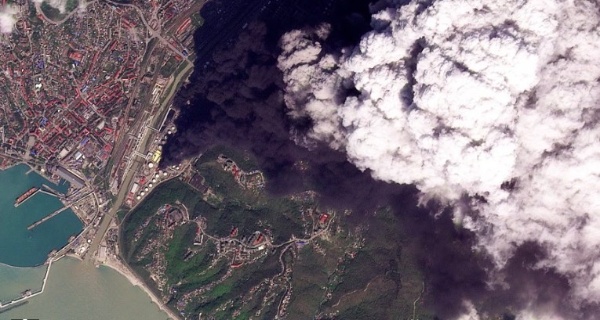
While the human toll of the invasion of Ukraine remains the most devastating consequence of the conflict, a severe ecological crisis is unfolding on Russia’s Black Sea coast. Following a series of Ukrainian drone strikes on the Tuapse oil refinery between April 16 and April 28, 2026, hundreds of tons of oil have leaked into the environment, contaminating the city and the coastline.
The Tuapse refinery is a critical hub for Russian oil exports, which fund the Kremlin’s military operations. However, environmental experts warn that the resulting spill has turned the region into a “disaster zone,” exacerbated by what they describe as a negligent and delayed response from Russian authorities.
A Timeline of Negligence
Independent environmentalists, speaking to the Kyiv Independent, highlighted a catastrophic failure in damage control. Despite the initial attack occurring on April 16, a regional state of emergency was not declared until April 28—twelve days later.
- April 16: First drone strike on the refinery. Experts argue containment efforts should have begun immediately.
- April 16–28: Oil continued to leak massively through subsequent strikes. No significant repairs to the facility’s protective dikes were reported.
- April 28: A regional emergency is finally declared. Public health advisories and limited evacuation orders are issued nearly two weeks after the initial leak.
Public Health and Ecological Risks
The spill in Tuapse is notably more dangerous to human health than previous offshore incidents, such as the sinking of “shadow fleet” tankers in late 2024. Because the refinery is located within a populated urban area, the pollution has affected the air and soil, not just the water.
- Air Quality: Toxic substances and fine particles released by the fire and evaporation pose long-term risks. Vladimir Slivyak of Ecodefense noted that the government’s recommendation to wear medical masks was “insufficient,” as only specialized respirators can filter cancer-causing toxins.
- Wildlife Impact: Eugene Simonov of the UWEC Working Group warned that the Tuapse River estuary is severely damaged. Migrating birds and local dolphin populations—already suffering high mortality rates this spring—are expected to face devastating impacts.
“Invisibilizing” the Catastrophe
Experts pointed out that the disaster was largely preventable. Standard refinery safety protocols require airtight dikes to contain spills. Analysts suggest that even if the infrastructure was damaged in the first strike, authorities could have used bulldozers to seal leaks within hours.
Instead, the Russian government followed a familiar pattern of crisis management:
- Denial: Initial ignoring of the environmental breach.
- Minimization: Downplaying the severity even as black smoke and oil slicks became undeniable.
- Inadequate Action: Providing late and insufficient safety instructions to “thousands” of exposed residents.
As the Black Sea ecosystem struggles to absorb this latest surge of pollutants, the Tuapse disaster stands as a stark example of the “ecological war” accompanying the kinetic conflict—a cost that local populations and the environment will be paying for decades to come.