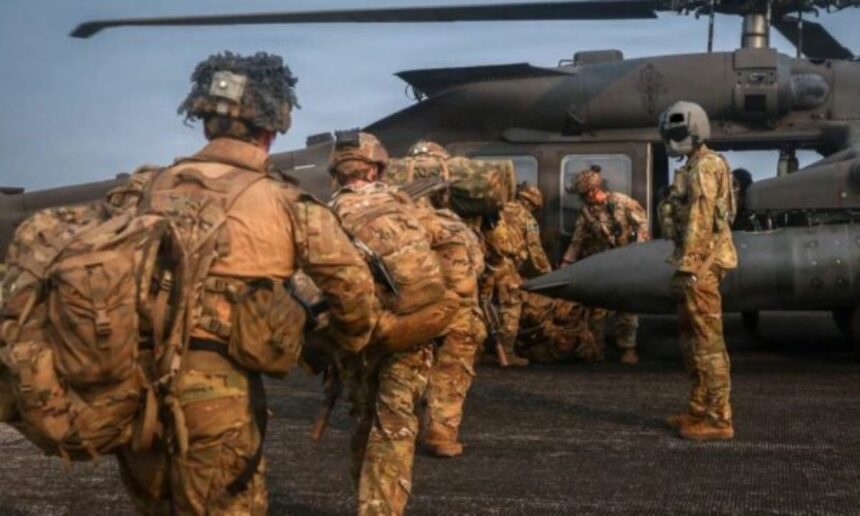
Lithuania has officially expressed its readiness to host the 5,000 U.S. troops that President Donald Trump has ordered to be withdrawn from Germany. The announcement marks a significant shift in the military landscape of NATO’s Eastern Flank and highlights growing diplomatic tensions between Washington and Berlin.
Lithuania currently hosts over 1,000 U.S. personnel, but the Lithuanian President confirmed today that the Baltic nation is prepared to expand its military infrastructure to accommodate a much larger permanent presence.
The Origin of the Withdrawal
The White House’s decision to pull approximately 15% of the American forces stationed in Germany—roughly 5,000 out of 36,000 personnel—follows a public and bitter dispute between President Trump and German Chancellor Friedrich Merz.
The fallout was triggered by Merz’s critical comments regarding U.S. foreign policy. The Chancellor had suggested that “the Americans clearly have no strategy” for Iran and claimed that Tehran was “humiliating” the United States on the global stage.
President Trump responded sharply to the Chancellor’s remarks:
“He thinks it’s okay for Iran to have a nuclear weapon. He doesn’t know what he’s talking about,” Trump stated, before moving to review the U.S. military footprint in Germany.
Timeline of the Move
Pentagon spokesperson Sean Parnell provided a timeline for the redeployment, stating that the Department of Defense anticipates the withdrawal to be completed within the next six to twelve months.
According to official data from late 2025, there are over 36,000 U.S. troops stationed in Germany. The removal of 5,000 soldiers represents a significant strategic downgrade for Germany, which has long served as the primary hub for U.S. military operations in Europe.
Lithuania’s Strategic Play
By volunteering to host the displaced troops, Lithuania aims to bolster its own national security against potential regional threats. The move is being welcomed by proponents of a “forward-leaning” NATO presence in Eastern Europe, though it is likely to be viewed as a provocation by Moscow.
For the Trump administration, shifting troops from Germany to Lithuania serves two purposes:
- Punitive Diplomacy: Directly penalizing the Merz administration for its rhetorical defiance.
- Strategic Rebalancing: Moving assets closer to the “front line” of NATO’s Eastern border, satisfying long-standing requests from Baltic allies.
Regional Impact
The decision has sent shockwaves through the NATO alliance. While Vilnius celebrates a potential security windfall, Berlin faces internal pressure over the economic and security consequences of the American drawdown. Analysts suggest that this redeployment could signal a broader trend of U.S. military assets migrating from Western to Eastern Europe under the current administration’s “America First” realignment.