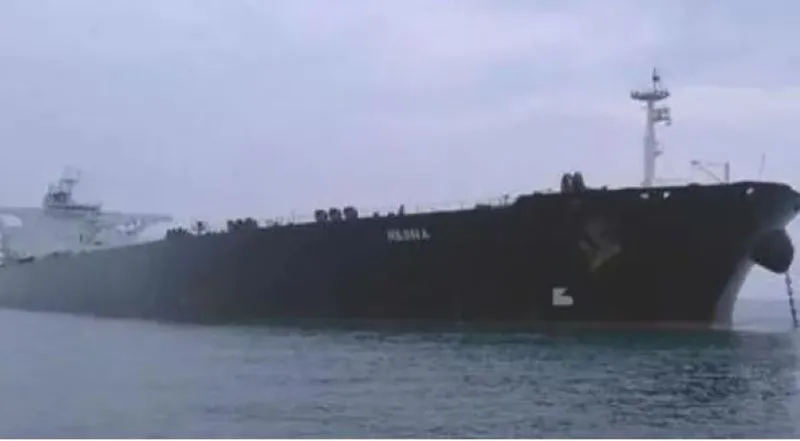
The Middle East has entered a period of heightened volatility following two major military actions involving U.S. and Israeli forces. On Wednesday evening, May 6, 2026, the U.S. military confirmed it had disabled an Iranian-flagged tanker in the Gulf of Oman, while Israel launched a high-profile airstrike in the heart of Lebanon’s capital.
U.S. Enforces “Project Liberty” Blockade
The U.S. military announced that its forces intercepted and neutralized an Iranian tanker attempting to bypass the ongoing blockade of Iranian ports. This action is part of the broader “Project Liberty”—a strategic initiative previously detailed by President Donald Trump aimed at controlling maritime traffic through the Strait of Hormuz.
- The Incident: U.S. forces fired upon and disabled the vessel’s propulsion or steering systems after it reportedly ignored warnings to change course.
- The Ultimatum: In a social media statement, President Trump warned that military strikes against Iranian assets would resume in full if a comprehensive deal is not reached.
- Diplomatic Status: An Iranian Foreign Ministry spokesperson confirmed to the BBC that a U.S. proposal to end the hostilities is “still under review,” despite earlier reports from U.S. officials suggesting an agreement was imminent.
Israel Targets Hezbollah Leadership in Beirut
Simultaneously, Israeli Prime Minister Benjamin Netanyahu confirmed that the Israel Defense Forces (IDF) have initiated targeted airstrikes in Beirut.
- The Target: The strike specifically targeted a high-ranking Hezbollah commander located in a densely populated area of the Lebanese capital.
- Netanyahu’s Stance: The Prime Minister framed the strike as a necessary preemptive measure against Hezbollah’s operational capabilities, though the outcome regarding the specific target has not yet been fully verified by independent sources.
Regional Analysis: A Fragile Peace Process
The dual military actions highlight a “pressure-cooker” strategy employed by Washington and Tel Aviv. While the U.S. is using maritime blockades and economic strangulation to force Tehran to the negotiating table, Israel is actively degrading the leadership of Iran-backed proxies like Hezbollah.
Despite the kinetic strikes, diplomatic channels appear to remain open. Reports citing unnamed officials indicate that a framework for a ceasefire or a wider regional agreement is “close,” though the renewed strikes in Beirut and the Gulf of Oman suggest that the “trial by fire” phase of these negotiations is far from over.