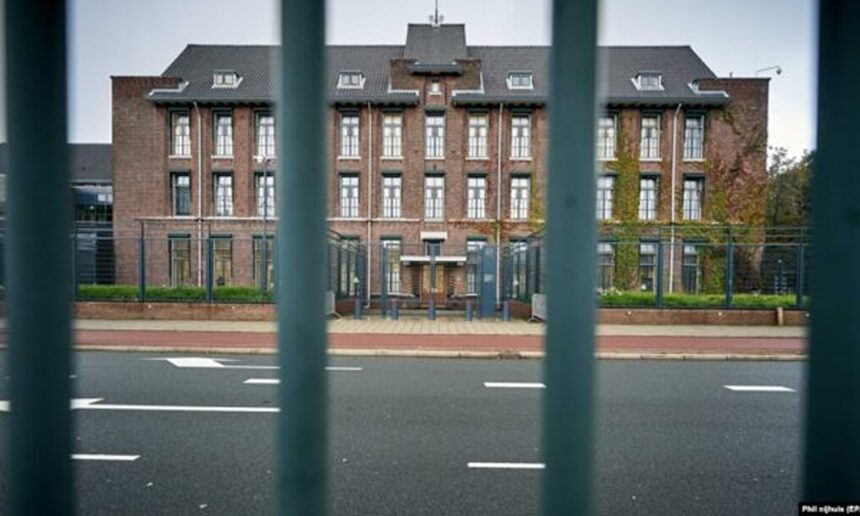
The preliminary report by British experts regarding the functioning of the Kosovo Specialist Chambers is not expected to have a direct legal impact on the court’s decisions, but it may carry political, institutional, and public significance in shaping perceptions of the judicial proceedings against former KLA leaders.
The report, presented by Naim Qelaj, raises concerns over several key issues, including the prolonged duration of pre-trial detention, the lack of realistic opportunities for early release, and restrictions on family and professional communication between defendants and their defence teams.
The Ombudsperson Institution considers the report an important contribution toward ensuring full respect for international standards of due process and fair trial guarantees. According to the institution, the findings may serve as a useful basis for further reflection and constructive dialogue among relevant stakeholders aimed at improving procedural safeguards and strengthening public confidence in justice.
Meanwhile, the spokesperson for the Kosovo Specialist Chambers, Angela Griep, stated that the report will have no effect on the court’s work or decision-making process, emphasizing that the Specialist Chambers operate as an independent judicial institution. She further clarified that the report does not conclude that any judicial decisions violated the human rights of defendants, nor does it determine that the court’s jurisprudence conflicts with the case law of the European Court of Human Rights or international tribunals such as the International Criminal Tribunal for the former Yugoslavia.
Researcher Nevenka Tromp argues that the report’s greatest value lies in promoting transparency and public oversight of international judicial institutions. According to her, independent organizations play an important role in monitoring, analyzing, and criticizing judicial proceedings, thereby contributing to broader public debate and the strengthening of the rule of law, even if such reports do not formally become part of criminal proceedings.
One of the major concerns highlighted by the report and critics of the process relates to the admission of a large volume of documentary evidence, including materials provided by Serbian authorities. Tromp argues that every piece of evidence should be individually explained by the prosecution with regard to its relevance to the specific criminal charges, noting that judges face serious challenges when reviewing “large quantities of documents” without detailed clarification of their significance.
The Organization of KLA War Veterans has also supported the idea of independent international monitoring of the proceedings. Its vice chairman, Gazmend Syla, stated that independent international monitoring bodies have, in other global cases, contributed to exposing politically motivated or one-sided judicial processes.
Nevertheless, from a legal standpoint, the report cannot alter verdicts or become part of the evidentiary record in the proceedings against Hashim Thaçi, Kadri Veseli, Jakup Krasniqi, and Rexhep Selimi. The court’s decisions will ultimately be based solely on the evidence and arguments formally presented by the prosecution and defence during trial proceedings.
In practical terms, the report’s most significant impact may include:
- increasing public pressure for greater transparency;
- intensifying international debate over the procedural standards of the Specialist Chambers;
- strengthening defence arguments in the public sphere; and
- encouraging international institutions to more closely monitor the treatment of defendants and compliance with human rights standards.