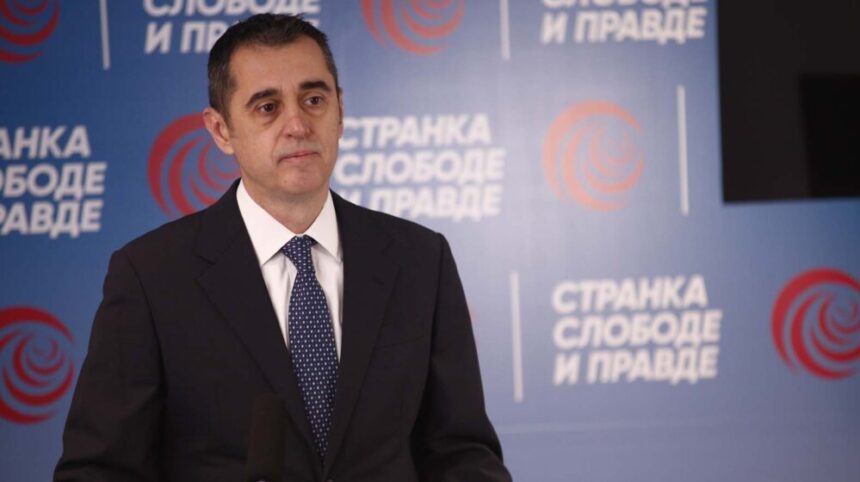
Dušan Nikezić, Vice President of the Freedom and Justice Party (SSP) and a Member of Parliament, issued a sharp warning on Monday, claiming that the Serbian government’s rapid accumulation of debt will inevitably lead the country to “bankruptcy and debt slavery.”
In an open letter addressed to Finance Minister Siniša Mali, Nikezić detailed a series of high-value financial maneuvers executed by the government over the past two weeks, which he argues represent an unsustainable fiscal trajectory.
A “Galloping” Debt Cycle
Nikezić highlighted four major financial developments from the last 14 days to illustrate his concerns:
- Loan Deferment: The Serbian government postponed the repayment of a $2 billion loan from the United Arab Emirates.
- Bond Issuance: The state borrowed an additional €3 billion through the issuance of new government bonds.
- Chinese Infrastructure Loans: A deal was struck with China for a €1.3 billion loan to fund the “Vožd Karađorđe” highway project.
- New Legislative Requests: The government submitted ten new laws to the National Assembly, which would authorize borrowing for more than €1 billion in additional funds.
Accusations of Mismanagement
The SSP official alleged that this excessive borrowing is being used to mask structural failures in the national economy rather than to foster genuine growth.
“You are using excessive borrowing to cover a massive hole in the budget, finance new corrupt deals, and refinance existing obligations under less favorable terms,” Nikezić stated in his written release.
Call for Immediate Halt
Nikezić urged the Ministry of Finance to cease the current borrowing spree, labeling it a “galloping pace” that threatens the long-term sovereignty of the state. He warned that refinancing old debts with higher interest rates while simultaneously taking on new multi-billion dollar projects is creating a “debt trap” that future generations will struggle to escape.
As of Monday evening, Finance Minister Siniša Mali and the Ministry of Finance have not issued a formal response to Nikezić’s open letter.