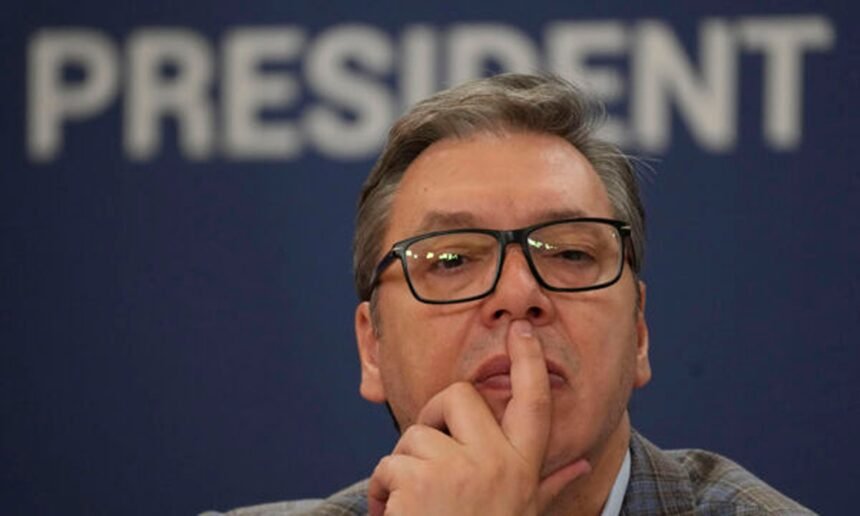
Serbian President Aleksandar Vučić has published a high-profile op-ed addressed to the citizens of Montenegro, marking the 20th anniversary of the country’s independence from the former state union with Serbia.
The text, titled “A Historical Address to the Citizens of Montenegro: Sorry for Loving You More Than You Loved Us,” was published on May 15, 2026, via the Podgorica-based portal Borba. The article serves as a direct rebuttal to the diplomatic backlash triggered by Vučić’s earlier refusal to attend independence celebrations in Podgorica.
“An Unequal Affection”
The centerpiece of Vučić’s address is a narrative of unrequited fraternal solidarity. He argues that while Serbia consistently viewed Montenegrins as “brothers and sisters” and wished to remain in a common state, the political leadership in Podgorica sought distance at any cost.
“Your rights, your decisions. You did not bother us; we perceived you as sisters and brothers… I admit, we are guilty, and we are sorry for loving you more than you loved us,” Vučić wrote.
Strategic Grievances: Kosovo and NATO
While maintaining that Serbia respects Montenegro’s territorial integrity and sovereignty, Vučić used the op-ed to highlight what he views as historical betrayals by Podgorica:
- The Recognition of Kosovo: He accused Montenegro of violating the UN Charter by recognizing Kosovo’s independence in 2008, just two years after leaving the union with Serbia.
- NATO Integration: He noted that Serbia accepted Montenegro’s entry into NATO without interference, despite opposing the alliance’s expansion in the region.
Demands for the Serbian Minority
A significant portion of the “Historical Address” is dedicated to the status of the Serbian population within Montenegro. Vučić called on the current Montenegrin government to show greater institutional respect for the one-third of its population that identifies as Serbian. Specifically, he emphasized:
- Language Rights: The official and protected status of the Serbian language.
- National Symbols: The right of Serbs to display and honor their national identity without fear of discrimination.
Allegations of Political Interference
Vučić reversed accusations of Serbian meddling, claiming instead that Montenegro has acted as a staging ground for political attacks against Belgrade. He alleged that Montenegrin media has focused more on Serbian internal scandals than on the “crimes of Europe’s two largest criminal organizations—the Kavač and Škaljari clans”—which originated in Montenegro. Furthermore, he claimed Podgorica provided a “political-media platform for conducting a ‘color revolution’ in Serbia.”
Context of the Dispute
The timing of the op-ed is critical. Montenegro is preparing for a landmark celebration on May 21, 2026, marking two decades since the 2006 referendum.
- Vučić’s Stance: He previously stated that attending the “glamorous celebration of secession” would be “spitting in the face of his own people.”
- Podgorica’s Reaction: Pro-independence parties, led by the Democratic Party of Socialists (DPS), have condemned the op-ed as a nationalist provocation, while the current ruling coalition in Podgorica has largely remained silent, a move critics call “ideological alignment with Belgrade.”
The address underscores the deeply polarized nature of the “Serbian-Montenegrin” relationship, which remains defined by shared history, conflicting geopolitical paths, and a sensitive struggle over national identity.