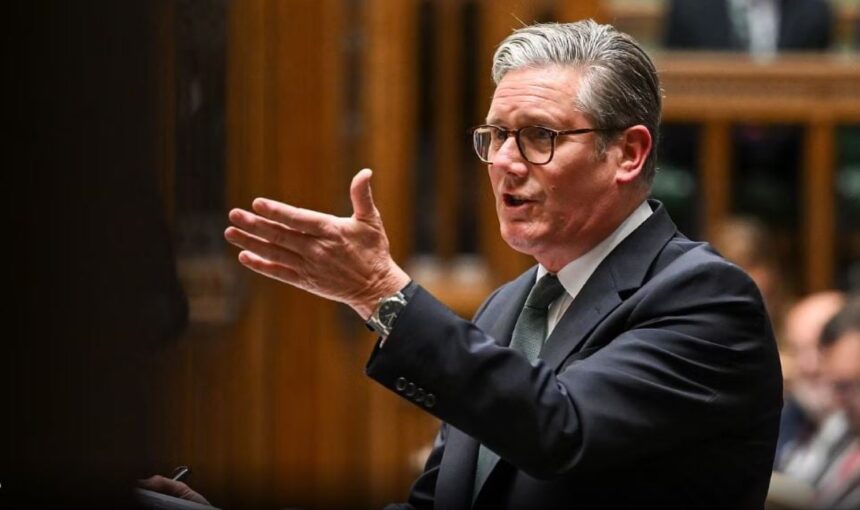
As the United Kingdom approaches the 10th anniversary of the Brexit referendum next month, Prime Minister Sir Keir Starmer is attempting a high-stakes political pivot to place Britain back “at the heart of Europe.” However, early reactions from Brussels and policy experts suggest that Starmer’s ambitions are colliding with a lack of concrete proposals.
Following significant losses in last week’s local elections, Starmer delivered a defiant speech this morning, framing a closer relationship with the European Union as the lifeline for both his political future and the British economy.
The “Reset” Speech
Starmer pledged to use the upcoming EU-UK Summit this summer as a platform to rebuild shattered ties. He outlined a vision where Labor’s governance would be defined by a restored European partnership.
“This Labor government will be defined by rebuilding our relationship with Europe, putting Britain at the heart of Europe so that we are stronger in economy, stronger in trade, and stronger in defense,” Starmer declared.
Critical Reception: “A Damp Squib”
Despite the soaring rhetoric, critics argue the Prime Minister is offering style over substance. Jill Rutter, a former senior civil servant and researcher at the UK in a Changing Europe think tank, described the speech to the BBC as “a damp squib.” She noted a distinct absence of “a single new proposal” that would actually shift the needle in Brussels.
The View from Brussels: A Tale of Two Sectors
Reaction across the English Channel remains deeply divided, according to BBC reporting. The EU’s willingness to engage depends heavily on the specific policy area:
1. Defense and Security: The Open Door
In the realm of security, Europe is eager for British cooperation. Facing a volatile geopolitical landscape, Brussels views the UK as an indispensable ally. Key concerns driving this openness include:
- The Iran Conflict: The regional war involving Iran, Israel, and the U.S. has made intelligence sharing vital.
- Russia-Ukraine Crisis: The ongoing threat from Moscow remains a primary bonding agent for EU-UK security ties.
- The Trump Factor: Worsening relations with the U.S. under Donald Trump have forced European capitals to look toward London as a stable NATO partner.
2. Trade and Economy: The Cold Shoulder
While defense is a point of unity, the economic reset is far more complicated. EU officials remain wary of “cherry-picking”—Starmer’s desire to gain the benefits of the Single Market without accepting the associated obligations, such as the free movement of people.
Summary of the EU-UK Dynamic
| Policy Area | EU Sentiment | Status |
| Defense | Highly Positive | UK seen as key partner against Russia and Iran. |
| Trade | Skeptical | No movement without concrete, rule-aligned proposals. |
| Political | Cautious | Brussels is waiting for Starmer to move past rhetoric. |
As the 10th anniversary of Brexit looms, Starmer finds himself in a difficult position: his domestic audience demands economic results that only a closer EU tie can provide, but the EU requires a level of commitment that Starmer has yet to formally put on the table.