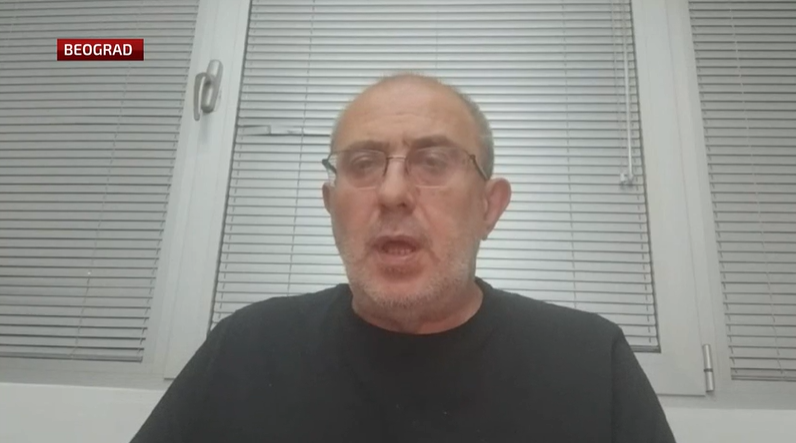
In a sharp critique of the current political landscape, Filip Švarm, Editor-in-Chief of the weekly magazine Vreme, stated on May 12, 2026, that Serbian President Aleksandar Vučić has fully returned to his “Radical Party roots.” Speaking on N1, Švarm analyzed the government’s controversial decision to fund the “Red Berets” (JSO) veterans’ association, describing it as an obscure and “revolting” attempt to solidify a hardcore voter base.
Švarm argued that Vučić, unable to expand his popularity among the general public, is now mimicking the aggressive campaign tactics used by his political mentor, Vojislav Šešelj, during the 1990s.
The “Symmetry” Between SNS and the Red Berets
A central theme of Švarm’s analysis was the visible presence of former JSO members at Serbian Progressive Party (SNS) rallies.
- Symbols of Fear: Švarm noted that the Red Berets represent the “heart of darkness” of the 1990s wars. Their presence is intended to evoke fear in the public while motivating the most radical segment of the SNS electorate.
- Budgetary Support: Reports from early May 2026 revealed that the Serbian government is using state budget funds to finance the “Red Berets” veterans’ association. Švarm called this “hypocrisy,” noting the contradiction of officials laying wreaths for the assassinated Prime Minister Zoran Đinđić while simultaneously funding the unit responsible for his murder.
- Public Presence: Veterans of the unit were reportedly seen patrolling near the anniversary of Đinđić’s assassination, a move Švarm views as a deliberate attempt to signal that the state views the late Prime Minister as a “traitor.”
Revisionism and the 1998 Parallel
Švarm compared the current atmosphere to 1998, a period of intense state propaganda and aggression. He claimed Vučić is actively working on a “revision of the 90s,” attempting to frame himself as a martyr while painting the judiciary, police, and students as “enemies of the state.”
“Vučić is Šešelj’s best student. When you look at his campaign, it looks as if Šešelj is leading it—full of insults, intimidation, ‘beating empty straw,’ and aggressive hate speech,” Švarm remarked.
Context: The 2026 Domestic Crisis
The editor’s comments come amid a broader wave of civil unrest and state-sponsored hostility:
- Student Protests: The “Students Win” movement has gained significant momentum, leading to a “branding war” where the government has been accused of vandalizing the city with hate speech to counter student slogans.
- Hate Graffiti: Masked groups have recently targeted Belgrade’s facades with messages calling students “Ustashe” and labeling academic figures as “murderers.”
- Political Stalemate: Analysts suggest the government has shifted into a purely “reactive” mode, using paramilitary symbols because it lacks new proactive ideas to engage the citizenry.
The Role of the Red Berets Today
| Function | Objective |
| At Rallies | Acting as “muscle” and symbols of nationalist strength for SNS. |
| Funding | Direct state support through the Ministry of Labor/Veterans. |
| Narrative | Reinforcing the idea that 1990s-era “patriotism” is the state’s true core. |
| Psychology | Utilizing the public’s memory of 90s-era violence to discourage dissent. |