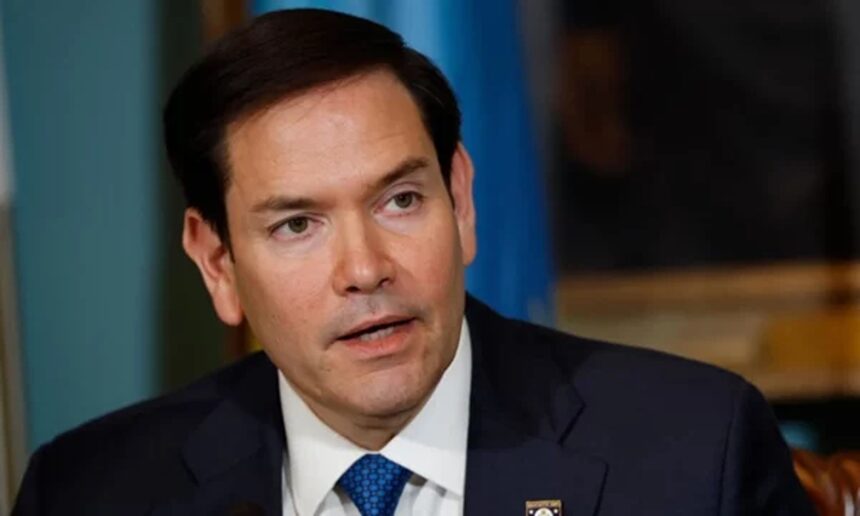
U.S. Secretary of State Marco Rubio held high-level discussions on Monday with his counterparts from Australia and the United Kingdom to address the escalating maritime crisis in the Strait of Hormuz and the ongoing conflict with Iran.
According to separate statements released by the State Department, Rubio spoke with Australian Foreign Minister Penny Wong and British Foreign Secretary Yvette Cooper. The focus of the talks remained centered on “Iran and the ongoing efforts to restore freedom of navigation in the Strait of Hormuz.”
The Strategic Importance of the Strait of Hormuz
The conflict has effectively paralyzed one of the world’s most vital maritime arteries. Historically, the Strait of Hormuz served as the primary transit point for approximately 20% of the global supply of oil and liquefied natural gas (LNG).
Currently, the situation on the ground remains critical:
- Iranian Blockade: Tehran has reportedly blocked nearly all maritime traffic through the strait, permitting only its own vessels to pass.
- U.S. Counter-Blockade: In response, President Donald Trump has implemented a separate blockade targeting all major Iranian ports.
- Market Impact: The disruption is being cited as the largest single shock to the energy market in modern history.
A Fragile Ceasefire
The geopolitical tension dates back to February 28, 2026, when a joint U.S.-Israeli military operation targeted Iran. While a ceasefire was brokered over a month ago, its stability is now in question. On Monday, President Trump characterized the agreement as being on “life support,” expressing frustration that Western allies have not provided sufficient support to the U.S. mission.
Trilateral Coordination
The discussions between Rubio, Wong, and Cooper signal a push for a more unified front. The U.S., Australia, and the UK have already coordinated a series of sanctions against Iranian individuals and financial networks, both prior to and during the current hostilities.
As energy prices fluctuate globally, the “AUKUS” partners (Australia, UK, and US) are seeking a diplomatic and strategic breakthrough to reopen the waterway and stabilize international shipping lanes.