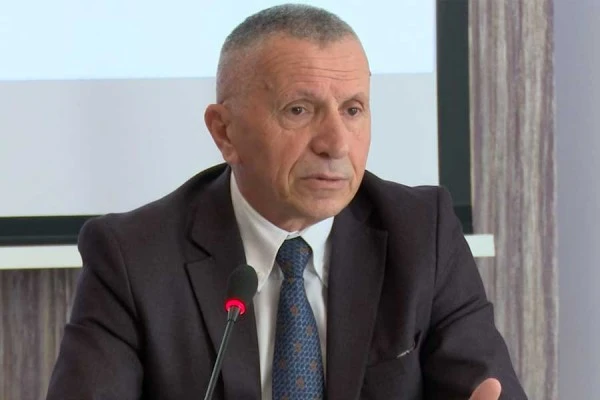
The Serbian Parliament has voted against a proposal to establish a special commission to investigate the suspicious deaths of 135 ethnic Albanian soldiers within the Yugoslav People’s Army (APJ) during the 1980s.
The motion, introduced by the sole ethnic Albanian Member of Parliament, Shaip Kamberi, failed to gain support on Tuesday. The voting results revealed a significant lack of participation:
- 7 votes in favor
- 4 votes against
- 164 deputies chose not to participate in the vote.
The “Suicide” Narrative vs. Ethnic Motives
In a passionate address to the assembly, Kamberi argued that for decades, the deaths of these young men have been categorized by state authorities as “suicides,” “accidents,” or “isolated incidents.” However, families of the victims and the Albanian community have long suspected ethnically and politically motivated killings.
“State authorities in Serbia have never officially recognized that Albanians were killed for ethnic motives while serving in the APJ,” Kamberi stated. “The lack of independent investigations and transparency only added to the suspicion that these were politically motivated murders.”
Legacy of the 1981 Demonstrations
Kamberi noted that discrimination against Albanians within the federal army intensified sharply after the 1981 demonstrations in Kosovo. During this period, ethnic Albanians were often viewed as “unreliable” or “separatist threats” to the Yugoslav state.
He highlighted that the trauma of these unsolved deaths remains a primary reason why young Albanians today remain deeply skeptical of mandatory military service.
The Call for Transparency
The proposal sought to create a body composed of:
- Members of the Serbian Parliament.
- Human rights organizations (such as the Humanitarian Law Center).
- Representatives of the Albanian community.
Kamberi emphasized that military archives from the Yugoslav era remain closed, preventing any meaningful closure for the families. “In Serbia, this topic is silenced, undocumented, and absent from official narratives,” he concluded, citing a persistent institutional discrimination that refuses to confront the dark chapters of the 1980s.
Despite the rejection, Kamberi’s initiative has reignited a sensitive debate regarding transitional justice and the treatment of ethnic minorities in the former Socialist Federal Republic of Yugoslavia (SFRJ).