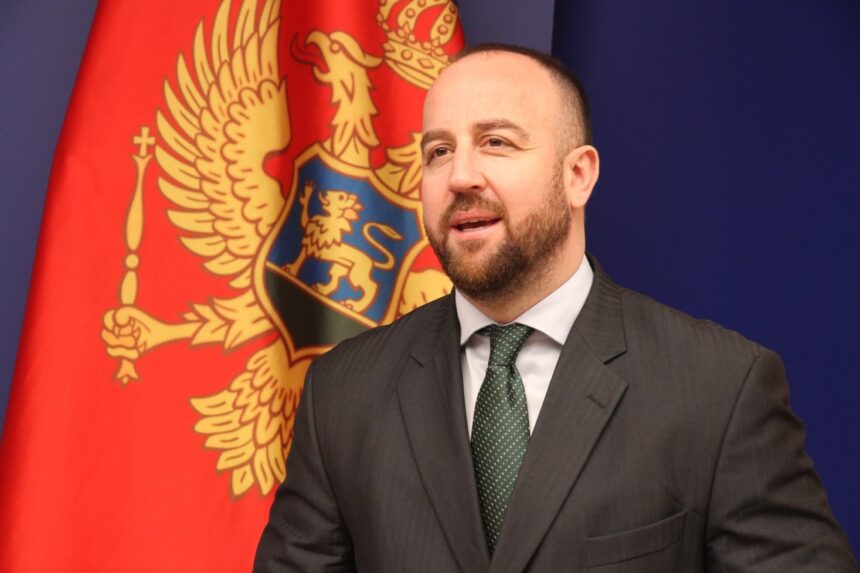
Andrija Nikolić, the head of the Democratic Party of Socialists (DPS) parliamentary group, has issued a sharp rebuke directed at Montenegro’s top leadership for their failure to respond to recent statements made by Serbian President Aleksandar Vučić.
Nikolić’s statement comes just days before Montenegro celebrates the 20th anniversary of its independence (May 21, 2006–2026), a milestone that has recently become a flashpoint for regional diplomatic tension.
“Montenegro is Not a ‘Seceded Part'”
Nikolić reacted to President Vučić’s refusal to attend the independence celebrations in Podgorica, where the Serbian leader referred to the event as a “glamorous celebration of secession from my Serbia.”
“It is sad to watch the President of Serbia, who cannot accept the historical and democratic fact that Montenegro is not anyone’s ‘seceded part,’ but a state with a thousand-year identity and the right to independently decide its fate,” Nikolić stated.
He criticized Belgrade for continuing to push “revisionist historical constructions” and lamented that the current Serbian government views the 2006 referendum as a mistake allowed by the leadership of that era.
Criticism of Milatović, Spajić, and Mandić
The core of Nikolić’s grievance was not aimed at Belgrade, but at the “silence” of Montenegro’s highest officials. He specifically named:
- Jakov Milatović (President of Montenegro)
- Milojko Spajić (Prime Minister)
- Andrija Mandić (President of the Parliament)
Nikolić argued that their lack of response suggests an “ideological closeness” to Vučić that compromises their duty to protect the dignity of the Montenegrin state.
“While the President of Serbia disputes the meaning and significance of May 21… citizens rightly expect those performing the highest state functions to clearly and unequivocally stand in defense of the dignity of their own state and its greatest modern holiday,” Nikolić added.
The Diplomatic Context
The exchange highlights a deep internal and external divide as the 20th-anniversary approaches:
- Beograd’s View: President Vučić has characterized the celebration as an affront to Serbian national interests and a reminder of a painful historical split.
- Podgorica’s View (Opposition): Pro-European and pro-independence parties like DPS view the silence of the current government as a sign of weakness or alignment with the “Serbian World” political project.
- The Government’s Stance: While the Ministry of Foreign Affairs (MVP) recently stated that Montenegro celebrates “freedom, not separation,” Nikolić insists that the heads of state must personally and forcefully reject Vučić’s rhetoric.
Conclusion
Nikolić concluded his statement with a note of resilience, asserting that Montenegro regained its statehood “democratically, peacefully, and in a European manner” and that it would survive the current administration’s “nostalgia” for the former state union.