The European Commission has officially finalized a landmark Memorandum of Understanding (MoU) with Ukraine, establishing a massive Macro-Financial Assistance (MFA) framework that clears the path for an immediate €3.2 billion disbursement scheduled for mid-June 2026.
The funds will be completely unlocked the moment the document is formally ratified by Ukraine’s parliament, the Verkhovna Rada. This multi-billion-euro injection serves as the opening tranche of a newly greenlit, overarching €90 billion EU financing scheme structurally engineered to keep the Ukrainian state financially liquid and operationally functional throughout the 2026 and 2027 fiscal years as it continues to battle the Russian invasion.
Breaking Down the €90 Billion Biennial Framework
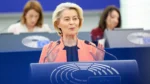
European Commissioner for Economy Valdis Dombrovskis confirmed the morning signing to reporters in Brussels, noting that the broader, total €90 billion credit facility will be formally signed into law within the coming days.
The structural blueprint of the package splits the funding precisely down the middle over a 24-month horizon:
   [EU-UKRAINE €90 BILLION FINANCING LIFECYCLE]
   • Fiscal Year 2026 Allocation: €45 Billion
   • Fiscal Year 2027 Allocation: €45 Billion
For the immediate 2026 funding cycle, the European Union has implemented a highly specific, dual-track allocation strategy tailored to meet both frontline combat demands and domestic civilian survival:
- Military Expenditures (€28.3 Billion): Direct structural funding earmarked strictly for the procurement of ammunition, advanced air-defense systems, logistics, and frontline hardware.
- General Budgetary Support (€16.7 Billion): Critical liquidity divided evenly into two distinct internal mechanisms:
- Macro-Financial Assistance (MFA): Direct cash infusions to maintain civil servant salaries, pension payouts, and basic state functionality.
- The Ukraine Facility: A specialized structural fund explicitly dedicated to localized infrastructure recovery, wartime reconstruction, and the systemic modernization of public institutions.
Strict Fiscal Conditionalities and IMF Synchronization
The European Union emphasized that this emergency capital is explicitly not a blank check. To continuously receive the staggered monthly payouts, Kyiv must strictly adhere to a rigid matrix of domestic and economic benchmarks.
Commissioner Dombrovskis outlined that the MFA funding is strictly tied to aggressive domestic reforms. The European Commission is requiring Ukraine to maintain an intense focus on structural fiscal stabilization, primarily through the heightened mobilization of domestic revenues, sweeping audits to maximize the efficiency of public expenditures, and the complete modernization of public financial management systems to stamp out institutional corruption.
“We also coordinated in lockstep with the International Monetary Fund (IMF) to guarantee that our fiscal conditionalities are structurally consistent,” Dombrovskis highlighted during his press briefing. “Where necessary, our criteria act as complementary or additional layers reinforcing the IMF’s existing stabilization program.”
The stabilization package arrives at a critical juncture for Kyiv, offering the war-torn country a predictable, legally binding financial horizon through December 2027, completely insulating its basic economic functions from shifting political winds across individual Western capitals.