The European Union has reached a provisional agreement to implement the EU–US trade deal, paving the way for significant changes in transatlantic tariffs and trade relations.
What is the “Turnberry Agreement”?
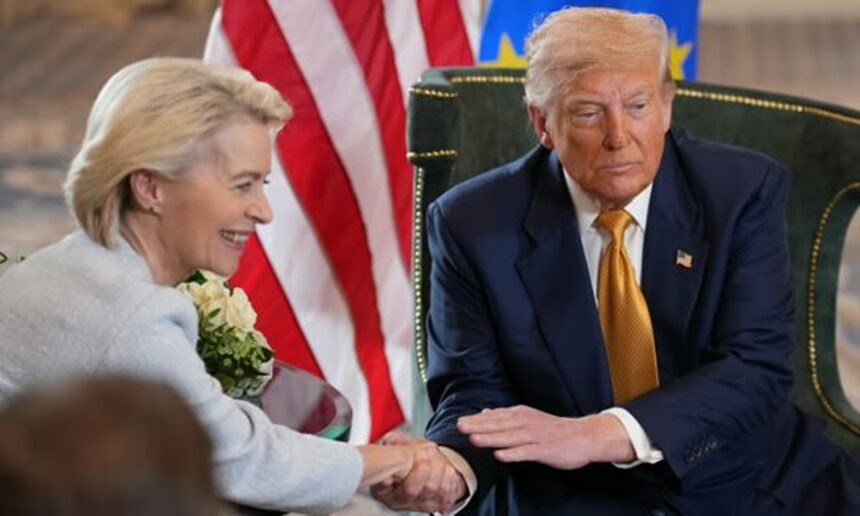
Last summer, European Commission President Ursula von der Leyen and Donald Trump reached an agreement in Turnberry, Scotland, at Trump’s golf resort.
In essence, the deal provides that the United States will impose tariffs of up to 15% on most EU products. In return, the EU will eliminate tariffs on American industrial goods and ease market access for certain U.S. agricultural and fisheries products.
What has happened since?
To implement its part of the deal, the EU must pass new legislation. EU institutions have now reached a provisional agreement on a legal act that enables this, including several new conditions proposed by the European Parliament.
Key conditions introduced by the European Parliament
Among the main elements are:
- Sunset clause: the agreement will apply until the end of 2029, with the possibility of extension
- Safeguard clause: allows suspension if higher tariffs on aluminium and steel continue beyond 31 December 2026
- Protection mechanism: aims to prevent serious damage from increased imports of U.S. goods
- The European Commission must publish quarterly reports on EU–US trade trends
What happens next?
The agreement still requires final approval from:
- The European Parliament
- The Council of the EU (representing all 27 member states)
A parliamentary vote is expected in mid-June, and officials anticipate a relatively fast approval process afterward.
Why has it taken so long?
The process has been delayed due to political tensions, including disputes over tariffs and external geopolitical pressures. The timeline was also affected by threats from the U.S. administration and legal uncertainties surrounding tariff measures.
What are the expectations?
While the European Commission views the agreement as a step toward stability and predictability in global trade, some Members of the European Parliament have criticized it as unbalanced.
According to the Commission, the implementation could reduce trade uncertainty and limit future tariff disputes between the two largest Western economies.