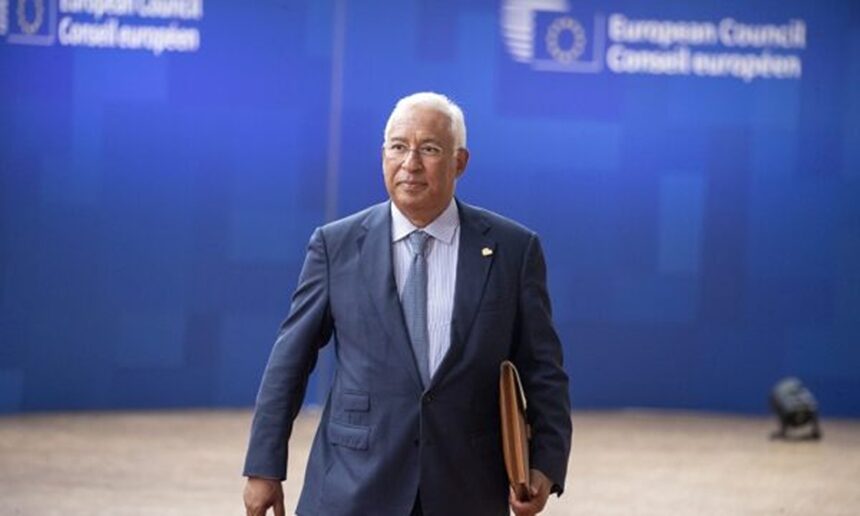
European Council President Antonio Costa issued a firm message to Kosovo’s political class during his high-stakes visit to Prishtina. Ahead of crucial elections this weekend, Costa reaffirmed EU support while emphasizing that funding and integration depend on political stability and commitments to the Serbia dialogue.
The President of the European Council, Antonio Costa, has wrapped up a rapid sequence of high-level meetings in Prishtina, issuing a stark reminder that European integration requires institutional stability and cross-party consensus.
Taking to the social media platform X (formerly Twitter) following his baseline diplomatic rounds, Costa stated that his physical presence in Prishtina was a deliberate move to “reaffirm the European Union’s continuous support for Kosovo.”
However, the tone of the visit shifted noticeably toward accountability. With Kosovo heading into highly anticipated national elections this upcoming weekend, Costa warned that the benefits of the Western alliance cannot be taken for granted.
“As Kosovo heads toward elections this weekend, my message is simple: our partnership comes with responsibilities,” Costa declared.
A Unified Message Across the Political Spectrum
In a rare move highlighting the urgency of the constitutional moment, the European Council President did not limit his consultations to the current caretaker government. Costa held separate and joint sessions with:
- The Head of State: Acting President Albulena Haxhiu.
- The Executive: Caretaker Prime Minister Albin Kurti.
- The Opposition: Leaders of Kosovo’s primary rival political factions.
Costa explicitly urged these leaders to look past domestic political rivalries and unite behind the singular goal of EU membership. “I have encouraged political leaders to place EU integration as a core priority, transcending political divisions, and to work together toward this common objective,” he noted.
The Preconditions for European Integration
The EU chief made it clear that Brussels is monitoring Kosovo’s ongoing political paralysis with growing concern. He underscored that to access lucrative funds—including the frozen tranches of the EU’s multi-billion-euro Growth Plan—the country must field an administration capable of governing.
┌────────────────────────────────────────────────────────┐
│             The EU Structural Requirements             │
├────────────────────────────────────────────────────────┤
│  1. Stable Institutions                                │
│     Build functional, post-election state machinery.   │
├────────────────────────────────────────────────────────┤
│  2. Comprehensive Reforms                              │
│     Demonstrate the capacity to execute rule-of-law    │
│     and economic benchmarks.                           │
├────────────────────────────────────────────────────────┤
│  3. Dialogue Alignment                                 │
│     Fully implement all outstanding commitments        │
│     negotiated under the Kosovo-Serbia Dialog.         │
└────────────────────────────────────────────────────────┘
“Kosovo needs strong, stable, and functional institutions, capable of implementing reforms, seizing the opportunities offered by the European Union, and fulfilling all commitments within the framework of the dialog,” Costa concluded.
The European delegation has departed Prishtina for Belgrade, where Costa is scheduled to deliver a corresponding message to Serbian President Aleksandar Vučić tomorrow, June 4.