Montenegrin border police at Tivat Airport denied entry and deported back to Belgrade on Wednesday a group of Serbian citizens, many of whom reportedly have criminal records and have for years been identified by Serbian media as individuals tasked with carrying out special assignments for the ruling Serbian Progressive Party (SNS) and Serbian President Aleksandar Vučić.
The decision to deny entry was made following a security assessment by Montenegro’s Police Directorate, which concluded that the presence of these individuals on Montenegrin territory could pose a threat to national and internal security.
The Air Serbia Embraer E195 aircraft (registration YU-ATC), which had brought the group to Montenegro earlier that morning, departed Tivat at 3:53 p.m. and returned to Belgrade with all passengers on board after several hours of detention.
According to authorities, the passengers carried banners reading “Serbia Is Winning,” along with a remote communication device and a marine radio station. They arrived in Tivat one day before the European Union–Western Balkans Summit.
Montenegrin newspaper Vijesti reported that security services assessed the group as an advance team linked to President Aleksandar Vučić’s delegation ahead of the EU–Western Balkans Summit taking place in Tivat.
A review of the passenger list indicates that several individuals have been accused or convicted of serious criminal offenses, while Serbian opposition media and activists have long described many of them as being closely connected to the SNS establishment.
Many of those denied entry have reportedly been used by the ruling party for political rallies, party office security, counter-protests, and activities aimed at suppressing political opposition. Some have also allegedly been involved in intimidating government critics at sporting events, opposition demonstrations, and student-led protests.
Among those reportedly deported was Dalibor Stanojević, known as “Boske,” a figure frequently linked by media reports to SNS power structures. Stanojević was previously accused of attacking protesters during anti-government student demonstrations.
Also aboard the charter flight was Jovan Kecman, known as “Coje,” a former leader of the “Korida” football supporters group from Novi Sad, who has been linked in media reports to violent criminal incidents.
Another individual denied entry was Aleksandar Janković, known as “Aca Hari,” whom Serbian activists have described as an enforcer connected to the ruling party. He has been accused of involvement in incidents targeting opposition activists and anti-government demonstrators.
The list of deported passengers also included individuals with backgrounds in organized supporter groups, mixed martial arts, football management, and several people facing criminal proceedings related to violent incidents during protests in Serbia.
Montenegrin authorities stated that the measures were taken as part of enhanced security preparations for the EU–Western Balkans Summit and emphasized that they would oppose any attempts to destabilize the country.
The police further announced that investigations are ongoing into the activities of criminal groups and their possible links to foreign elements allegedly seeking to undermine Montenegro’s stability and its path toward European Union membership.
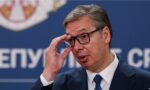
The deportation comes amid heightened tensions between Belgrade and Podgorica. Serbian President Aleksandar Vučić recently accused Montenegro of exporting organized crime networks into Serbia, allegations that Montenegro’s Foreign Ministry dismissed as politically irresponsible.

Who Will Attend the EU–Western Balkans Summit?
The EU–Western Balkans Summit, scheduled for June 5 in Tivat, will bring together leaders from all 27 European Union member states and the six Western Balkan countries.
In addition to host nation Montenegro, representatives from Kosovo, Bosnia and Herzegovina, Albania, North Macedonia, and Serbia are expected to participate.
Serbian President Aleksandar Vučić has confirmed his attendance after previously boycotting the last summit held in Brussels in December 2025.
This year’s summit carries particular significance because Montenegro remains the only Western Balkan country currently viewed as having a credible prospect of European Union membership in the foreseeable future.