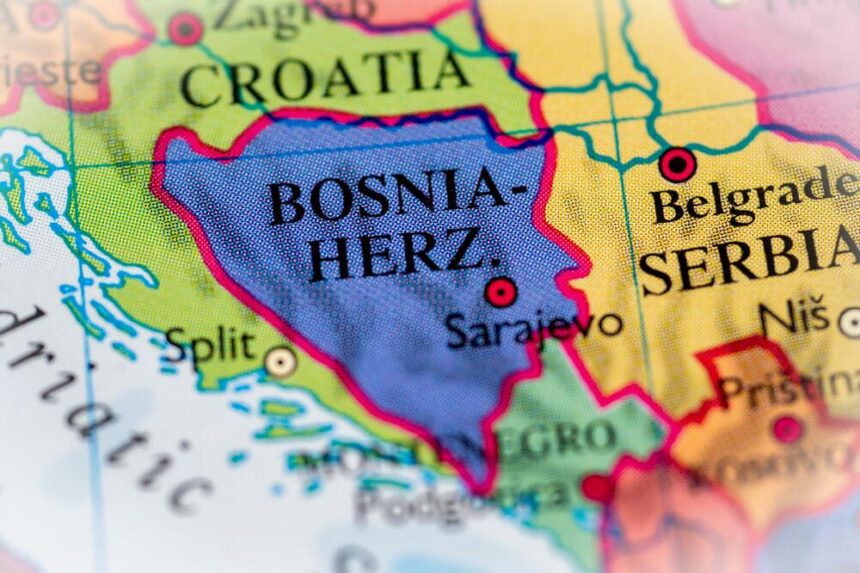
A fresh diplomatic conflict has erupted between Croatia and Bosnia and Herzegovina (BiH) as Zagreb’s ruling coalition partner, the far-right Domovinski pokret (Homeland Movement), formally demanded a constitutional overhaul to carve out a distinct Croat electoral unit within BiH.
The radical right-wing party warned that if a specialized voting zone is not established to ensure “legitimate political representation,” Croatia should push for the resurrection of Herceg-Bosna—the wartime Croat parastate that was officially dissolved under the U.S.-mediated Washington Agreement in 1994.
The bold platform has triggered severe condemnation from Sarajevo, where political leaders and legal experts view it as a direct assault on Bosnia’s territorial sovereignty and a revival of dangerous wartime partition schemes.
The Inciting Incident: What is the Homeland Movement Demanding?
The Homeland Movement—the junior coalition partner to Prime Minister Andrej Plenković’s mainstream Croatian Democratic Union (HDZ)—expects the Croatian Parliament to officially launch a legislative initiative targeting Bosnia’s electoral framework.
┌────────────────────────────────────────────────────────┐
│        HOMELAND MOVEMENT'S ULTIMATUM ON BOSNIA         │
└───────────────────────────┬────────────────────────────┘
                            │
            Does BiH create a Croat Electoral Unit?
                            │
           ┌────────────────┴────────────────┐
           ▼ YES                             ▼ NO
┌──────────────────────────────┐┌──────────────────────────────┐
│ • Guaranteed Croat Seat in   ││ • Push for "Third Entity"    │
│   the BiH Tripartite         ││ • Revive "Herceg-Bosna"     │
│   Presidency.                ││   (Dissolved in 1994).       │
└──────────────────────────────┘└──────────────────────────────┘
The nationalist party argues that the current system allows the Bosniak majority within the shared Federation entity to mathematically outvote ethnic Croats, point-blank referencing the repeated election of Željko Komšić to the Croat seat in the tripartite presidency.
Sarajevo Condemns “Agression on Sovereignty”
The reaction from Bosnia’s capital was swift and unyielding. Speaking to Radio Free Europe (RFE), Bosnian Foreign Minister Elmedin Konaković drew a firm line against foreign interference:
“We are encouraged by initial comments showing this is not the official stance of Zagreb,” Konaković stated. “If it were, we would have a massive problem and would consider it an assault on the sovereignty of BiH and our constitutional order, because such an option simply does not exist in Bosnia.”
Konaković emphasized that while Sarajevo is willing to negotiate electoral reform, it will only do so in a comprehensive “package deal” that simultaneously resolves the severe, institutionalized discrimination faced by minorities and non-constituent peoples.
Plenković’s Delicate Balancing Act in Sarajevo
Amid the escalating rhetoric, Croatian Prime Minister Andrej Plenković traveled to Sarajevo on Monday, June 8, 2026. Caught between his radical coalition partners at home and international diplomatic norms abroad, Plenković chose not to explicitly condemn the Homeland Movement’s initiative, dismissing it instead as a populist play for media attention.
“The more innovative and media-attractive your ideas are, the more visible you become,” Plenković said during a press conference. “However, we aren’t new to the topic of BiH, and even less so to the issue of the Election Law… or a series of ideas that should lead to what is colloquially called, even a virtual electoral unit.”
Nevertheless, Plenković backed the underlying sentiment of Croat grievance, asserting that the Dayton Peace Agreement of 1995 intended for each of the three constituent peoples to strictly elect their own representatives without cross-ethnic voting.
The Legal Reality: Seven Defied Human Rights Violations
While Croat nationalist parties emphasize “collective ethnic rights,” opposition figures inside Bosnia point out that the entire Dayton matrix is inherently discriminatory.
Zlatan Begić, an opposition MP in the Parliament of BiH, warned that resurrecting Herceg-Bosna relies on “wartime projects that have already been adjudicated and condemned by international war crimes tribunals.”
[The Structural Deadlock of the BiH Presidency]
• Current Constitution: Explicitly mandates 1 Bosniak, 1 Croat (from the Federation), and 1 Serb (from Republika Srpska).
• The ECHR Judgments: 7 distinct rulings from the European Court of Human Rights have declared this system unlawful.
• The Disfranchised: Jews, Roma, and citizens identifying simply as "Bosnians" are legally barred from running for the Presidency or the House of Peoples.
• The Legislative Bar: Amending this requires a two-thirds majority in the BiH Parliament, which remains permanently gridlocked.
The European Court of Human Rights (ECHR) has issued seven separate binding judgments ruling that Bosnia’s constitution actively discriminates against citizens who do not belong to the three dominant constituent tribes. Rather than creating a “third entity” or further fracturing the country along ethnic fault lines, international mediators continue to demand a transition toward a civic, democratic model where every individual voter possesses equal weight.