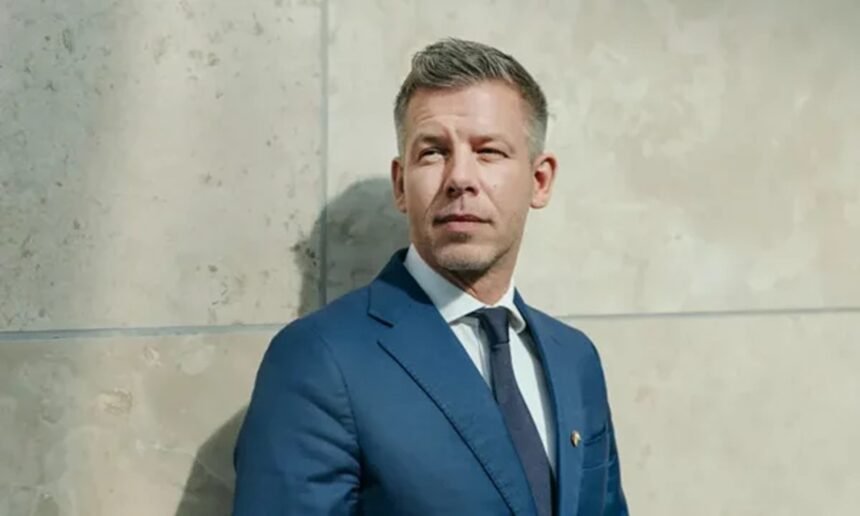
After 16 years under the leadership of Viktor Orbán, many believed democracy in Hungary had been extinguished. But Péter Magyar challenged the system from within and achieved a historic victory. In this interview, Hungary’s new prime minister speaks about bringing down the regime, confronting its legacy, and the country’s new direction.
Born in 1981, Péter Magyar was part of Orbán’s governing apparatus until two years ago. He was even married to one of Orbán’s justice ministers. He later broke away from the longtime ruler and launched a nationwide campaign.
In the April 12 election, Magyar and his Tisza Party secured a decisive victory. Hungarians rewarded his stance against corruption and arbitrary rule with a parliamentary supermajority of more than two-thirds. In this interview, Magyar says that to earn voters’ trust, politicians must meet people face-to-face, look them in the eye, and listen to them.
You began this journey two years ago as a political unknown and have now defeated Viktor Orbán, the longest-serving leader in the EU and a man widely accused of undermining democracy. Was there a moment when you thought: this could actually work?
“In fact, I never intended to enter politics. I was once a member of Orbán’s Fidesz party, but I eventually broke away from the system. In February 2024, I gave an interview to the online media outlet Partizán.
Nearly three million people watched it, which genuinely surprised me. A month later, I organized an anti-corruption and anti-clientelism protest. Fifty thousand people attended. Three weeks later, there were 200,000. That may have been the turning point.”
Yet Orbán’s allies controlled most of the media and the state apparatus…
“I was always skeptical that it was possible to defeat such a regime, especially by such a large margin. But I became truly optimistic only in the second half of 2025.”
How do you explain that, after 16 years, public sentiment suddenly turned against the system?
“There are many reasons. Hungarians are very patient people, but they love freedom. There had been too many lies, too much corruption, too much propaganda. And after all those years, we emerged as a force outside the system that genuinely wanted to win and said: we will govern honestly and transparently, and we will protect our citizens.”
Orbán won previous elections with highly polarizing campaigns against Brussels, migrants, and more recently an alleged threat from Ukraine. Why did voters stop believing these narratives?
“People eventually get used to constant propaganda and begin to see through it. Propaganda only works when it contains a grain of truth. We managed to show that Orbán’s claims had no real basis.
The end of a regime comes when people are no longer afraid of it—when they start laughing at it. That is exactly what happened in Hungary. From the very beginning, my motto was: ‘Do not be afraid!’ Even two years ago, I said that Orbán’s power looked much stronger than it actually was.”
What lessons can democrats in other countries learn from your success against authoritarian leaders?
“I don’t believe there is a universal recipe. We simply worked honestly and with enormous dedication. Politics is about people. If you want voters to trust you, you must go to them, look them in the eye, and listen to them.
During the campaign, I visited more than 700 towns and villages. In some places, I went five or six times. I spent more time on the road than at home. Others believed social media and television were enough. They are not.”
How is the defeated power structure reacting now? Orbán essentially captured the state, with loyalists throughout the system…
“Our country was a captured state. There are still many of his loyalists in the system. For example, in the Media Council. The president of the Supreme Court and the prosecutor general are also Orbán allies. So yes, we have faced resistance.
But we expected that. These people must step down. They betrayed the rule of law, democracy, and the Hungarian people. None of them spoke out when judges, journalists, artists, or ordinary citizens were insulted and smeared.
Nor when Orbán described critics of the system as ‘parasites’ who should be crushed. People did not vote for a simple change of government—they voted for a change of system.”
You have called on several powerful Orbán loyalists to resign voluntarily, including President Tamás Sulyok…
“We tried to be fair. He had an opportunity to leave with dignity. He chose not to, likely under pressure from Orbán. They are trying to obstruct systemic change, perhaps to prevent the exposure of crimes involving billions in fraud and embezzlement.
It is ironic to see those who weakened the rule of law for 16 years now claiming to defend it. We have an unprecedented two-thirds majority and can amend the constitution. The people voted for a complete break with the past. We need new people, new rules, and the restoration of checks and balances.”
Is there a risk that, with such a large majority, you could be tempted toward authoritarian rule yourself?
“I have proposed limiting the prime minister’s term to eight years, and that would apply to me as well. We will take additional steps to prevent the abuses of power seen over the last 16 years.”
Do you fear continued polarization in society?
“We want to reunite the nation. This was not a battle of Hungarians against Hungarians; it was the Orbán system against the people. We must confront the past, but those responsible must first apologize and accept accountability. Orbán has done neither.
He does not attend parliament. He does not want to face the people. Once the public campaign of hatred and propaganda ends, it will be easier to reunite society. I hope that when we commemorate the 70th anniversary of the 1956 Revolution in October, we will do so in a more united country.”
Orbán has often been criticized for his pro-Russian policies. Will Hungary support assistance to Kyiv?
“We want good relations with all neighboring countries. There are Hungarian minorities in every neighboring state. More than 100,000 ethnic Hungarians live in Ukraine alone. For example, they are not permitted to use their language in public administration or kindergartens.
We are negotiating these issues. If minority rights are guaranteed—and I am optimistic—I will meet with Volodymyr Zelenskyy and open a new chapter with Ukraine. However, we will not send weapons or troops.”
Will Hungary support EU sanctions packages against Russia?
“If there is consensus within the European Union, then of course we will support the sanctions. Just as Orbán ultimately did, despite his domestic rhetoric.”
Source: Der Spiegel