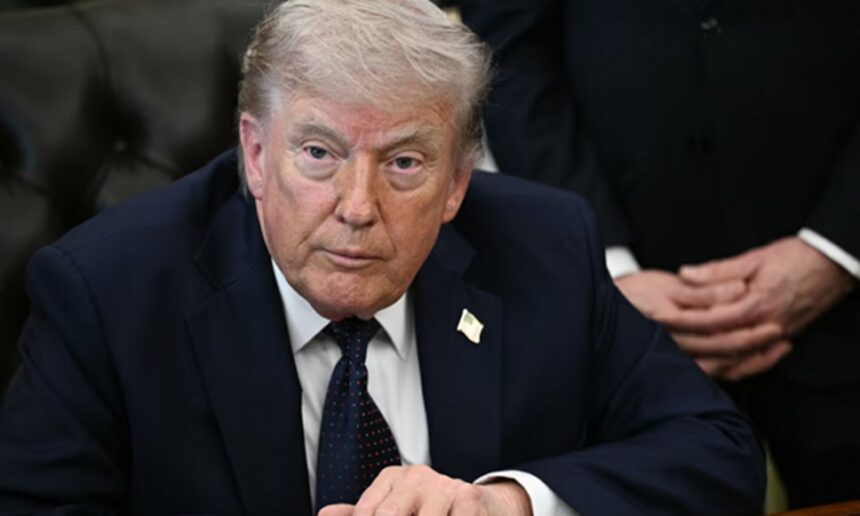
U.S. President Donald Trump and senior Iranian officials have traded aggressive new warnings of further military action today, June 10, 2026, following a major direct exchange of air strikes that has pushed the fragile regional ceasefire to the brink of collapse.
Trump declared via his Truth Social platform that Tehran has “taken too long to negotiate a deal” and “will now have to pay the price,” claiming that the majority of Iran’s Navy and Air Force “no longer exist” and describing their military as a complete mess.
The Spark: Apache Downing and Centcom Retaliation
The rapid escalation was triggered by a dramatic encounter over the strategic Strait of Hormuz, a vital maritime shipping lane that has remained effectively closed since major hostilities erupted in late February.
- The Helicopter Incident: An Iranian drone collided with a U.S. Army Apache helicopter flying at a low altitude. While Trump told Fox News that the drone struck the helicopter without detonating, it caused the aircraft to go down. The two U.S. crew members survived and were rescued by an American naval drone.
- The U.S. Response: U.S. Central Command (Centcom) launched what it termed “proportionate” retaliatory strikes on Tuesday, bombarding Iranian air defense systems, ground control stations, and radar networks near the Strait of Hormuz. The IRGC reported that the strikes targeted the cities of Jask and Sirik, as well as Qeshm Island.
- Iran’s Counter-Strike: In immediate retaliation, the Islamic Revolutionary Guard Corps (IRGC) launched targeted strikes against 21 objectives across U.S. bases in the region, specifically targeting facilities in Bahrain and Jordan. According to U.S. officials cited by Reuters, almost all incoming Iranian missiles and drones were intercepted, and no U.S. casualties were reported.
Diplomatic Deadlock and Broken Ceasefires
The volatile rhetoric marks a sharp reversal from Tuesday, when Trump optimistically told reporters that the U.S. and Iran were “in the final throes of what will be a very, very good deal.”
Iran’s Foreign Ministry has blasted Washington’s shifting posture, accusing the U.S. administration of undermining delicate diplomatic channels.
“The U.S. is damaging this diplomatic process through the contradictory messages it sends, repeated changes in positions and demands, and worst of all, through repeated violations of the ceasefire,” stated Iranian Foreign Ministry Spokesperson Esmaeil Baqai.
Timeline of the Conflict
The ongoing confrontation has evolved rapidly since the beginning of the year, transforming the security architecture of the Middle East:
- February 28, 2026: The conflict begins after massive, joint U.S. and Israeli air strikes target Iran, resulting in the killing of Iran’s Supreme Leader. Iran retaliates against Israel and Gulf nations, quickly drawing Lebanon into the war by March.
- April 2026: The U.S. and Iran agree to a temporary two-week ceasefire. While it prevented immediate all-out war, intermittent skirmishes have persisted.
- June 2026: High-stakes, tense negotiations continue behind closed doors—including recent diplomatic tracks mediated in Pakistan—but remain paralyzed by the latest direct military clashes.