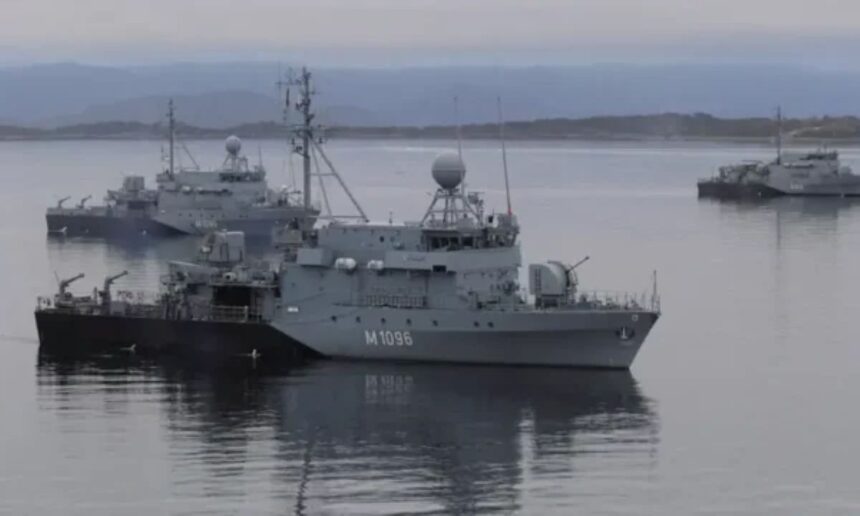
In a major shift toward a more muscular maritime defense posture, the German government is actively preparing a legislative framework for the Bundeswehr (German Armed Forces) to potentially join an international coalition tasked with protecting commercial shipping lines in the highly volatile Strait of Hormuz.
According to intelligence obtained by Der Spiegel, the German Foreign Ministry and the Ministry of Defense have already co-authored a draft mandate for the Bundestag. If triggered, this mandate can be pushed through the cabinet at a moment’s notice to authorize naval deployment.
1. The Security Calculus: Merz Weighs Global Escalation
Despite the advanced state of the legislative draft, German Chancellor Friedrich Merz has emphasized that a final deployment order has not yet been authorized.
Germany's Tactical Constraints & Mandate Status

 [ THE DRAFT MANDATE ] ──► LEGISLATIVELY ARMED
 • A ready-to-trigger framework has been mutually prepared by the Foreign and
   Defense Ministries for lightning-fast cabinet and Bundestag authorization.

 [ THE LEGAL IMPASSE ] ──► CONSTITUTIONAL CLARITY
 • Chancellor Merz noted that the precise domestic and international legal
   foundations for this out-of-area deployment must be meticulously clarified.

 [ THE DIPLOMATIC ALIGNMENT ] ──► G7 COLLABORATION
 • The operational roadmap was fiercely debated during the high-stakes G7
   Summit in Evian, France, alongside trans-Atlantic security allies.
2. The Strategic Importance of the Strait of Hormuz
The Strait of Hormuz represents the most vital and sensitive maritime transit choke point for the global energy infrastructure. Measuring just 21 miles wide at its narrowest corridor, the strait has become an active theater of geopolitical conflict amidst escalating warfare between the United States and Iran.
The Anatomy of a Global Energy Choke Point
┌────────────────────────────────────────────────────────────────────────┐
│                                                                        │
│  [ GLOBAL SEABORNE OIL ] ──────────────────────────────────────────┐   │
│  • Roughly 20-30% of the world's total petroleum liquids pass directly  │   │
│    through the strait, making it the central artery of global industry.│   │
│                                                                        │   │
│  [ THE US-IRAN COMBAT ZONE ] ──────────────────────────────────────┤   │
│  • Recent kinetic escalations have seen commercial tankers targeted by │   │
│    sea-mines, drone strikes, and illegal boarding operations.          │   │
│                                                                        │   │
│  [ THE GERMAN MANDATE ] ───────────────────────────────────────────┘   │
│  • Berlin's potential deployment signifies a departure from traditional │
│    military passivity, defending critical economic lanes directly.     │
└────────────────────────────────────────────────────────────────────────┘
3. The Geopolitical Security Grid
The preparation of this snap naval mandate indicates that Germany is increasingly willing to bear the burden of international maritime security, aligning its defense output with its G7 partners to safeguard democratic shipping lines.
| Geopolitical Actor | Strategic Stance in the Gulf Region | Operational Risks & Priorities |
| Germany | Preparing high-readiness naval assets under a pending Bundestag mandate to shield merchant vessels. | Balancing strict constitutional limits on military action with the need to protect energy supply lines. |
| United States | Actively spearheading coalition patrols and striking asymmetric launch sites. | Needs European allies to share the operational burden to prevent regional military overextension. |
| Iran | Utilizing its tactical geographic posture along the northern coast to threaten transit shipping. | Leverages control of the strait as economic warfare to counter international sanctions. |
By weaponizing administrative processes ahead of time, Berlin has ensured that if the US-Iran maritime conflict further compromises European energy supplies, the Bundeswehr can move from harbor to active escort duty in the Persian Gulf without being choked out by domestic bureaucratic delays.