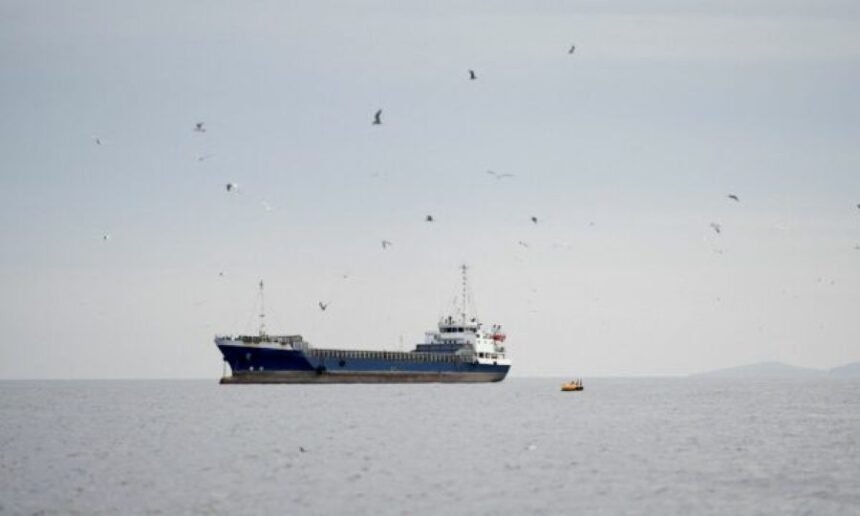
For the first time since the United States Navy enforced a total maritime blockade two months ago, commercial supertankers laden with Iranian crude oil have officially departed the Strait of Hormuz.
The monumental maritime movement, verified on June 17, 2026, serves as the first tangible sign of de-escalation following a devastating flash war that erupted in late February. The breakthrough follows a high-level, electronically signed memorandum of understanding (MoU) concluded between Washington and Tehran on June 15, clearing the way for a formal peace signing ceremony in Switzerland this Friday.
1. Satellite and Digital Intelligence Verifies the Breakthrough
According to specialized maritime tracking agency TankerTrackers.com, data feeds matched seamlessly with real-time satellite imagery to confirm the departure of the first Iranian crude exports in over 60 days. The tankers successfully navigated directly through the active U.S. naval blockade zone after loading from state-owned Iranian coastal terminals.
Initial Crude Tonnage Breaking the U.S. Naval Blockade

 [ VLCC SUPERTANKER: "DIONA" ] ──► 1.9 MILLION BARRELS
 • Fully laden with Iranian heavy crude; cleared the choke point
   and traveling under active tracking toward international buyers.

 [ VLCC SUPERTANKER: "HERO2" ] ──► 1.9 MILLION BARRELS
 • Operated by the National Iranian Tanker Company (NITC); successfully
   vetted via digital transponder signatures exiting the Gulf.

 [ THIRD UNNAMED VESSEL ]      ──► MULTI-STREAM TRANSIT
 • Confirmed by tracking analysts as the third vessel permitted
   to cross the defensive perimeter without U.S. naval interception.
Combined, the first two supertankers alone are carrying a staggering 3.8 million barrels of crude oil, signaling an immediate injection of energy supply into volatile global commodity markets.
2. The Chronology of the De-Escalation Framework
The resumption of shipping is a direct consequence of intense, back-channel diplomacy designed to resolve the war that began when joint U.S. and Israeli forces struck targets inside Iran on February 28 to dismantle Iran’s blockade of global energy lanes.
The Strategic Timeline of the June 2026 Armistice
┌────────────────────────────────────────────────────────────────────────┐
│                                                                        │
│  [ JUNE 15, 2026 ] ────────────────────────────────────────────────┐   │
│  • Washington and Tehran electronically sign a comprehensive, generalized│   │
│    Memorandum of Understanding (MoU) outlining the core terms of peace.│   │
│                                                                        │   │
│  [ JUNE 17, 2026 ] ────────────────────────────────────────────────┤   │
│  • U.S. Navy stands down its aggressive enforcement; TankerTrackers  │   │
│    records the "Diona" and "Hero2" entering international shipping lanes.│   │
│                                                                        │   │
│  [ JUNE 19, 2026 ] ────────────────────────────────────────────────┘   │
│  • Senior American and Iranian diplomats convene in Switzerland for    │
│    the official, in-person signing of the initial armistice.           │
└────────────────────────────────────────────────────────────────────────┘
The 60-Day Window: Following the formal protocol signing on June 19, both superpowers will officially trigger a strict 60-day negotiating phase to iron out secondary legal disputes, structural asset releases, and long-term security guarantees.
3. Global Market and Security Implications
The reopening of the Strait of Hormuz neutralizes the world’s most dangerous economic flashpoint. The narrow waterway is an irreplaceable transit corridor responsible for carrying nearly one-fifth of the entire planet’s daily petroleum and liquefied natural gas (LNG) supply.
| Strategic Indicator | Pre-Agreement Blockade State | Post-Agreement Resumption Impact |
| Global Energy Prices | Extreme volatility and soaring insurance premiums due to military threats in the Persian Gulf. | Immediate stabilization of Brent crude futures as millions of barrels re-enter the market. |
| Naval Posture | High-alert deployments, active electronic warfare, and threat of direct U.S.-Iran fleet engagements. | Transition to a monitored ceasefire, allowing commercial traffic to resume normal navigation patterns. |
| Iranian Economic Outflow | Total paralysis of maritime state revenue, forcing Reliance on domestic stockpiles for two months. | Gradual economic relief as state-backed vessels re-establish contact with international delivery hubs. |
By allowing these specific tankers to cross the blockade line before the formal diplomatic signatures are even dry in Switzerland, Washington is delivering a undeniable signal of good faith to Tehran. This operational compliance on the water proves that both administrations are fully committed to transitioning away from active military conflict and toward a highly structured, market-stabilizing diplomatic resolution.