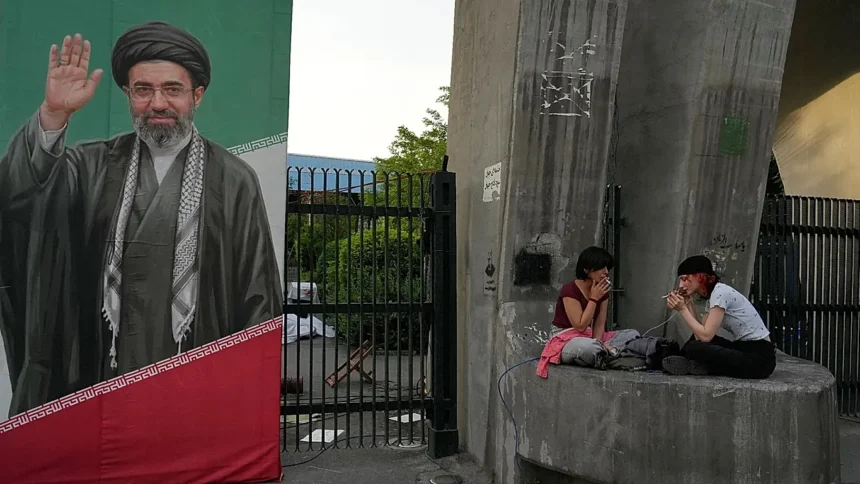
In his first official declaration since ascending to power, Iran’s Supreme Leader Ayatollah Mojtaba Khamenei announced on June 18, 2026, that he has formally authorized the landmark U.S.–Iran framework agreement aimed at bringing an end to the devastating regional war.
The extraordinary decree, broadcast via Iranian state television, lends crucial theological and political backing to the 14-point Memorandum of Understanding (MoU) digitally signed just a day earlier by U.S. President Donald Trump at the Palace of Versailles and Iranian President Masoud Pezeshkian in Tehran.
1. The Ayatollah’s Mandate: Permission with Provisos
Ayatollah Mojtaba Khamenei—who assumed leadership in March 2026 following the death of his father, Ayatollah Ali Khamenei, in the joint U.S.–Israeli airstrikes that triggered the regional war on February 28—conceded that he held fundamental reservations regarding the framework but deferred to executive consensus to preserve state rights.
The Supreme Leader's Conditional Endorsement Matrix

 [ PRAGMATIC CONCESSION ] ──► CONDITIONAL APPROVAL
 • Khamenei granted explicit permission based on strict personal guarantees
   from President Pezeshkian to shield the sovereign rights of the Iranian nation.

 [ THE RESISTANCE FRONT ]  ──► GEOPOLITICAL PROJECTION
 • The endorsement mandates that the tactical architecture of the "Resistance Front"
   (including regional proxy assets like Hezbollah) remains institutionally protected.

 [ ZERO-CONCESSION LIMIT ] ──► THE BOUNDARY WALL
 • The Leader explicitly warned that forthcoming technical talks will collapse
   if Washington initiates "excessive demands" outside the signed MoU framework.
“In principle, I had a different view, but I issued my permission due to the commitment that the honourable president gave me… to protect the rights of the Iranian nation and the Resistance Front. It is obvious that the face-to-face negotiations that will be held in the future will not mean accepting the enemy’s point of view.”
— Ayatollah Mojtaba Khamenei, Supreme Leader of Iran
2. Inside the 14-Point Versailles Agreement
The diplomatic breakthrough at Versailles marks an astonishing geopolitical shift, moving from the destructive brinkmanship of Operation Midnight Hammer to a structured, 60-day stabilization window. While the Trump administration frames the text as an historic success that averted a worldwide depression, the deal relies on massive financial and strategic trade-offs.
Key Architectural Pillars of the U.S.-Iran MoU
┌────────────────────────────────────────────────────────────────────────┐
│                                                                        │
│  [ MILITARY CEASEFIRE ] ───────────────────────────────────────────┐   │
│  • An immediate, permanent cessation of hostilities across all regional│   │
│    theaters, including a guaranteed freeze on operations in Lebanon.   │   │
│                                                                        │   │
│  [ THE FINANCIAL PACKAGE ] ────────────────────────────────────────┤   │
│  • Establishment of a U.S.-backed $300 billion (€261B) reconstruction   │   │
│    and development fund for Iran, alongside phased sanctions relief.   │   │
│                                                                        │   │
│  [ MARITIME & ENERGY ACCESS ] ─────────────────────────────────────┘   │
│  • Immediate lifting of the U.S. naval blockade on Iranian ports and  │
│    the normalization of commercial navigation through the Strait of Hormuz.│
└────────────────────────────────────────────────────────────────────────┘
3. Washington Defends the Line Amid Allied Friction
At the White House, U.S. Vice President JD Vance aggressively defended the administration’s blueprint against a wave of domestic conservative blowback and fierce condemnation from Middle Eastern allies. Critics have lambasted the deal for leaving Iran’s missile infrastructure intact and lacking a definitive schedule for the total destruction of its nuclear enrichment sites.
                  ┌────────────────────────────────────────┐
                  │      WHITE HOUSE DEFENSE STRATEGY      │
                  └───────────────────┬────────────────────┘
                                      │
         ┌────────────────────────────┴────────────────────────────┐
         ▼                                                         ▼
[ THE PERFORMANCE RULE ]                                  [ THE ISRAELI REBUKE ]
"The Iranians have to perform.                             "Anybody in Israel who thinks
If they don't perform, they                                their biggest problem is the
don't get any benefits...                                 president of the United States
We are about verification."                               needs to wake up and smell reality."
4. The Switzerland Technical Milestone
The diplomatic apparatus is now moving rapidly to solidify the gentleman’s agreement into a binding international treaty.
| Phase of Engagement | Primary Negotiators / Observers | Core Objectives & Operational Targets |
| The Versailles Signing (Completed June 17) | President Donald Trump & President Masoud Pezeshkian | Digital signing of the 14-point framework; cessation of primary maritime blockades. |
| The Geneva Plenary (Imminent) | Vice President JD Vance & Iranian Diplomatic Delegation | Launching technical, face-to-face working groups in Switzerland to draft treaty text. |
| The 60-Day Horizon (Ongoing) | IAEA inspectors, U.S. Treasury, Iranian Central Bank | Verifying Iranian uranium stockpile configurations while auditing the initial rollout of the $300B reconstruction fund. |
While Trump has issued explicit public warnings that any Iranian breach will result in immediate, catastrophic military bombardment, the administration’s willingness to allow civilian uranium enrichment represents an unprecedented policy pivot. With Vice President Vance stepping forward as the primary pointman for the high-stakes Geneva negotiations, the next 60 days will determine whether this Versailles accord achieves enduring stability or collapses into renewed conflict.