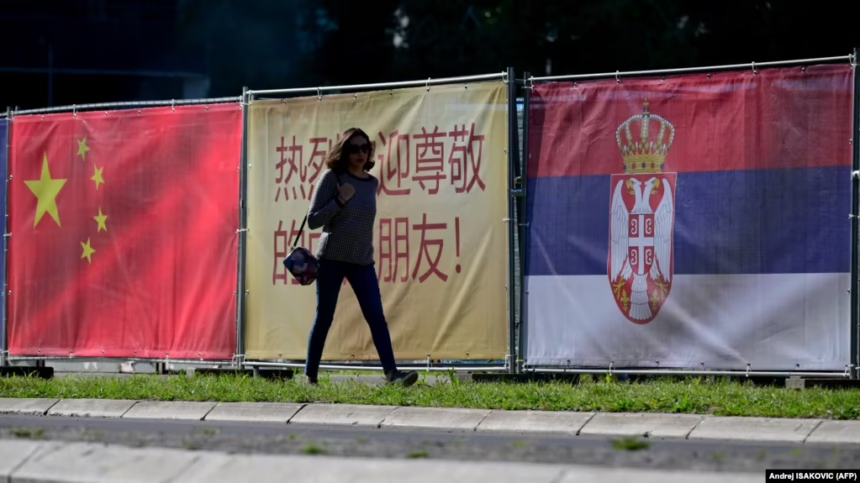
Serbia is on the absolute cusp of ratifying a highly controversial bilateral extradition treaty with the People’s Republic of China. The legislative push comes despite intense, ongoing appeals from major international watchdogs warning that Beijing systematically weaponizes these legal frameworks to execute transnational repression against political dissidents, rights activists, and ethnic minorities in the diaspora.
On June 17, 2026, lawmakers in the National Assembly of Serbia launched a plenary debate on dozens of pending bills and international accords, explicitly placing the China extradition proposal on the legislative fast track.
1. The Legislative Blueprint and Triggers
The foundational text was signed two years ago in Belgrade during a high-profile state visit by Chinese President Xi Jinping. While Beijing rapidly ratified the agreement in September 2025, the Serbian government kept the document sidelined until this week.
Core Parameters of the Serbia-China Extradition Law

 [ EXTRADITION THRESHOLDS ]   ──► PENAL ARCHITECTURE
 • Extradition will be greenlit for offenses carrying a minimum sentence of
   1 year, or if a fugitive has at least 6 months remaining on an existing term.

 [ STRUCTURAL FLEXIBILITY ]   ──► LANGUAGE & CATEGORY LOOPHOLES
 • It is legally irrelevant whether both states place the offense in the
   same category or share identical judicial terminology.

 [ CONDITIONAL DENIALS ]      ──► THEORETICAL SAFEGUARDS
 • Extradition must be denied for clearly defined "political offenses" or if
   the targeted individual has been formally granted asylum in Serbia.
2. Institutional Backlash: Transnational Repression & The EU Position
The timing of Belgrade’s ratification push places it in direct ideological conflict with Western institutions. Just weeks ago, on April 30, 2026, the European Parliament adopted a sweeping resolution targeting Beijing’s aggressive new “Ethnic Unity and Progress Law”—a domestic statute containing explicit extraterritorial clauses designed to prosecute critics globally.
International Human Rights Assessments
┌────────────────────────────────────────────────────────────────────────┐
│                                                                        │
│  [ AMNESTY INTERNATIONAL ] ────────────────────────────────────────┐   │
│  • Alkan Akad warned that Beijing regularly abuses vague national      │   │
│    security charges—like "subversion" and "separatism"—to dragoon      │   │
│    journalists and human rights defenders back into China.             │   │
│                                                                        │   │
│  [ EUROPEAN PARLIAMENT DIRECTIVE ] ────────────────────────────────┤   │
│  • The EU's April 2026 resolution explicitly called on all member states │   │
│    to immediately suspend existing extradition treaties with China to   │   │
│    shield individuals from systemic, borderless state repression.      │   │
│                                                                        │   │
│  [ FREEDOM HOUSE AUDIT ] ──────────────────────────────────────────┘   │
│  • Categorizes China as an absolute "not free" state where the ruling  │
│    Communist Party dictates judicial rulings, alongside documented     │
│    accounts of routine torture and medical neglect in detention centers.│
└────────────────────────────────────────────────────────────────────────┘
3. Legal Defenses vs. International Precedents
Defending the treaty before parliamentarians, Assistant Minister of Justice Vladimir Vinš argued that the agreement is structurally designed to solidify a mandatory security wall against global crime, ensuring fugitives cannot use Serbia as a safe haven to escape prison sentences.
However, international courts have increasingly moved to freeze extraditions to China based on human rights grounds:
| Jurisdictional Body / Case | Year of Ruling | Foundational Legal Precedent Established |
| European Court of Human Rights (ECHR) | 2022 | Blocked Poland from extraditing a Taiwanese national, ruling that widespread torture in Chinese penitentiaries constitutes an omnipresent environment of structural violence. |
| Italian Appellate Courts | 2023 | Issued two landmark refusals to return citizens to China, citing the ECHR’s findings on structural abuse. |
| Cypriot Judiciary | 2023 | Rejected a Beijing-initiated financial crime extradition request, protecting a mother and son from the Chinese penal grid. |
4. Strategic Repercussions for Belgrade
Since the Serbian Progressive Party (SNS) took power in 2012, Belgrade and Beijing have cultivated an unyielding “ironclad friendship,” converting economic infrastructure loans into deep security cooperation. By legalizing this extradition pact while neighboring EU member states actively dismantle theirs, Serbia risks further decoupling its judicial system from European Union accession standards.
While higher courts in Belgrade will technically retain the power to evaluate individual extradition requests, the formal passage of this law hands Beijing a powerful legal mechanism to demand the tracking and detention of targeted individuals right on the doorstep of the European Union.