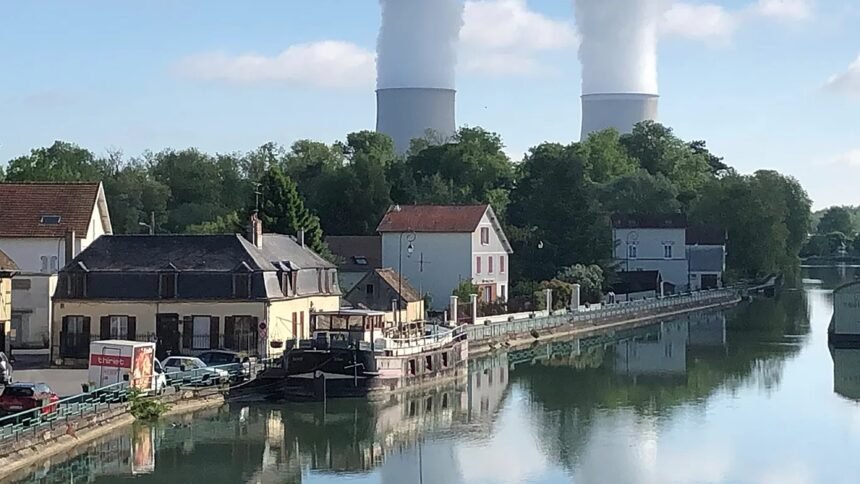
France has temporarily shut down several nuclear reactors as a precautionary measure while the country and much of Europe face a record-breaking heatwave that has already claimed lives.
State-owned energy giant Électricité de France (EDF) announced that the shutdowns were necessary due to rising river temperatures. These rivers provide cooling water for nuclear power plants, and excessively warm water can create environmental and operational concerns.
The affected reactors are located at:
- Nogent Nuclear Power Plant on the Seine River
- Bugey Nuclear Power Plant on the Rhône River
- Golfech Nuclear Power Plant in southwestern France
Under French environmental regulations, nuclear facilities must limit the discharge of heated water into rivers in order to protect aquatic ecosystems. As temperatures rise, operators are often forced to reduce output or temporarily halt operations.
French authorities report that the extreme heat has contributed to at least 18 deaths, while dozens of other heat-related incidents, including drownings, have been recorded since mid-June as temperatures reached historic highs.
Despite reduced production at several plants, RTE France stated that the country still has sufficient electricity generation capacity to meet current demand.
Meteorological agencies have placed large parts of France under red-alert conditions due to the extreme temperatures, urging residents to avoid prolonged sun exposure, stay hydrated, and take extra precautions.
The heatwave has also affected several other European countries, including Germany, Spain, and Switzerland, where authorities have reported disruptions to daily life and increased pressure on energy and infrastructure systems.