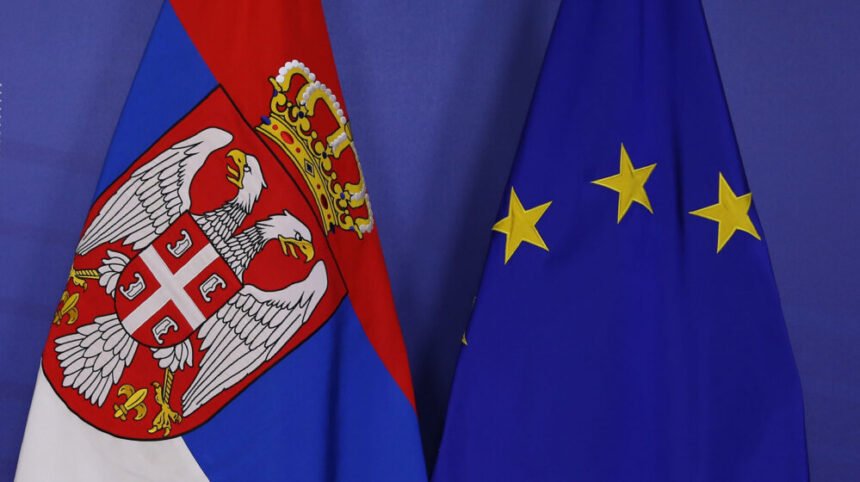
The adoption of a sweeping resolution on Serbia by the Parliamentary Assembly of the Council of Europe (PACE) has exposed a deep, widening chasm between European democratic standards and Belgrade’s official response.
The document passed with a resounding majority of 89 votes in favor out of 116 present. It delivers a stinging rebuke of Serbia’s electoral integrity, judicial independence, and media freedoms, while specifically condemning police conduct during recent student uprisings.
However, far more telling than the resolution’s findings is the aggressive, defensive posture adopted by Serbian authorities—a strategy that analysts warn is isolating the country from the Euro-Atlantic community.
The Battle Over Text: Relativizing Electoral Fraud
In the lead-up to the vote, representatives of Serbia’s ruling coalition within the state delegation attempted to aggressively alter the document’s core language. In total, the government proposed 27 separate amendments aimed at diluting the findings of the international monitoring mission:
- From “Fraud” to “Tensions”: In sections detailing verified instances of vote-buying, voter intimidation, and the deployment of parallel voter registries during the 2023 elections, Serbian delegates formally requested that the language be deleted and replaced with the vague euphemism “tensions.”
- The Strategic Blunder: Government officials additionally demanded the complete erasure of clauses identifying systemic institutional failures. Ultimately, opposition delegates successfully dismantled and defeated all 27 government amendments, leading ruling party officials to publicly dismiss the final document as “non-objective” and built on “media rumors.”
PACE Vote Outcomes & Diplomatic Diagnostics (June 2026)
========================================================================
Final Vote Count   --> 89 "Yes" | 13 "No" | 4 Abstentions.
Amendment Outcome  --> 0 out of 27 government-proposed revisions accepted.
Key Areas of Censure--> Systemic vote manipulation, media suppression, police brutality.
Geopolitical Trend --> Accelerated self-isolation from European integration frameworks.
========================================================================
Conspiracy Theories and Diplomatic Paradoxes
Faced with a total diplomatic defeat in Strasbourg, the ruling Serbian Progressive Party (SNS) resorted to a familiar domestic playbook, framing the international human rights resolution as an “orchestrated and pre-arranged attack.” Officials claimed the document’s singular motive was to exert psychological and political pressure on President Aleksandar Vučić.
In state-aligned domestic media, the serious findings of the Council of Europe were immediately equated with bizarre, state-manufactured fringe narratives—such as the recent, highly controversial criminal investigation into whether students “simulated” a police sonic cannon attack to cause public panic.
The Strasbourg Paradox: Serbian officials loudly complained on the assembly floor that European delegates “refused to listen to their arguments.” Observers noted the irony: on the international stage, Belgrade’s ruling elite experienced the exact same total dismissal and political steamrolling that they have systematically dealt to domestic political opponents, independent journalists, and civil society groups inside Serbia for years.
Progressive Self-Isolation
While PACE resolutions carry monumental political and diagnostic weight rather than direct legal enforcement powers, the diplomatic fallout is severe. By branding every institutional critique from Europe as a hostile, orchestrated conspiracy, the ruling majority is systematically shutting its own doors to Western integration.
As Brussels prepares a separate, potentially harsher session within the European Parliament to debate Serbia’s democratic backsliding, Belgrade’s hollow rhetoric regarding its “European path” is disintegrating. In practice, the regime is actively constructing a closed system where the only operational door left open inside the country belongs to the presidential palace.