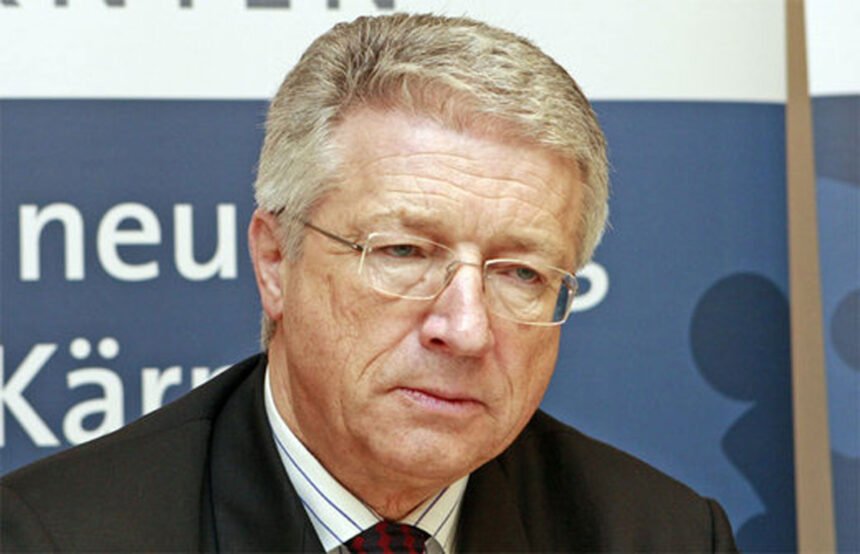
Former high-ranking Austrian diplomat Wolfgang Petritsch has issued a stark warning to Kosovo’s leadership, revealing that potential plans to downsize NATO’s troop presence in the region are directly tied to intense, ongoing pressure from Washington.
Speaking in an exclusive interview on Kosovo’s public broadcaster, RTK, Petritsch highlighted a shifting geopolitical landscape where the United States is actively advancing plans to significantly draw down its military footprint across the European continent—a shift that will directly reverberate within the borders of Kosovo.
The U.S. Drawdown Threatens the Status Quo
Petritsch, who previously served as the European Union’s Chief Negotiator at the Rambouillet peace talks, emphasized that the security umbrella provided by NATO’s KFOR mission can no longer be taken for granted.
- Washington’s Pivot: The veteran diplomat noted that NATO is under immense pressure from Washington. The White House has made its long-term objective publicly transparent: European allies must shoulder their own territorial defense as the U.S. reassesses its overseas troop deployments.
- The Transatlantic Fallout: This strategic shift means that Kosovo can no longer rely indefinitely on an expansive, foreign-led military deterrent to shield it from regional volatility.
NATO-Kosovo Security Transition Parameters (June 2026)
========================================================================
Strategic Driver --> Washington's mandate to reduce U.S. troop presence in Europe.
The KFOR Outlook --> Escalating pressure on NATO to scale back regional deployments.
Kosovo's Mandate --> Transitioning from a "security consumer" to a "security provider."
Diplomatic Goal  --> Immediate progression on resolving open regional disputes.
========================================================================
Shifting from a “Security Consumer” to a “Stabilizing Factor”
In light of these impending structural alliance shifts, Petritsch urged Prishtina to urgently wrap up its outstanding diplomatic disputes and aggressively accelerate the self-reliance of its own defense institutions.
Wolfgang Petritsch: ““You will have to take responsibility for your own security. You will have to become a security provider for Kosovo and for the region. You must become a stabilizing factor. We need Kosovo to transform into a constructive partner in Europe.””
The former diplomat did not mince words regarding Kosovo’s current standing in international circles, leveling criticisms at its current approach to regional stability. According to Petritsch, rather than generating diplomatic friction, Prishtina must realign its foreign policy to position itself as a highly constructive, collaborative partner inside Europe.
As the upcoming NATO Summit in Ankara looms—where European rearmament, spending parity, and the redistribution of alliance responsibilities are slated to dominate the docket—Petritsch’s warning underscores a looming reality: the Western Balkans must prepare to secure their own frontiers.