Access to the archives of Serbia’s state institutions and the continuation of excavation efforts at identified sites on Serbian territory remain two of Kosovo’s key demands in uncovering the fate of persons forcibly disappeared during the Kosovo war.
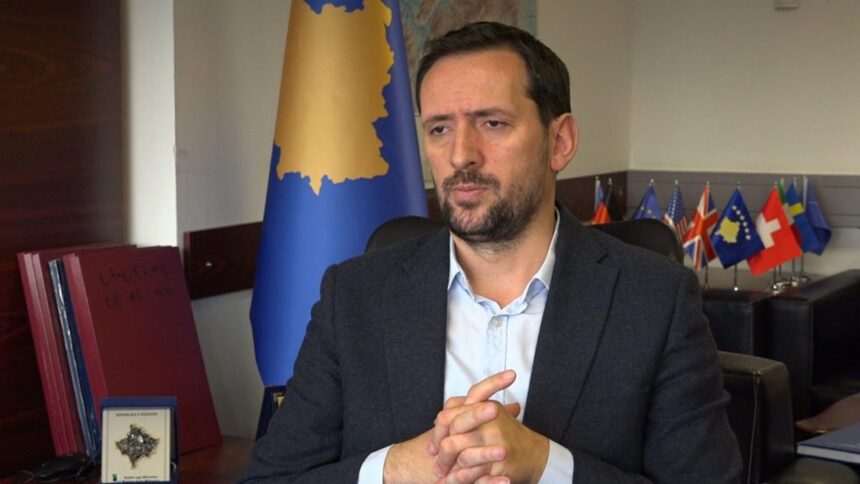
Kushtrim Gara, Head of the Government Commission on Missing Persons Unit, said in an interview that the Batajnica mass grave site remains a top priority, as available evidence suggests it may still contain the remains of at least 58 additional victims.
Gara noted that, following persistent efforts to implement the Joint Declaration on Missing Persons signed on May 2, the first meeting of the Joint Commission was held earlier this year, followed by a working-level meeting in April. According to him, Kosovo has consistently raised two primary demands throughout all dialogue processes with Serbia and international partners.
The first is full access to the archives of Serbian institutions, particularly the archives of the former Yugoslav Army. Gara emphasized Kosovo’s request for access to the reclassified archives of the 37th Motorized Brigade, which is believed to have been responsible for crimes committed in the Drenica region during the war. He said these records are essential for locating additional mass graves both in Kosovo and on Serbian territory.
Regarding confirmed mass graves in Serbia, Gara stated that excavations at Rudnica and Kizevak, in the Raška region, have led to the recovery of the remains of 61 Kosovo war victims, most of whom were killed in the Rezallë, Old Qikatovë, and Lower Zabel massacres. However, he stressed that official Serbian statements from 2010 indicated that approximately 250 victims were believed to be buried in the Raška region, suggesting that numerous burial sites remain undiscovered.
He called for the immediate resumption of excavations at already identified locations in Raška, Novi Pazar, and other priority sites, emphasizing that many investigations were either suspended prematurely or have yet to begin.
Speaking about Batajnica, Gara said that despite the exhumation of more than 700 victims between 2001 and 2002, detailed analyses conducted with international partners, including the International Committee of the Red Cross, as well as satellite imagery, indicate that the site may still contain the remains of at least 58 more victims.
Gara also revealed that Serbia refused to participate in a Working Group meeting on Missing Persons scheduled to take place in Pristina in March and rejected a proposed meeting between forensic experts from both sides aimed at coordinating future fieldwork.
He reaffirmed Kosovo’s commitment to continuing investigations into every credible lead concerning missing persons. During the first six months of this year, authorities assessed 14 locations, 13 of which were directly related to the search for missing persons. Human remains belonging to at least 10 individuals were recovered, with final identification pending DNA analysis.
According to Gara, approximately 2,700 locations across Kosovo have been identified for assessment, making the search process highly complex and dependent on the continuous evaluation of new information.
He also pointed to delays at the Kozhle site in Serbia, saying the excavation process has faced obstacles similar to those previously encountered at Rudnica and Kizevak. No invitation has yet been received this year to resume excavations at Kozhle or at other priority sites, including Batajnica.
Gara argued that stronger international pressure on Serbia is essential to achieve meaningful progress. He noted that all five confirmed mass graves discovered in Serbia were located only after sustained international involvement and, in some cases, the use of satellite imagery.
He further stated that Serbian institutions had referred as early as 2000–2001 to a list of approximately 16 suspected mass grave sites on Serbian territory. Kosovo has never been granted access to that list and therefore cannot determine whether the five confirmed sites are included or whether additional undiscovered mass graves remain.
Gara concluded that Kosovo will continue to prioritize two key objectives: securing unrestricted access to Serbian state archives and ensuring permission for excavations at identified locations across Serbia in order to provide answers to the families of those still missing.