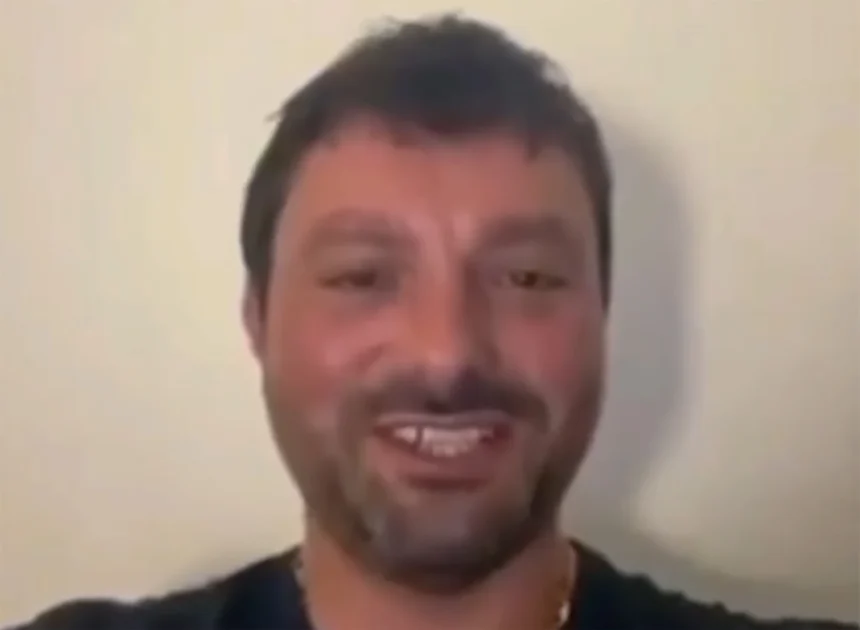
In a media landscape crippled by a chronic lack of public trust, a bizarre and dangerous alternative information ecosystem has taken root. Miloš Medenica, widely known as “Medeni,” who was sentenced in the first instance to 10 years and 2 months in prison for organized crime and smuggling, has transformed into a viral whistleblower from an undisclosed location.
Through his wildly popular Telegram channel, “Medeni sve zna” (Medeni Knows Everything), and his profile on X (formerly Twitter), the fugitive has captured a massive audience by airing unverified, insider-style exposés detailing raw corruption linking state politicians, senior judiciary members, and the criminal underworld.
Writing for Danas, prominent media theorist and FDU professor Ana Martinoli breaks down the anatomy of this information crisis, warning that the phenomenon is less about eccentric individual rebellion and far more about a weaponized, highly sophisticated political-communication psyop.
The Information Vacuum: Why the Public Prefers a Fugitive
The rapid ascent of an escaped convict to the status of a public truth-teller is a direct symptom of a dying mainstream media ecosystem. Martinoli points out that distrust in official institutions is a chronic illness in Serbian society, and traditional journalism has vacated its civic duty.
- A Collapse in Media Trust: According to the latest Reuters Institute Digital News Report, public trust in Serbian mainstream media stands at a dismal 22%.
- The Validation Trap: When traditional channels lose all credibility, audiences stop looking for verification and instead look for validation. They reward any fast, aggressive source that confirms the suspicions they already hold—namely, that state institutions are hiding dark truths.
- The Outsourcing of Journalism: State-controlled mainstream media systematically ignore stories that threaten political elites. Meanwhile, independent professional outlets are bound by ethical codes that require rigorous double-sourcing, evidence gathering, and legal reviews. This lengthy verification process creates an immediate informational vacuum that a fugitive, who has zero reputational, legal, or professional boundaries, can instantly fill.
The Asymmetry of Information Overhaul
| Media Attribute | Controlled Mainstream Media & Ethical Journalism | Rogue Telegram Channels (“Medeni sve zna”) |
| Sourcing Standards | Requires multi-source cross-checking, documentation, and rigorous editorial accountability. | Single-source insider narrative, zero legal accountability, zero fact-checking. |
| Audience Engagement | Rigid, formal, and increasingly viewed as compromised or overly cautious. | Casual, direct eye-to-camera style, high theatricality, and instant emotional identification. |
| The Legal Risk | Vulnerable to state lawsuits, systemic censorship, and financial intimidation. | Immune to legal prosecution due to anonymous servers and fugitive status. |
The AI Frontier and the Death of Verifiability
A particularly chilling layer of the Medenica phenomenon involves the rapidly blurring lines of reality. In February, the Montenegrin Police administration officially announced that one of the earliest videos distributed by Medenica was “synthetically generated” using advanced artificial intelligence deepfake tools to mislead the public.
While the subsequent videos uploaded over the past few weeks appear to be authentic, the underlying threat remains unprecedented. In an era where deepfakes can seamlessly mimic human insiders, public trust has become completely uncoupled from factual verifiability. Audiences no longer judge information based on forensic truth; they judge it based on how convincingly an actor plays the part of a transparent whistleblower.
The Robin Hood Inversion: Who Controls the Narrative?
Martinoli warns that treating Medenica as a trivial, street-talking entertainment figure is a profound national security mistake. By positioning himself as a “hero of necessity”—someone who was on the inside of the criminal syndicate and is now turning against it to liberate the populace with truth—Medenica is successfully converting his extensive criminal record into a badge of authenticity.
Prof. Ana Martinoli: “It would be naive to view the ‘Medeni’ phenomenon as an individual rebellion. The platform he uses, the format in which his content is packaged, and the speed at which it spreads raise the question of whether this transcends narrow personal interest. Guerrilla channels allow for an absolute absence of a signature, an absence of an address of responsibility, and an absence of anyone to whom the question ‘where did you get this from?’ could be posed. This is a testing ground to see how easy it is, in a society with 22% trust in media, to redirect public attention, shape a narrative of guilt or innocence, and discredit an undesirable actor.”
Ultimately, the true danger of the “Medeni sve zna” platform is not the fugitive himself, but the shadow actors maneuvering behind him. In a society where institutional truth has collapsed, the public is eager to surrender its trust to anonymous digital pipelines—leaving Serbia highly vulnerable to whoever controls the script, owns the Telegram servers, or programs the synthetic face on the screen.