The European Union Office in Kosovo issued a direct diplomatic brief emphasizing that Pristina must ensure absolute institutional stability if it intends to unlock billions in development aid and exploit the European Union’s newly revitalized enlargement momentum.
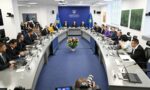
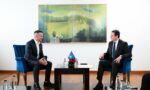
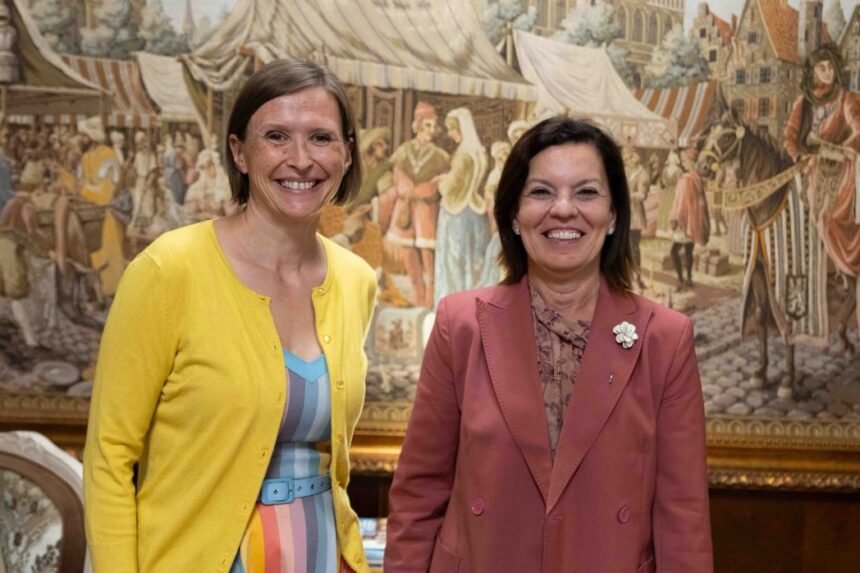
The high-level warning follows an official strategic briefing in Pristina between Eva Palatova, the Acting Chief of the EU Delegation in Kosovo, and Valentina Superti, the European Commission’s Director for the Western Balkans within the Directorate-General for Enlargement and Eastern Neighbourhood (DG ENEST).
The Expansion Window: Growth Plan, IPA, and Reforms
The working session served as the immediate prelude to a series of highly anticipated, high-stakes meetings scheduled between Director Superti, Kosovar institutional heads, and prominent civil society organizations.
The European Union’s diplomatic mission utilized the summit to issue a clear, direct public message regarding Kosovo’s integration trajectory:
The European Union Office in Kosovo: “Kosovo needs institutional stability to benefit fully from the new momentum of EU enlargement, the Growth Plan, and IPA III funds.”
The EU’s current enlargement agenda is deeply anchored in a highly structured, performance-based economic framework designed to push Western Balkan states toward economic harmonization before full integration occurs.
                       [ Kosovo's Three-Tiered EU Funding Matrix ]
                                            │
       ┌────────────────────────────────────┼────────────────────────────────────┐
       ▼                                    ▼                                    ▼
[ The Western Balkans Growth Plan ]     [ IPA III Pre-Accession Funds ]      [ Strict Reform Agendas ]
Access to Kosovo's allocated portion    Direct funding streams geared        Financial disbursements remain
of the landmark €6 billion regional     toward bolstering administrative     contingent on domestic rule of law,
stimulus pool to jumpstart the economy.  capacity and cross-border projects.  anti-corruption, and stable markets.
The Subtext: Overcoming Political Friction
While the EU’s joint statement focused strictly on macroscopic financial mechanisms and reform frameworks, the explicit warning regarding “institutional stability” lands amidst severe regional headwinds. International monitors have consistently signaled that Kosovo’s access to the newly minted €6 billion Western Balkans Growth Plan remains intrinsically linked to structural political metrics—most notably, demonstrating active de-escalation and constructive engagement within the EU-facilitated dialogue to normalize relations with Belgrade.
Director Superti’s arrival in Pristina highlights a critical diplomatic crossroads: the European Union is actively presenting an unprecedented financial and geopolitical integration window to Pristina, but the actual disbursement of those transformative funds remains entirely dependent on domestic political stability and deep, unyielding structural reforms.