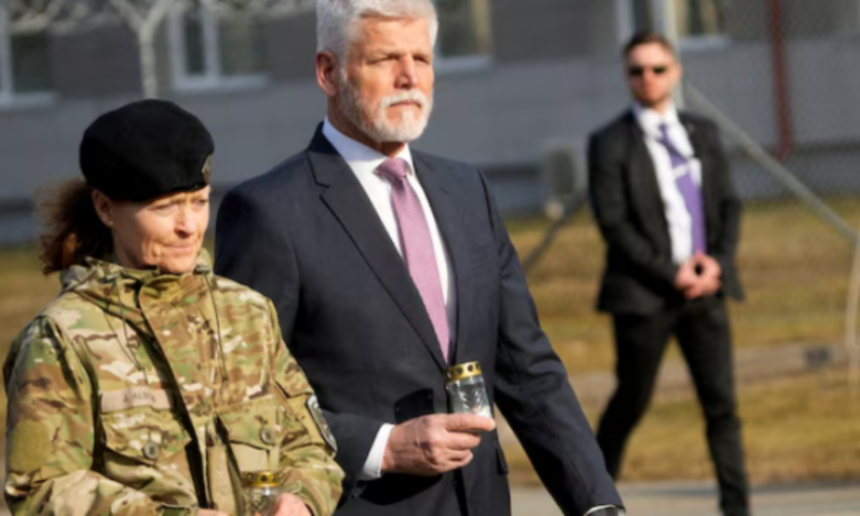
A fierce institutional power struggle has erupted in the Czech Republic between pro-Western President Petr Pavel and populist Prime Minister Andrej Babiš. The constitutional deadlock centers on which executive leader possesses the legal authority to represent the nation and head its diplomatic delegation at the upcoming NATO Summit in Ankara, Turkey, on July 7–8.
Under immense pressure from an emergency Constitutional Court injunction, the Babiš government relented on Monday, officially adding President Pavel to the state delegation. However, in an unprecedented move that fractures nearly three decades of diplomatic tradition, the Cabinet is refusing to allow the president to lead the delegation, insisting that Prime Minister Babiš will remain the sole chief negotiator.
The Root of the Conflict: Weapon Shipments and Defense Spending
The bitter political feud is an extension of the deep ideological divide shaping Czech domestic policy since Babiš’s nationalist party returned to power:
- Pavel’s Strategic Stance: President Pavel—a retired four-star army general and former Chairman of the NATO Military Committee—is an ardent Europhile. He has spent years championing aggressive increases to national defense budgets and spearheaded the highly successful “Prague Initiative” to supply heavy artillery ammunition to Ukraine.
- Babiš’s “Czech First” Policy: Prime Minister Babiš, a billionaire populist and close ally of Donald Trump, ran on an explicit platform opposing the use of taxpayers’ money to fund foreign military conflicts. Upon taking office, Babiš halted Czech funding for the Ukrainian ammunition project and openly declared that the Czech Republic will miss NATO’s mandatory 2% GDP defense spending target, counting instead on his close ties with Washington to shield Prague from American ire.
The Battle for the Empty Chair
The escalation reached a tipping point when Babiš and Foreign Minister Petr Macinka approved the final NATO summit roster while completely omitting the President of the Republic from the list. The government argued that since the Cabinet formulates foreign policy under the constitution, the head of state’s conflicting views would compromise national unity on the international stage.
Pavel immediately fired back, filing an urgent complaint to the country’s highest judicial authority to protect the presidency from what he termed an “unprecedented attempt to clip the head of state’s powers.”
                 [ The Czech Constitutional Crossroads ]
                                    │
                                    ▼
                     [ The Constitutional Mandate ]
                     The Czech Cabinet dictates foreign policy, but the
                     President is legally the Supreme Commander of the Armed Forces.
                                    │
                                    ▼
                     [ The Historical Precedent ]
                     Since joining NATO in 1999, Czech Presidents have traditionally
                     led the delegation at 19 out of 20 alliance summits.
                                    │
                                    ▼
                       [ The Judicial Injunction ]
                     The Constitutional Court rules in favor of Pavel, forcing the
                     Cabinet to accredit the President and provide state aircraft.
An Awkward Cohabitation Heading to Ankara
Despite the court’s intervention ordering the government to facilitate the president’s travel, the political environment remains highly toxic. Following Monday’s Cabinet session, Prime Minister Babiš continued his public offensive against Pavel:
Prime Minister Andrej Babiš: “The best thing would be if he did not insist on taking part. He could show goodwill by choosing to skip this year’s summit and instead attend the gathering next year.”
Babiš confirmed that he will fly to Ankara with his foreign and defense ministers on the primary state aircraft to handle the high-level plenary sessions, while Pavel has been forced to travel separately on a secondary government plane.
Pavel has remained defiant, stating he will show up to the leaders’ gala dinner and plenary sessions anyway, demanding that the executive branch respect historical custom until the Constitutional Court issues its final, binding verdict on the precise limits of presidential power.