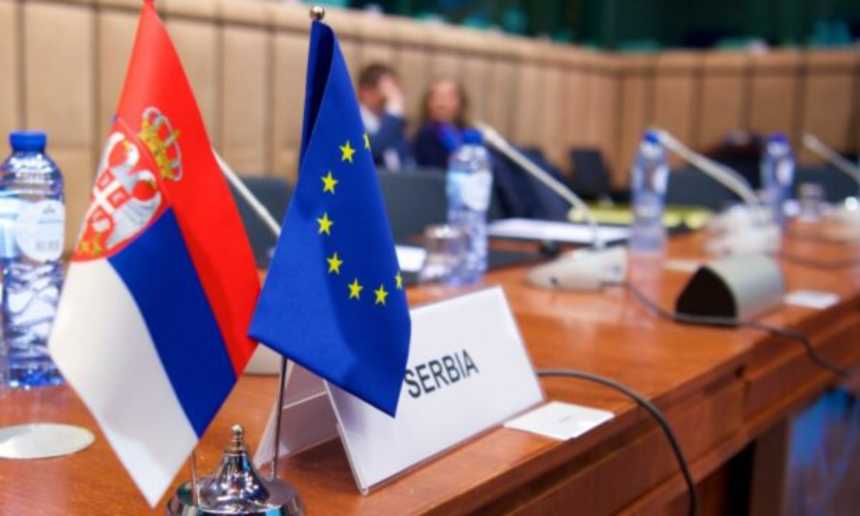
Brussels is seeking to revive Serbia’s European Union accession process, with member states expected to discuss opening Chapter 3 of Serbia’s accession negotiations on Wednesday. However, EU capitals remain divided over whether Belgrade has done enough to justify further progress.
The debate was reignited after Serbia repealed controversial judicial reforms following criticism from the Venice Commission, prompting the European Commission to argue that the move addresses earlier concerns and justifies opening a new negotiation chapter.
In a briefing document dated July 3 and obtained by Euronews, the Commission states that Serbia has corrected the democratic backsliding identified earlier this year and taken steps to strengthen the capacity of its Organized Crime Prosecutor’s Office. At the same time, it acknowledges that significant work remains to improve the judiciary and prosecution system.
Despite the Commission’s assessment, interviews with diplomats, EU officials, and experts indicate that member states remain split. While some argue Serbia should be rewarded for implementing the Venice Commission’s recommendations, others believe repealing the disputed laws is insufficient to reverse years of democratic backsliding, concerns over judicial independence, corruption, and the rule of law.
For many officials in Brussels, the debate extends beyond a single negotiation chapter. As the largest economy in the Western Balkans, Serbia is viewed by some as a strategically important partner whose EU integration should continue despite ongoing challenges. Others warn that rewarding limited progress before broader democratic reforms risks undermining the credibility of the enlargement process.
The discussion has gained additional significance following Serbian President Aleksandar Vučić’s announcement that he intends to step down after eight years in office and call elections within the next three to four months. While supporters describe the move as the beginning of a new political chapter, critics argue it could allow Vučić to retain power by seeking the office of prime minister.
The European Commission emphasized that any final decision rests with the EU member states. The issue is expected to be discussed by EU ambassadors in Brussels on Wednesday.
The debate reflects the EU’s broader dilemma: whether to reward incremental reforms to keep Serbia aligned with the European Union or insist on deeper democratic changes before allowing further progress in the accession process.