
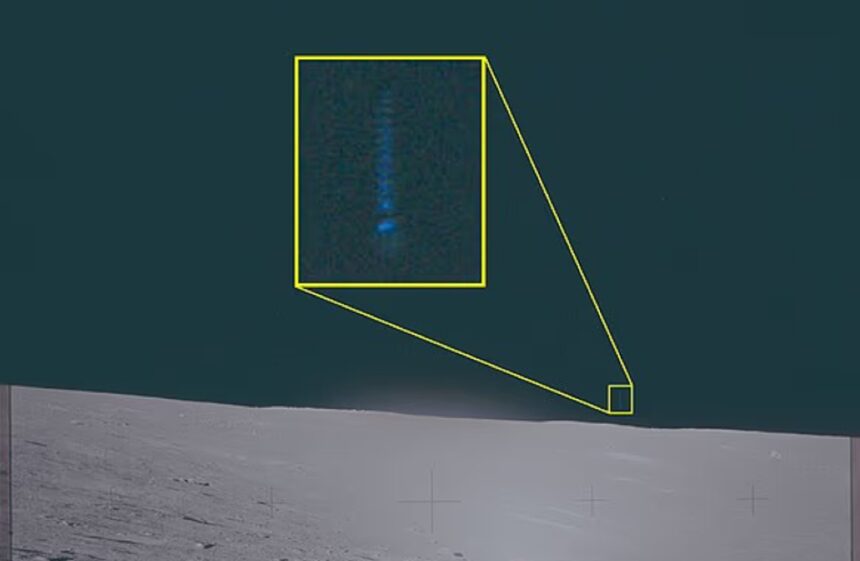
A renewed debate over Unidentified Flying Objects (UFOs), now more commonly referred to as Unidentified Anomalous Phenomena (UAP), has been sparked by comments from NASA Administrator Jared Isaacman, who said the agency has captured images of objects that cannot currently be explained with certainty as known natural phenomena.
Speaking on Jack Gordon’s podcast, Isaacman said NASA possesses observational data that remains unexplained, while emphasizing that it does not constitute evidence of extraterrestrial life.
“We have images, and this is something President Trump has been very progressive about. Based on the data we have from these images, we do not know what these objects are,” Isaacman said.
He added that humanity may eventually discover that life in the universe is far more common than currently believed.
“There is a very real possibility that, within our lifetimes, we will conclude that life may exist throughout the universe and that it is not nearly as rare as we think,” he said.
However, the NASA administrator stressed that he has not seen any evidence that the U.S. government possesses crashed alien spacecraft or biological samples from extraterrestrial beings.
“I have not seen any evidence of crashed UFOs or aliens,” Isaacman stated.
NASA has repeatedly maintained that there is no confirmed evidence of extraterrestrial life, while both the White House and the Pentagon have stated that there is no physical evidence indicating that aliens have visited Earth.
According to Isaacman, one of the most promising opportunities to answer the question of life beyond Earth may come from rock and soil samples collected on Mars.
“We have samples on Mars right now. If we bring them back, there is a very high probability they could reveal at least microbial life existed on Mars at some point,” he said.
NASA’s Perseverance rover has collected samples from the Martian surface that scientists believe may contain valuable clues about the planet’s ancient history and the possibility of past microbial life. However, the mission to return those samples to Earth has faced significant challenges due to high costs and funding issues.
Isaacman’s remarks come amid growing political calls for greater transparency regarding government records on UFOs. President Donald Trump has called for the release of documents, photographs, and recordings related to these phenomena.
Despite the publication of thousands of pages of government materials, no official evidence confirming the existence of extraterrestrial life has been presented to date.
Isaacman, an entrepreneur, pilot, and private astronaut who has flown to space with SpaceX, said that the search for life beyond Earth remains one of NASA’s central missions.
“I can’t dislike this topic. In fact, I’m incredibly fascinated by it because it lies at the heart of what we’re trying to accomplish at NASA: answering the question of whether we are alone,” he said.
At the same time, Isaacman rejected the notion that space exploration necessarily means the “conquest” of other worlds.
“I don’t believe it is humanity’s destiny to remain on a single planet,” he said, arguing that exploration of the universe will continue.
His comments have also revived discussions surrounding previous claims made by former officials, astronauts, and researchers suggesting that evidence of extraterrestrial life may have been concealed.
Among them is Apollo astronaut Edgar Mitchell, the sixth person to walk on the Moon, who claimed to have witnessed phenomena during space missions that he believed exceeded known human technological capabilities. Former NASA contractor Donna Hare also alleged that some photographs allegedly showing UFOs had been altered before their public release. Neither claim has been officially confirmed by NASA.
During the interview, Isaacman also addressed conspiracy theories surrounding the 1969 Moon landing, saying he understands why some people remain skeptical due to the limited image quality available at the time.
According to him, future Artemis missions will be equipped with modern high-resolution cameras on lunar landers and robotic explorers, providing far more detailed imagery of a new era of lunar exploration.
The question that continues to intrigue scientists and the public alike remains whether humanity is alone in the universe—or whether science is closer than ever to answering one of history’s greatest mysteries.