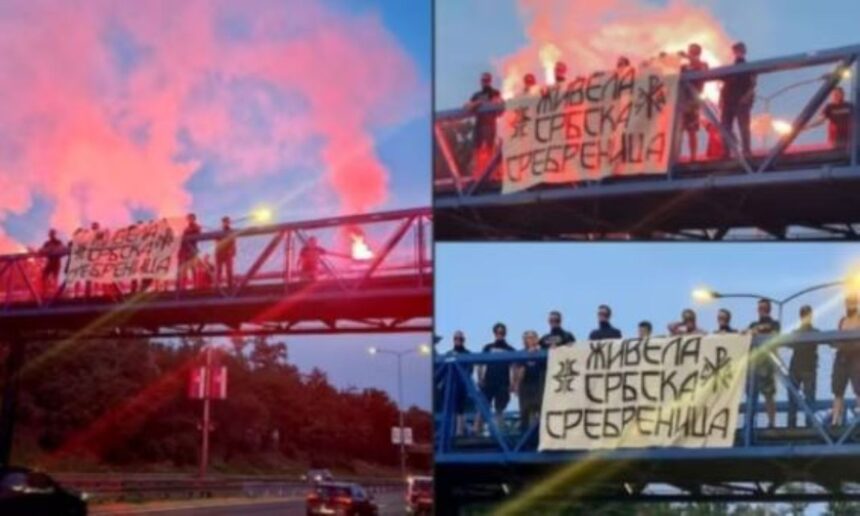
In parallel with digital channels, far-right organizations and informal groups in Serbia have moved their campaigns of denying the Srebrenica genocide and glorifying convicted war criminals directly onto the streets.
Through torchlight rallies, graffiti, posters, and banners in public spaces, these groups are actively pushing historical revisionism during the anniversary of the tragedy.
Far-Right Networks on Telegram
During the anniversary of the genocide, Telegram channels belonging to groups like “People’s Patrol”, “Serbian Action”, “Club 451”, and “Serbian Sparta” were flooded with propaganda. Their core narratives include:
- Reframing the genocide as “liberation”: These groups claim that convicted war criminal Ratko Mladić “liberated” Srebrenica.
- Calling the genocide a “myth”: The group “Serbian Action” publicly labeled the mass murder of Bosniaks a historical lie.
- Glorifying Mladić: “Serbian Sparta” claimed Mladić’s name is “forever engraved in the history of Serbdom.”
Street Action and Violence Against Activists
This campaign didn’t stay online. It translated into physical actions in Serbia’s major cities:
- Torchlight marches: Members of “Serbian Action” held a torchlit rally on a Belgrade overpass, hanging a banner reading “Long Live Serbian Srebrenica.”
- Nationwide flyering: Vojislav Šešelj’s far-right Serbian Radical Party (who was also convicted by the Hague Tribunal) plastered posters across the country depicting Mladić with the slogan “Hero, Not a Criminal.”
- Physical violence: On the eve of a Srebrenica memorial event in Belgrade organized by the “Krokodil” Association, hooligans physically assaulted its founder, writer Vladimir Arsenijević. The event was subsequently canceled due to safety concerns. Hooligans also spray-painted “Ratko Mladić Hero” at the venue, signed by “Club 451.”
The “Atmosphere of Denial” and State Co-plicity
According to Isidora Stakić, a researcher at the Belgrade Centre for Security Policy, these extremist actions go largely unpunished because they align closely with Serbia’s official state policy:
“The only thing we hear from Serbian institutions is the denial that it was a genocide.”
While Serbian President Aleksandar Vučić claimed it is time to show respect and bow before the Bosniak victims, official policy strictly rejects the term “genocide,” opting instead for labels like “terrible crime” or “massacre.”
This dynamic was heavily mirrored during the state’s aggressive campaign against the UN Srebrenica Resolution, where billboards across the country blared the message: “Serbs are not a genocidal people.”
Historical and Legal Facts of the Genocide
Despite active revisionism, the internationally established legal and historical facts remain clear:
| Key Aspect | Historically Confirmed Facts |
| Victims | Over 8,300 Bosniak men and boys were systematically executed in July 1995. |
| Perpetrators | Army of Republika Srpska under the command of Ratko Mladić. |
| Legal Rulings | Both the International Court of Justice (ICJ) and the ICTY formally ruled the massacre a genocide. |
| Convictions | Over 50 individuals convicted, totaling some 780 years in prison, including life sentences for Mladić and Radovan Karadžić. |
| The Missing | 6,782 victims have been laid to rest at Potočari. More than 1,000 people remain missing. |
In 2007, the ICJ found Serbia guilty of violating international law by failing to prevent the genocide and failing to punish the perpetrators, cementing state responsibility in failing to protect lives in the UN-declared safe zone.