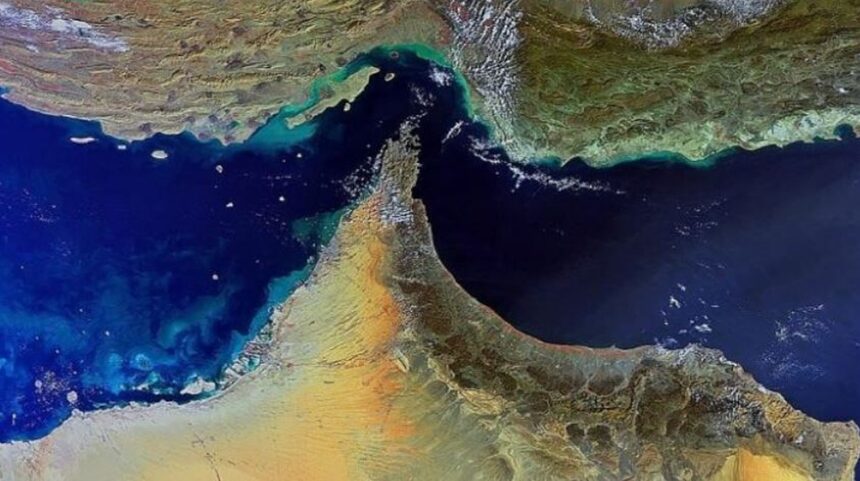
The United Kingdom has firmly reiterated its position that the Strait of Hormuz must remain open “without tariffs or charges,” explicitly rejecting a proposal by U.S. President Donald Trump to tax maritime shipping in the strategic waterway.
The diplomatic split follows a pledge by Trump to impose an economic blockade on Iranian ships while forcing all other international commercial vessels to pay a hefty transit fee to the United States.
Trump’s Proposal: The U.S. as a Maritime “Guardian”
During an address, Donald Trump announced that the United States would take over unilateral control as the primary “guardian” of the shipping lane, which handles roughly a fifth of the world’s oil consumption.
To offset the military costs of securing the channel against geopolitical threats, Trump proposed a dramatic shift in international maritime policy:
- The 20% Cargo Fee: U.S. forces would levy a 20% tariff on the total value of the cargo carried by any commercial transit vessel passing through the Strait.
- Total Blockade on Iran: Iranian-flagged ships, or vessels carrying Iranian products, would be completely barred from using the waterway under a renewed U.S. military blockade.
Downing Street and Global Rejection
The British government quickly distanced itself from the White House’s economic plan, emphasizing the preservation of unrestricted global commerce and established international maritime legal frameworks.
                  [ Strait of Hormuz Transit Positions ]
                                     |
         +---------------------------+---------------------------+
         |                                                       |
         v                                                       v
  [ Donald Trump / U.S. ]                                [ UK & International Law ]
  - Direct 20% cargo tariff.                             - Free and unhindered transit.
  - Complete naval blockade on Iran.                     - No extra levies or toll fees.
  - U.S. acts as paid maritime guardian.                  - Total adherence to UNCLOS.
A spokesperson for Downing Street addressed reporters, highlighting London’s opposition to the proposed transit toll:
“It is up to the U.S. to determine the precise details of these proposals. We have always said that the Strait of Hormuz must be reopened in accordance with international law, without tariffs or charges that could hinder global trade.” — Downing Street Spokesperson
International Maritime Bureaucracy Weighs In
The UK’s stance was strongly echoed by the International Maritime Organization (IMO), the United Nations specialized agency responsible for regulating shipping.
Following Trump’s announcement, the IMO issued a clear legal reminder stating that transit through international straits “must remain free from any tariffs and charges, in compliance with international law,” warning that unilateral fees could trigger chaos in global supply chains and significantly inflate energy prices worldwide.