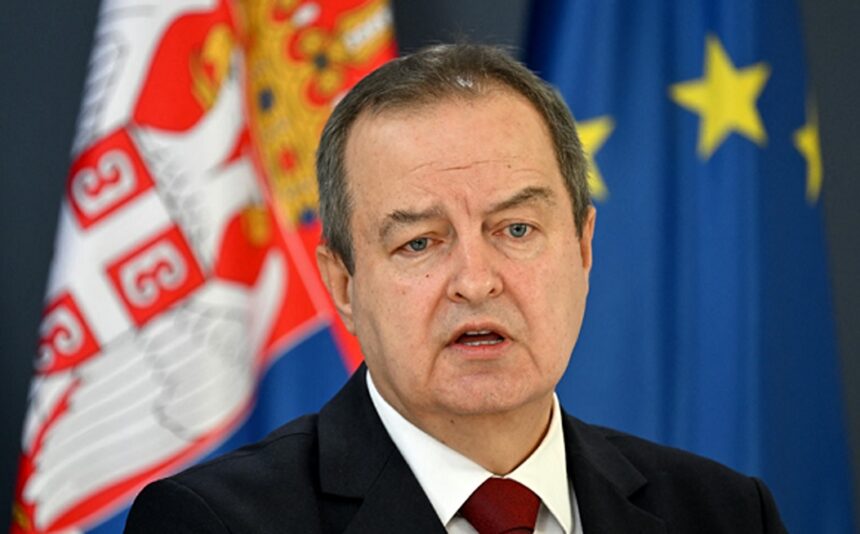
Serbian Deputy Prime Minister Ivica Dačić has defended the controversial remarks made by Public Administration and Local Self-Government Minister Snežana Paunović, who said during an interview on Kurir Television that she would have “ethnically cleansed Kosovo” if she had been in the position of former Serbian leader Slobodan Milošević in 1998.
In a statement released by his office and reported by N1, Dačić described the criticism directed at Paunović as “shameful” and “hypocritical,” arguing that those condemning her have remained silent about what he called the ethnic cleansing of Serbs from Kosovo.
> “I want to say that it is shameful that, to this day, I have not heard a single domestic politician condemn the ethnic cleansing of Serbs from Kosovo,” Dačić said, adding that he was speaking in his capacity as Serbia’s deputy prime minister.
Dačić claimed that approximately 240,000 Serbs were expelled from Kosovo in 1999, while fewer than 10,000 have returned since then. He argued that the issue of displaced Serbs receives insufficient attention and accused critics of ignoring what he described as long-term demographic changes in Kosovo.
He also cited historical and religious sites such as the Patriarchate of Peć, Dečani Monastery, Gračanica Monastery, and the Church of Our Lady of Ljeviš as evidence of Serbia’s historical connection to Kosovo.
Defending Paunović directly, Dačić said:
> “And now Snežana Paunović is supposedly guilty of ethnic cleansing? Shame on you. She said that everyone who does not feel Serbia as their state should return to their mother state, Albania.”
He further argued that accusations against Paunović were being used as evidence for claims that Serbia committed ethnic cleansing in Kosovo, insisting instead that Serbs had been the victims of ethnic cleansing.
Paunović’s original statement, made during an interview on Kurir Television, has triggered strong reactions in Kosovo and criticism from the European Union, which stated that such rhetoric has no place in Europe and called on Serbian leaders to refrain from inflammatory statements.