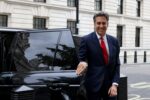
Serbian President Aleksandar Vučić has announced that in the upcoming election campaign he will present himself as an “ordinary citizen,” stating that he will travel in his personal car and will not use the privileges provided by his position as president.
According to him, he will not campaign as president, but as an ordinary citizen.
“I will enter the elections in a way none of them would. I will not participate in the parliamentary campaign as president, but as an ordinary citizen. I will drive my own car during the campaign and I will not even return to Belgrade,” Vučić declared.
However, Serbian media have raised questions regarding his statement, as none of Vučić’s asset declarations over the years list any vehicle under his ownership. The 2006 Škoda Octavia, which he had previously referred to as his personal vehicle, is officially owned by his brother, Andrej Vučić.
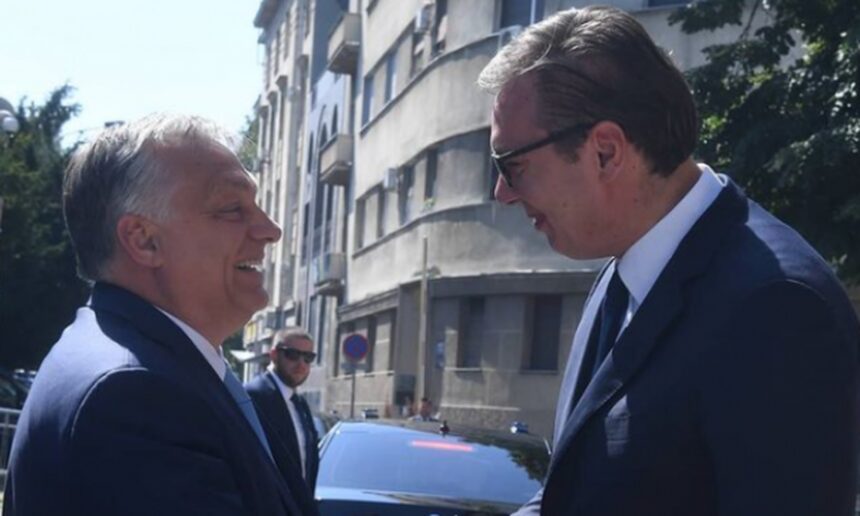
Serbian media outlet Nova.rs assesses that Vučić’s strategy is not new, but resembles that of former Hungarian Prime Minister Viktor Orbán, who during his last election campaign conducted campaign activities by driving himself and presenting himself as a politician close to ordinary citizens.
During that campaign, Orbán also faced criticism after, at one point while driving, he let go of the steering wheel. Videos published at the time showed him listening to campaign songs while trying to create the image of a modest leader.
Vučić has also previously appeared driving in front of journalists, and in 2019 he organized a ride with members of the media along Corridor 10, claiming that he was driving his personal vehicle.
Beyond their public image, Nova.rs notes that there are also similarities in the political narratives of Vučić and Orbán.
Both have relied on messages that demonize political opponents, warned of dark scenarios should they lose power, and used rhetoric aimed at escalating the political climate. Orbán also invoked the support of the administrations of Donald Trump and Russian President Vladimir Putin during his campaign, but nevertheless failed to avoid electoral defeat.
Political scientist Dejan Bursać told Nova.rs that Vučić’s attempts to portray himself as an ordinary and frugal politician are unconvincing after 14 years in power and a series of scandals that have accompanied his rule.
According to Bursać, this strategy is intended to soften criticism related to corruption.
“Everything that has happened since the collapse of the canopy has turned into a revolt against injustice, corruption, and plunder. Vučić is trying to create the image of an ordinary man who drives an old car and works for the citizens, but this is an illusion,” he said.
He added that after many years in power, citizens in Hungary realized that Viktor Orbán’s attempts to present himself as an honest leader did not match public perceptions of corruption and the way he governed.
Nova.rs recalls that Orbán lost power after 16 years in office, while his party was left with only 52 members of parliament, compared to the 141 seats won by the victors led by Péter Magyar.
Meanwhile, according to the latest poll conducted by CRTA in Serbia, the Student List enjoys the support of 44.9% of decided voters, while Vučić’s Serbian Progressive Party (SNS) stands at 35.7%. The survey also records a decline in citizens’ trust in state institutions, including the presidency, where confidence in Vučić has fallen from 60% to 35% over the past three years.