Approval ratings for President Donald Trump may be declining, but one of his strongest political instincts remains as sharp as ever: choosing a confrontation with an opponent whom he portrays as the embodiment of the entire Democratic Party.
Enter New York City Mayor Zohran Mamdani.
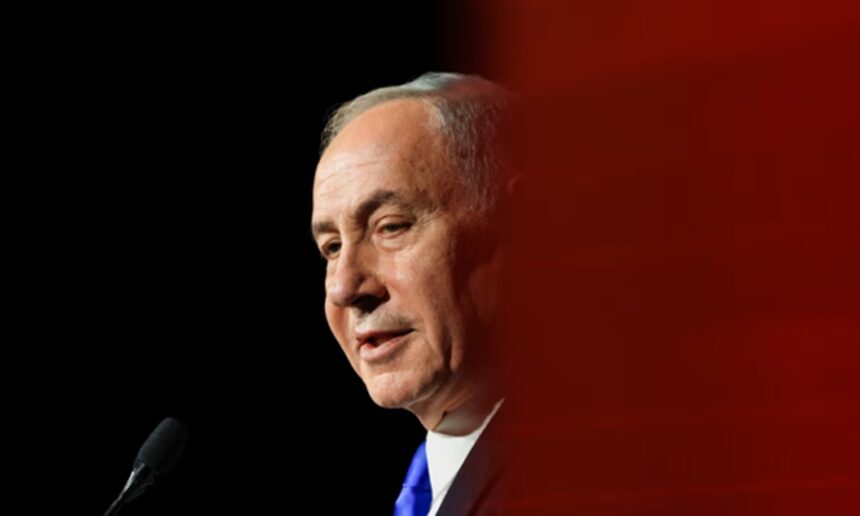
It took Trump only a few days to respond to Mamdani’s refusal to withdraw his campaign promise to arrest Israeli Prime Minister Benjamin Netanyahu — against whom the International Criminal Court has issued an arrest warrant — if he appeared in the city.
“Benjamin Netanyahu will not be arrested, in any way, shape, or form, while he is in the United States of America,” Trump declared Monday on Truth Social, his preferred platform for fueling new battles in the culture wars.
The president’s response raised the possibility of a clash between federal authority and the city he once called home.
But the significance goes even further.
This was also a classic example of Trump’s habit of using an issue or public figure to ignite a broader political debate. He was not only defending an ally like Netanyahu — and perhaps creating a new sense of obligation toward a leader with whom he has recently had tense relations. Trump was also laying the groundwork for his emerging midterm election narrative that the Democratic Party has become overly extreme.
However, both Trump and Mamdani may welcome a confrontation over Netanyahu — one that carries deeper consequences in domestic politics than a foreign policy dispute over civilian deaths during Israel’s offensive in Gaza following Hamas’ October 7, 2023 attacks, CNN reports.
That is why, in reality, it may not matter much whether Mamdani can actually arrest Netanyahu. (The issue remains legally unclear, as the United States has not ratified the Rome Statute, which requires member states to arrest individuals subject to ICC warrants. Furthermore, Washington has long allowed leaders of rival countries — such as Iran and Cuba — to visit New York for the United Nations General Assembly.)
Instead, this is one of those cases where the confrontation itself matters more than whether anyone wins it.
It also reflects how American politics is moving away from the historically near-universal support for Israel, while illustrating the broader evolution taking place within the Democratic Party.