
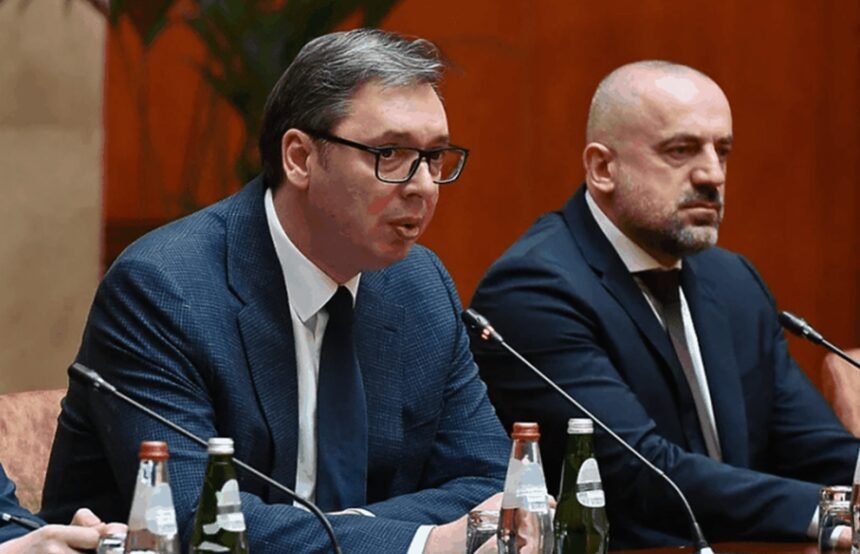
Dušan Janjić, founder of the Forum for Ethnic Relations in Belgrade and a political analyst, has said that the relationship between Serbian President Aleksandar Vučić and Milan Radoičić, the leader of the Banjska attack, is highly complex and far from stable.
In an interview, Janjić argued that Radoičić should not be viewed merely as a figure with a criminal past, but as someone with considerable influence in northern Kosovo. According to him, Radoičić wields more real power in the area than Vučić himself.
Janjić recalled his public disagreements with Radoičić following the assassination of Oliver Ivanović, noting that he had supported the criticism voiced by Serbian politician Rada Trajković. At the same time, he described Radoičić as a highly capable operative whose influence extends well beyond the Serbian List party and the events in Banjska.
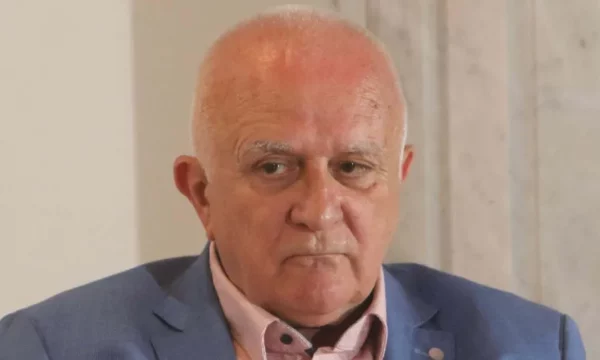
According to Janjić, Radoičić’s influence also stems from an extensive network of contacts and associates, including international connections, making him a figure who is difficult to control. He suggested that this is why Vučić, as well as other circles in Belgrade, have reason to be concerned about Radoičić’s potential actions.
Speaking about the Banjska attack, Janjić said he does not believe Radoičić entered the operation without prior planning or without Belgrade’s knowledge. He also suggested that certain key international actors may have been aware of the developments.
Janjić further questioned why Radoičić has not been arrested despite being under international sanctions, suggesting that the Banjska case may have become the subject of political negotiations.
He also said it remains unclear whether Vučić’s greater concern is Radoičić’s possible conviction or the possibility that he could testify against the Serbian president.
According to Janjić, a full understanding of the Banjska events will require the disclosure of information held by Western partners, including the United States and the United Kingdom.