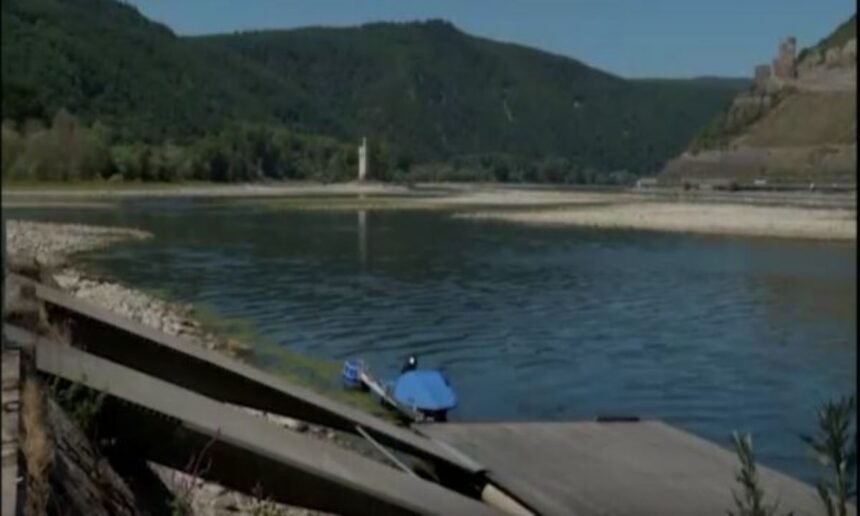
Prolonged heatwaves and drought are driving water levels in some of Europe’s major rivers to historic lows, creating growing challenges for transportation, energy production, agriculture and drinking-water supplies.
Germany, the Netherlands, Hungary, Serbia, Romania and Italy are among the countries facing particularly severe conditions, with experts warning that temperatures above 40 degrees Celsius could further intensify the crisis.
The Rhine, one of Europe’s most important commercial waterways, has fallen to record-low levels at several monitoring points in Germany and the Netherlands. The decline is disrupting commercial shipping and increasing transportation costs, with authorities warning that cargo may need to be distributed across a larger number of vessels to prevent further disruptions.
The Danube is facing a similar situation, with water levels in some areas falling to their lowest point in three decades.
Hungary has been forced to temporarily halt operations at its only nuclear power plant because of insufficient water available for cooling. Serbia and Romania are also experiencing difficulties with electricity production as water resources decline.
In Italy, the Po River has reached historically low levels, threatening drinking-water supplies and putting additional pressure on agriculture. Saltwater intrusion from the Adriatic Sea is affecting farmland, compounding the impact of the drought on agricultural production.
European drought monitoring authorities say conditions remain critical across large parts of the continent and could deteriorate further as another heatwave moves across Europe.
Scientists warn that climate change is contributing to rising temperatures and increased evaporation, making droughts more frequent and severe. The consequences extend beyond water shortages, affecting economic activity, energy security, agriculture and the risk of wildfires across Europe.
The latest developments are adding to concerns that Europe’s water infrastructure and management systems are increasingly under pressure from a changing climate and more frequent extreme weather events.