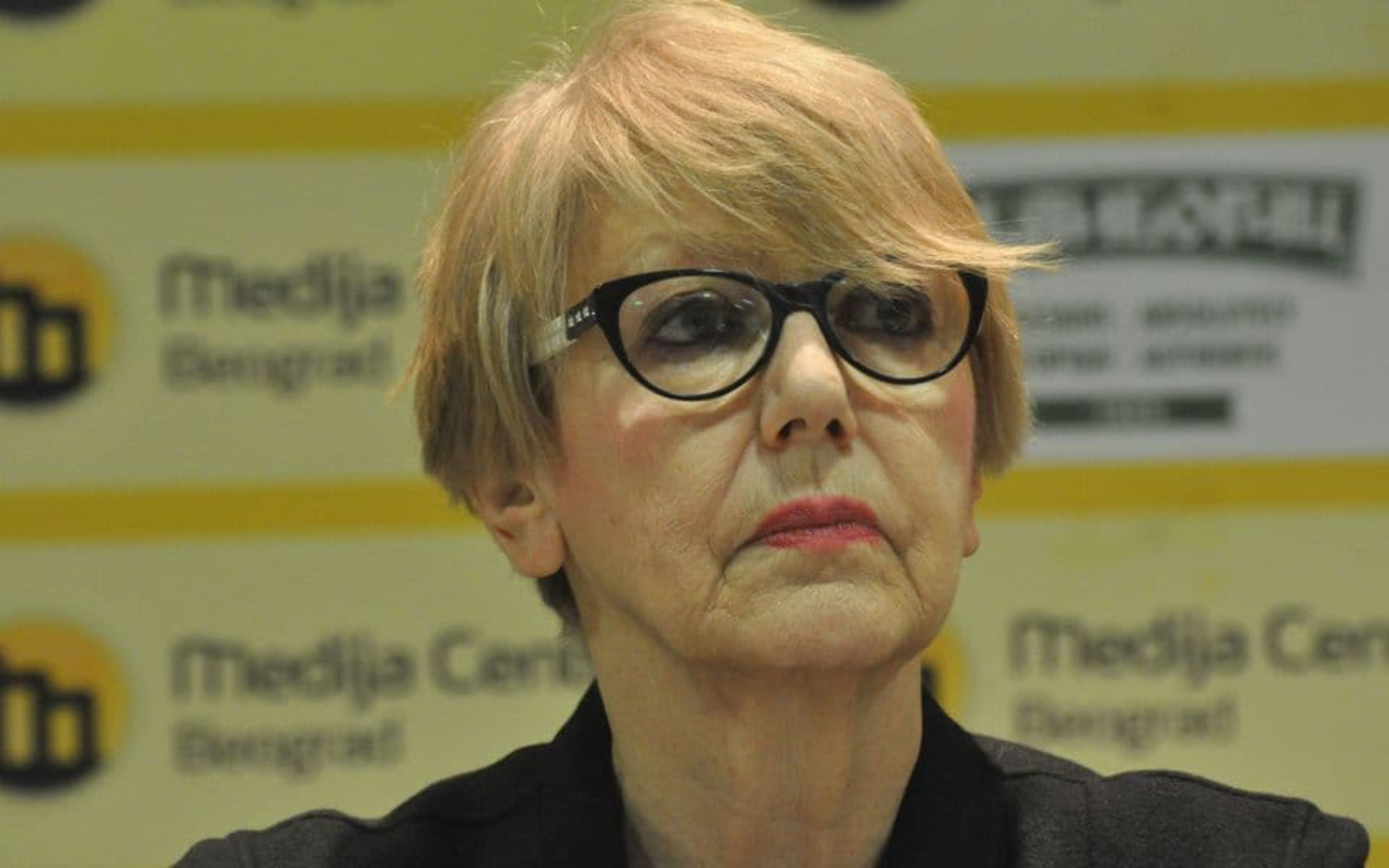
Sonja Biserko, president of the Helsinki Committee for Human Rights in Serbia, said the discovery of mass graves continues to expose the scale of crimes committed by Serbian forces during the wars in Kosovo, Bosnia and Herzegovina, and Croatia.
Biserko said many mass graves remain undiscovered and argued that each new discovery raises questions about Serbia’s responsibility for wartime crimes.
“There are still many undiscovered mass graves that show the scale of the crimes committed by Serbia in Kosovo, as well as in Bosnia and Herzegovina and Croatia,” Biserko said following the discovery last week of a suspected mass grave in northern Kosovo containing remains believed to belong to Kosovo Albanians who went missing during the war.
“Therefore, every discovery of a new grave raises the issue of Serbia’s responsibility, an issue it has never confronted, despite the fact that the Hague Tribunal for the former Yugoslavia convicted Serbia’s military and political leaders precisely over crimes committed in Kosovo,” she added.
Kosovo authorities arrested a suspect for alleged war crimes in Zubin Potok on Sunday following a two-year investigation. Acting Prime Minister Albin Kurti said the remains discovered at the site could belong to a group of 23 Kosovo Albanians who disappeared in the area in 1999.
Biserko also criticized what she described as a deeply rooted narrative in Serbia that Serbs and Serbia were the primary victims of the conflicts of the 1990s.
According to her, the narrative is widespread not only among Serbia’s political establishment but also within cultural, religious and other circles, while individuals who speak publicly about Serbia’s responsibility for wartime crimes often face significant pressure.
Biserko pointed to the case of the person arrested by Serbian security services who allegedly provided information about the location of the suspected mass grave in Zubin Potok. She also cited the example of a Serb in Bosnia and Herzegovina who disclosed the location of a mass grave in Tomašica containing the remains of around 1,000 victims.
The Kosovo war ended in 1999 after NATO’s air campaign and the withdrawal of Yugoslav and Serbian forces under an agreement signed in Kumanovo. More than 13,000 people were killed during the conflict, while the fate of more than 1,600 people, most of them Kosovo Albanians, remains unresolved.
At the height of the conflict, 862,979 Kosovo Albanian refugees were registered as having been expelled from their homes, representing roughly 43 percent of Kosovo’s population at the time.
The discovery of suspected mass graves decades after the war continues to underscore the unresolved legacy of the conflict and the continuing demands by families for information about their missing relatives.