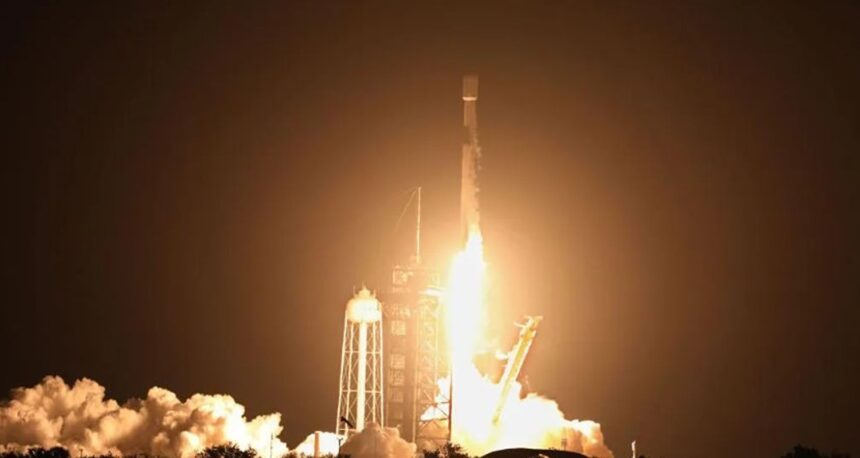
A section of a SpaceX Falcon 9 rocket is expected to collide with the Moon’s surface on Wednesday, August 5, in a rare event that has drawn attention from astronomers around the world.
According to NASA’s Center for Near-Earth Object Studies (CNEOS), the rocket’s upper stage will impact the lunar surface after traveling at a speed of approximately 2.43 kilometers per second (around 5,400 miles per hour).
NASA reached this conclusion after independent astronomers analyzed publicly available data and determined that a part of the rocket, launched in January 2025, is now on an uncontrolled trajectory toward the Moon.
The U.S. space agency has stated that the impact poses no danger to Earth. NASA will continue monitoring the object and later study the impact site for scientific purposes.
The Falcon 9 rocket was used during a U.S.-Japanese mission to transport two lunar landers and research equipment toward the Moon. While some parts of SpaceX rockets are designed to return to Earth and be reused, other components remain in space and can eventually collide with other celestial bodies.
The impact is expected to occur at around 02:35 Eastern Time (06:35 GMT) and could create a large cloud of lunar dust rising tens of kilometers above the Moon’s surface.
Cambridge University astronomer Matt Bothwell said that the Moon’s lack of atmosphere and weaker gravity will make the collision far more dramatic than a similar event on Earth.
Scientists estimate that debris from the impact could weigh around one million kilograms, with some material potentially being scattered into space due to the Moon’s unique surface conditions.