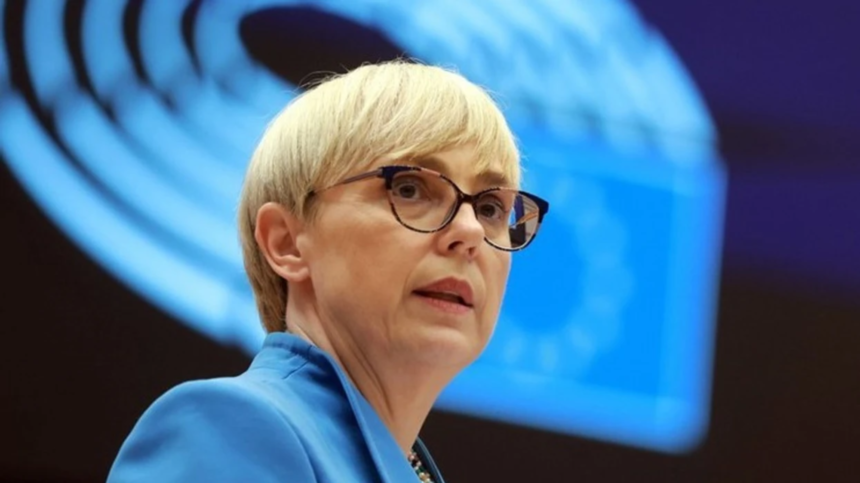
Slovenian President Nataša Pirc Musar is facing increased scrutiny after Slovenian newspaper Dnevnik and Austria’s APA news agency published details about her repeated private trips to Russia and examined the background of a close friend who travelled with her.
According to the investigation, Pirc Musar travelled to Russia at least seven times with Viktorija Krivolucka, a Russian-Slovenian citizen whom the president has described as one of her closest friends for almost two decades.
The reports have attracted wider attention, including from Germany’s Frankfurter Allgemeine Zeitung, which questioned why Pirc Musar had travelled to Russia so frequently.
One of the trips that has drawn particular attention took place between December 26, 2021 and January 7, 2022, just weeks before Russia launched its full-scale invasion of Ukraine on February 24, 2022.
Pirc Musar’s office has confirmed that she travelled to Russia several times before becoming president, but strongly rejected suggestions that the trips had any political or intelligence-related purpose. Her office said that before taking office she had travelled to more than 80 countries and that her visits to Russia were private trips undertaken as a tourist or with family and friends.
The investigation has nevertheless raised additional questions because of Krivolucka’s past relationship with Roman Jeglič, a former senior Slovenian intelligence official.
According to Dnevnik and APA, Krivolucka and Jeglič were registered at the same address in Krasnoyarsk, Siberia, in 2009. Jeglič had previously served as deputy head of Slovenia’s intelligence and security service in the early 1990s, the predecessor of today’s SOVA intelligence agency.
Krivolucka has confirmed that she and Jeglič were in a relationship for several years while both were working for Slovenian companies in Krasnoyarsk and that they lived together for a period.
Pirc Musar’s office has also acknowledged that the president knew about the former relationship.
Krivolucka, however, has rejected any suggestion that her relationship with Jeglič was connected to intelligence activities. She said she was unaware of his previous intelligence career at the time and claimed that she had had no contact with him for at least 15 years. She has also denied having any links to foreign intelligence services.
The Slovenian intelligence agency SOVA has meanwhile sought to clarify its own role in the controversy. The agency said that when it conducted a security assessment of Krivolucka in 2016, it did not identify any circumstances that were relevant to national security.
At this stage, the publicly available information does not establish that Pirc Musar’s trips to Russia were connected to intelligence operations or that she herself engaged in any improper activity.
However, the combination of repeated travel to Russia, the timing of at least one visit shortly before the full-scale invasion of Ukraine, and the previously undisclosed connection between her close friend and a former senior intelligence official has inevitably generated questions about the circumstances surrounding those trips.
The issue now places the Slovenian president under political pressure to provide greater clarity about her private travel and the nature of her relationship with Krivolucka.
For now, the controversy raises questions—but questions and suspicious circumstances should not be presented as proof of espionage or foreign interference without concrete evidence.