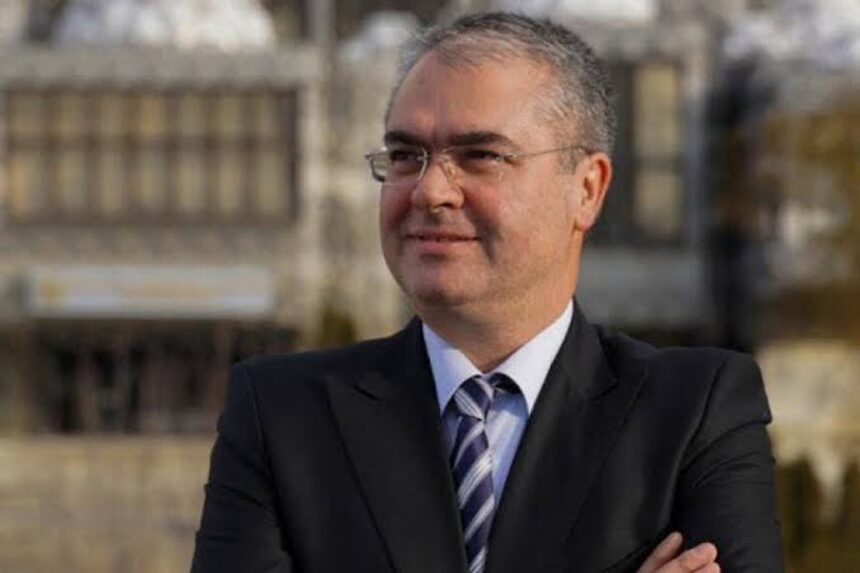
Arben Fetoshi, director of the Octopus Institute, has called on Kosovo’s institutions to lead efforts to challenge the Specialist Chambers’ ruling against former Kosovo Liberation Army (KLA) leaders in The Hague through a clear state strategy that mobilises legal expertise and diplomacy without jeopardising international partnerships.
In a public statement, Fetoshi argued that opposition to the ruling should not rely on escalating tensions, political polarisation or confrontations with strategic partners. Instead, he called for a coordinated institutional approach focused on the appeals process.
According to Fetoshi, Kosovo must move beyond emotional reactions and concentrate on mobilising legal expertise, state resources and diplomatic efforts to defend its position internationally.
He proposed establishing a task force to coordinate experts, resources and diplomatic initiatives in support of these efforts.
“Now that our institutions have been consolidated, outrage, resentment and accusations must give way to strategy, and the state must lead the fight for justice. A task force that mobilises unlimited resources, expertise and lobbying is needed to defend the truth against Serbo-Russian machinations,” he wrote.
Fetoshi said this approach should strengthen diplomacy, counter what he described as fabrications abroad and help reduce tensions within Kosovo.
Addressing the debate following the Hague ruling, he said Kosovo was facing a test of democratic maturity. Public debate was necessary, he argued, but must not turn into campaigns of public shaming or persecution over differing opinions.
He distinguished between respecting the sacrifices of veterans, war invalids and families of martyrs and using those sacrifices to justify actions that could harm institutions or democratic debate.
“But even for patriots—veterans, war invalids and families of martyrs—sacrifice and heroism are not a ‘licence’ to undermine it,” Fetoshi wrote, adding that even heated debate serves democracy, unlike inflammatory rhetoric and campaigns of public shaming.
Fetoshi: EU Reactions Must Be Answered With Arguments
The director of the Octopus Institute also addressed the debate over amendments to the Law on the Specialist Chambers, saying they should help clarify Kosovo’s next steps and the state’s responsibilities in the appeals process.
He argued that the amendments should not be interpreted as a position against justice, but should instead be considered part of efforts to challenge what he regards as injustice in the proceedings.
Commenting on reactions from the European Union and European partners to the legislation, Fetoshi said Kosovo’s response should be political, reasoned and professional, rather than driven by anger or resentment.
“The reactions of the EU and European partners against the law are political, and therefore require a political response. With seriousness and arguments, not anger and resentment,” he wrote.
According to Fetoshi, disagreeing with the European Union does not necessarily mean violating agreements. However, a lack of communication could deepen disagreements and put relations with partners at risk.
He therefore called for the concerns of international partners to be addressed with restraint and professionalism while preserving Kosovo’s strategic partnerships.
“Our approach should be built on the determination that comes from our small size, not on folkloric and sentimental premises,” Fetoshi concluded.
He reiterated that challenging the Specialist Chambers’ ruling requires coordinated state action, institutional determination and diplomacy, with the appeals process at the centre of Kosovo’s future efforts.