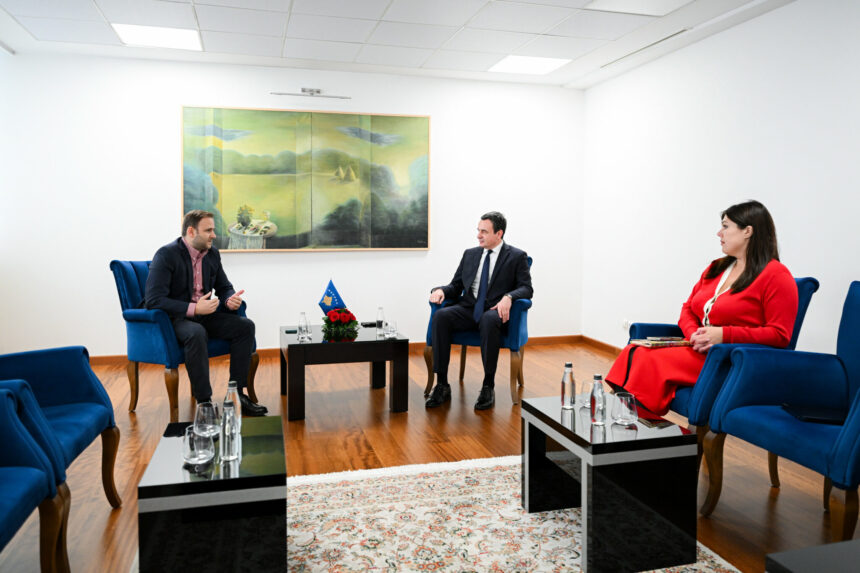
Kosovo Prime Minister Albin Kurti today met with Hekuran Nikçi, Chair of the Board of Directors of the Kosovo Privatisation Agency (KPA), to discuss the administration and protection of socially owned enterprise assets, unresolved property disputes and the steps needed to complete the agency’s mandate.
Particular attention was given to properties belonging to Kosovo’s socially owned enterprises that are located in Serbia, as well as the need to identify, document and protect ownership rights over these assets.
In this context, they also discussed the incomplete implementation of the Cadastral Agreement reached in Brussels on September 2, 2011, under which Serbia committed to returning cadastral records taken from Kosovo. Despite the agreement and financial support from the European Union, including a project worth approximately €2 million intended to facilitate its implementation, Serbia has yet to fully fulfil its obligations. This continues to complicate the resolution of property disputes and undermine legal certainty regarding ownership.
The meeting also addressed the necessary legal and institutional changes that would enable the completion of the KPA’s mandate and the transfer of relevant assets to the Sovereign Fund of the Republic of Kosovo. The process aims to improve the management of public assets and put them to work for the country’s economic development.
Discussions also covered the Law on the Sovereign Fund, adopted by the Kosovo Assembly in December 2023, which has remained pending a decision by the Constitutional Court for nearly three years. The absence of a final ruling has prevented the law from entering into force and, consequently, delayed the planned reform to transform how state assets are managed and developed.
Prime Minister Kurti emphasised the importance of continued institutional efforts to protect the Republic of Kosovo’s assets, resolve outstanding property disputes and advance reforms that ensure these assets are managed responsibly, transparently and in the public interest.