Serbian President Aleksandar Vučić’s suggestion that Belgrade could consider changing the course of the Ibër River has triggered strong reactions in Serbia, with experts and analysts describing the idea as irrational, prohibitively expensive and potentially damaging to Kosovo’s environment and population.
Vučić raised the possibility of redirecting the river as a response to measures taken by authorities in Prishtina toward the Serb community. He questioned what Albanians would do if Serbia took such a step and how they would respond.
According to reports cited by Deutsche Welle, Vučić has also announced the formation of a working group of engineers and construction experts to examine whether such a project could be carried out.
However, retired professor of hydraulic engineering and hydrology Jovan Despotović told FoNet that redirecting the Ibër would be practically impossible to achieve in the short term. Such an undertaking would require major construction works, including extensive excavation, tunnels and dams, while potentially conflicting with European regulations.
Experts have also warned of serious ecological consequences, arguing that a major intervention in the river’s natural course could affect the entire Ibër basin and areas beyond it.
Janjić: An ideological and propaganda project
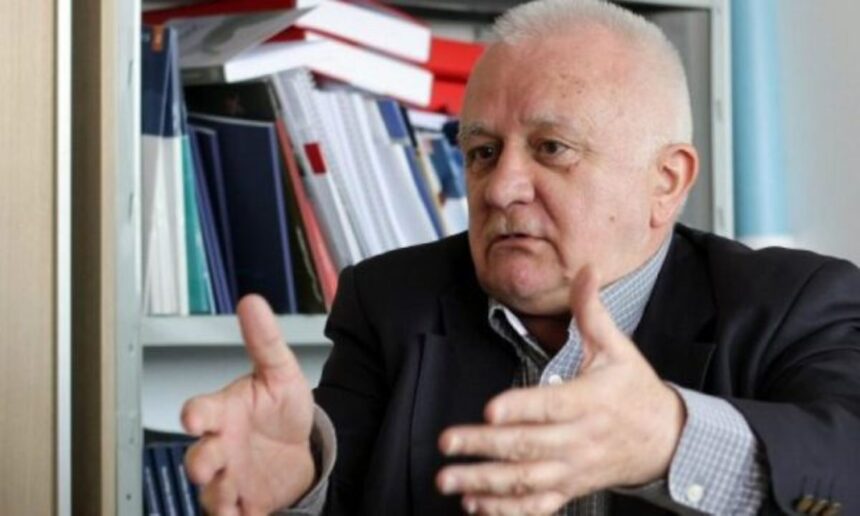
Dušan Janjić, chairman of the Board of the Forum for Ethnic Relations, described Vučić’s proposal as a return to nationalist ideas from the 1980s.
According to Janjić, plans to alter the course of the Ibër were discussed as early as 1983–1985 and were connected to nationalist thinking about Kosovo.
Speaking to Deutsche Welle, Janjić argued that the idea no longer represents a realistic solution to any existing problem but instead functions as an ideological and propaganda project designed to increase tensions and fuel fear in the region.
He said the threat of actually damaging Kosovo was unrealistic given the scale of the proposed undertaking and the amount of time required to implement it.
Janjić argued that the proposal was intended to create the impression that there could be “no salvation” without Vučić’s intervention while simultaneously diverting attention from Serbia’s domestic problems.
“Vučić is unlikely to be able to see how Albanians would suffer, but all residents of Kosovo would be harmed,” Janjić warned, adding that the statements were already damaging the image of Serbia and its leadership.
He said such public statements could also cause international partners to question whether Serbia is a reliable country with which they should cooperate.
Redirecting the Ibër would also affect Kosovo Serbs
Janjić stressed that the consequences of any major intervention in the river would not be limited to Kosovo Albanians but would affect all residents of Kosovo, including the Serb community.
He estimated that such a project would take decades to complete and argued that Vučić would not be in a position to witness the long-term consequences of the proposal.
Opposition SRCE leader Zdravko Ponoš mocked Vučić’s statement, saying that before embarking on major infrastructure projects, the Serbian president should first address sewage problems in Borča, a municipality of Belgrade.
The “Myth of Sisyphus”
Janjić also described Vučić’s approach as part of a broader political campaign, comparing it to the “Myth of Sisyphus.”
In his assessment, Serbia’s foreign policy is increasingly being used to deflect attention from domestic problems and strengthen the government’s political position.
The Ibër-Lepenc system is strategically important for Kosovo, particularly for water supplies and energy production. Any major intervention in the river’s flow could therefore have significant implications not only for the environment but also for Kosovo’s energy and water security and wider regional stability.