The United States has renewed its call for Kosovo’s political leaders to work together to form functioning institutions in line with the Constitution and decisions of the Constitutional Court.
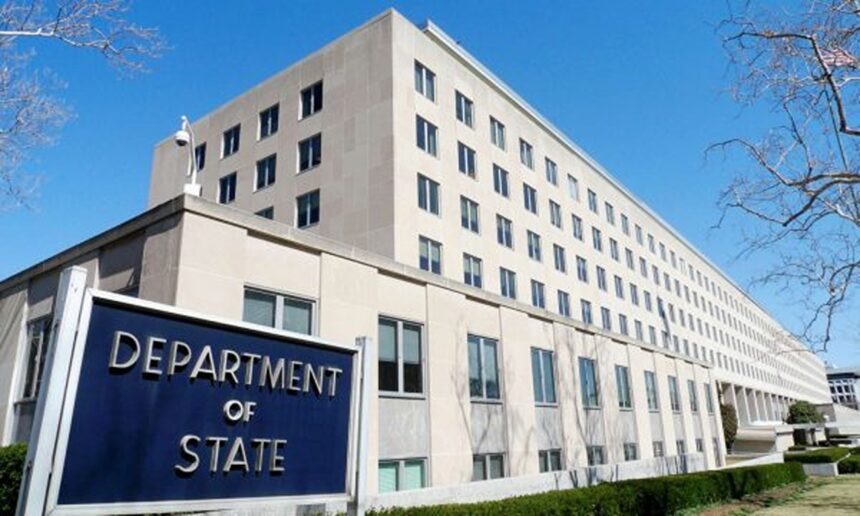
In a statement to Radio Free Europe, a U.S. State Department spokesperson urged Kosovo’s political leaders to cooperate to overcome the ongoing institutional deadlock.
“This ongoing political deadlock is resulting in missed opportunities for Kosovo. It is time for leaders to prioritize progress and stability, for the benefit of all citizens,” the spokesperson said.
The latest statement marks the second similar appeal from the United States in a short period, following a call for political cooperation issued by the U.S. Embassy in Prishtina on August 12.
The renewed U.S. intervention comes as Kosovo’s new Assembly remains unconstituted following the June 7 parliamentary elections.
The constitutive session of the new legislature began on August 6. MPs were sworn in, but the process stalled before the election of the Assembly speaker.
Albin Kurti, in his capacity as leader of the Vetëvendosje Movement, requested additional time for consultations with other parties, saying that no agreement had yet been reached on the formation of institutions. The session was suspended and scheduled to resume on August 8.
The August 8 continuation also failed to produce a candidate for Assembly speaker. Kurti again requested additional time for consultations, after which AAK MP Time Kadrijaj threw eggs in his direction. The incident prompted session chair Avni Dehari to suspend the proceedings.
The process has remained blocked since then. Dehari has said the next session will be called once the parties reach an agreement to resolve the crisis, arguing that holding another session merely as a formality would serve little purpose without a political agreement.
Kurti-Abdixhiku talks focus on presidential election
Efforts to find a political solution continued on August 18, when Kurti met with LDK leader Lumir Abdixhiku.
The talks focused on the election of Kosovo’s next president. Following the meeting, both leaders said there was a willingness to find a solution and agreed to discuss specific potential candidates for president at their next meeting.
The Democratic Party of Kosovo (PDK) and AAK, meanwhile, have called for the Assembly session to continue without waiting for a political agreement.
On August 12, MPs from the two parties gathered in the Assembly chamber and called on Dehari to convene the continuation of the session, leading to confrontations with MPs from Vetëvendosje.
EU warns of costs of prolonged deadlock
The United States is not the only international actor urging Kosovo’s political parties to resolve the crisis. The European Union has also called for a swift political solution and warned that the institutional deadlock and delays in implementing reforms could limit Kosovo’s ability to benefit from European support.
Under the EU Growth Plan, Kosovo has access to €882.6 million in grants and favorable loans through the end of 2027, with disbursements linked to the implementation of commitments under its Reform Agenda.
The European Commission has identified 111 reform steps for Kosovo. Thirteen of them, collectively worth €90.8 million, had an initial deadline of June 30, 2026, while another 27 measures, worth €165.9 million, are due by the end of December.
The International Monetary Fund has also warned that the prolonged political deadlock has constrained Kosovo’s progress in implementing reforms under the Growth Plan and accessing external financing.
With pressure mounting from both Washington and Brussels, Kosovo’s political parties now face increasing demands to end the institutional paralysis and restore functioning state institutions.