Cuba is pushing ahead with its most significant economic reforms since the 1959 revolution, but Havana says intensified US sanctions are undermining efforts to attract private investment and revive the country’s struggling economy.
The dispute highlights a growing contradiction in US-Cuban policy: Washington has spent decades calling on Havana to open its economy to private enterprise and market forces, while simultaneously tightening financial and trade restrictions that Cuban officials say make it harder for those reforms to succeed.
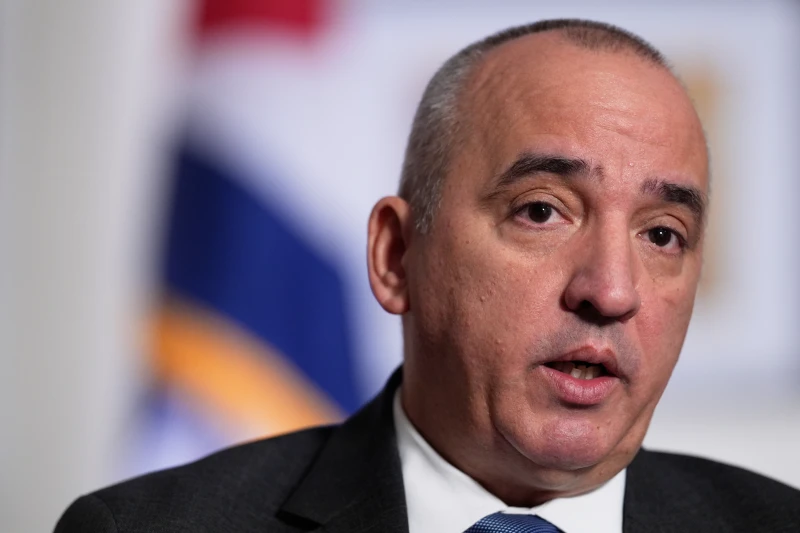
In an interview with the Associated Press, Cuba’s ambassador to the United Nations, Ernesto Soberón Guzmán, questioned the objectives of US policy and criticized the impact of the latest sanctions on the country’s economy and population.
“What are you afraid of? If you are so convinced that the Cuban government is an incapable government, why do you need to impose new sanctions almost every two weeks?” Guzmán said, directly addressing US Secretary of State Marco Rubio.
The Cuban diplomat said restrictions affecting oil supplies, as well as new measures targeting mining, metallurgy and construction, were contributing to severe shortages of electricity and fuel while discouraging foreign investors and tourism operators.
Washington defends pressure campaign
The US State Department has defended its approach, arguing that Havana’s economic reforms do not go far enough to loosen the government’s political control.
Rubio said Washington would continue imposing sanctions to prevent the Cuban government from creating alternative economic mechanisms that could provide relief while preserving the existing political system.
“The new sanctions will continue to be announced to close the relief valves that they are trying to create in every mechanism,” Rubio said.
He argued that the central problem facing Cuba was that its government wanted to improve the economy without relinquishing political control.
The US position reflects Washington’s longstanding argument that economic pressure should be used to encourage political and economic change in Cuba.
Havana opens door to private sector
The Cuban government, meanwhile, has announced a series of reforms intended to give private businesses a greater role in the economy.
Measures announced by President Miguel Díaz-Canel include expanded authorization for private companies, the ability to conduct imports and exports without direct state intermediation, authorization for private banks and greater opportunities for investment by members of the Cuban diaspora.
The reforms represent a significant departure from Cuba’s traditionally state-dominated economic model and could provide new opportunities for entrepreneurs and foreign capital.
However, international analysts warn that the reforms face major obstacles if US sanctions remain in place.
Restrictions on access to financing, fuel and international transactions can make it significantly more difficult for Cuban businesses to attract capital, expand operations and establish stable commercial relationships with foreign partners.
A clash over the future of Cuba’s economy
The dispute therefore reflects two fundamentally different interpretations of Cuba’s economic crisis.
Havana argues that it is attempting to reform an inefficient state-dominated economy while facing an increasingly restrictive US sanctions regime that limits the benefits of those reforms.
Washington argues that economic liberalization without political reform would simply allow the Cuban government to strengthen its grip on power while benefiting selectively from market mechanisms.
For Cuba, the success of the reforms could depend not only on how far Havana is willing to open the economy, but also on whether it can secure access to the capital, energy and international markets needed to make those changes viable.
The confrontation with Washington is likely to remain a major obstacle as Havana attempts to balance economic liberalization with the government’s determination to retain political control.